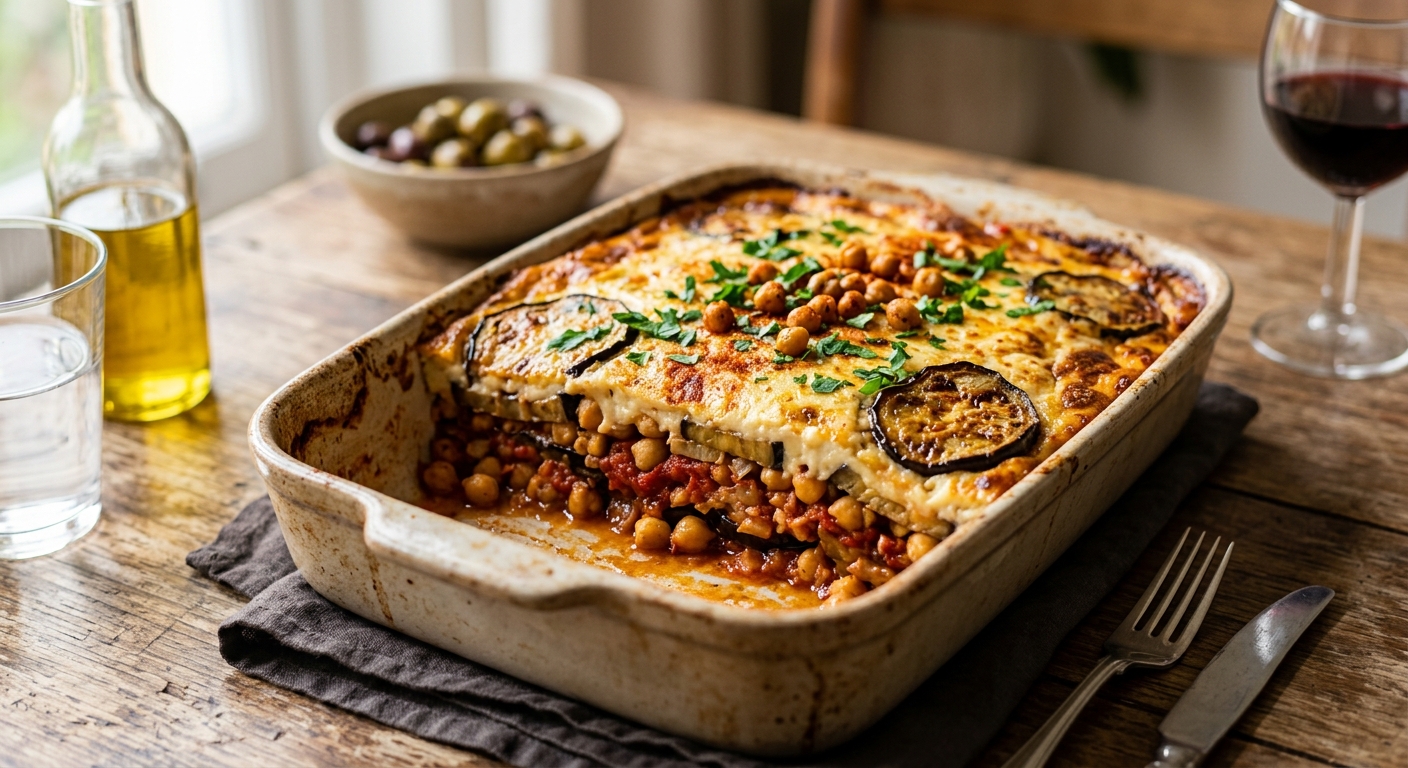
Moussaka is one of the Mediterranean’s most beloved comfort dishes, and this plant-based version transforms the traditional lamb-and-eggplant layered bake into a mineral powerhouse without sacrificing a single note of the original’s warmth and depth. Chickpeas stand in for ground meat with remarkable authority, providing complete-protein building blocks alongside a generous payload of iron, zinc, copper, and manganese. Eggplant, often dismissed as nutritionally modest, contributes meaningful amounts of potassium, manganese, and the antioxidant nasunin, which actively protects cell membranes from oxidative stress.
What makes this moussaka genuinely special is the layering of flavors achieved through technique rather than shortcuts. The eggplant is salted and cooked until silky and caramelized, the chickpea ragu is spiced with cinnamon, allspice, and smoked paprika in the classical tradition, and the bechamel is enriched with nutritional yeast for an extra hit of B vitamins and a savory depth that rivals any cheese-laden original. Each layer contributes its own nutritional story, and together they form one of the most complete mineral profiles you will find in a single vegetarian main course.
At Calibrated Cuisine, we have engineered this recipe to deliver a verified mineral matrix: over 35% DV of manganese, over 30% DV of copper, meaningful iron, magnesium, phosphorus, and zinc, all within approximately 410 calories per serving. Whether you build it slowly in a slow cooker, assemble and bake it in the oven, or streamline the process in a pressure cooker, each method has been specifically crafted to honor both the dish and your time.
4
servings
Ingredients
- 800 geggplant (about 2 medium), cut into 1cm rounds
- 480 gcanned chickpeas, drained and rinsed (about 2 x 240g drained cans)
- 400 gcanned crushed tomatoes
- 1 mediumyellow onion, finely diced
- 4 clovesgarlic, minced
- 3 tbspextra-virgin olive oil, divided
- 2 tbsptomato paste
- 1 tspground cinnamon
- 1 tspsmoked paprika
- 0.5 tspground allspice
- 0.5 tspground cumin
- 1 tspdried oregano
- 1 tbspred wine vinegar
- 30 gunsalted butter
- 30 gall-purpose flour
- 480 mlwhole milk
- 2 tbspnutritional yeast
- 0.25 tspground nutmeg
- 2 largeeggs
- 30 ggrated Parmesan or pecorino (optional, for topping)
- —Colima Sea SaltMicroplastic Free Salt and freshly ground black pepper to taste
- —Cooking spray or extra olive oil for greasing
Instructions
Click on an item below to shop for the recommended items for this recipe on Amazon.
As an Amazon Associate, we earn from qualifying purchases.
- Salt the eggplant rounds generously on both sides and arrange them in a single layer on paper towels. Let them sweat for 15 minutes to draw out bitterness and excess moisture, then pat thoroughly dry with fresh paper towels.
- Heat 2 tablespoons of olive oil in a large, wide skillet over medium-high heat. Working in two batches to avoid crowding, cook the eggplant rounds for 3 to 4 minutes per side until deeply golden and tender. Transfer to a plate and set aside. Do not wipe the skillet.
- Reduce the heat to medium and add the remaining 1 tablespoon of olive oil to the same skillet. Add the diced onion and cook, stirring occasionally, for 6 to 7 minutes until soft and translucent. Add the garlic, cinnamon, smoked paprika, allspice, cumin, and oregano. Stir constantly for 90 seconds until the spices are fragrant and beginning to stick.
- Add the tomato paste and stir it into the onion mixture for 1 minute to cook off its raw edge. Pour in the crushed tomatoes and red wine vinegar. Stir to combine, then add the drained chickpeas. Season generously with salt and pepper. Simmer uncovered over medium-low heat for 15 minutes, stirring occasionally, until the sauce thickens and the chickpeas have absorbed the spiced tomato flavor.
- While the ragu simmers, prepare the bechamel in a separate medium saucepan. Melt the butter over medium heat until foaming subsides. Whisk in the flour and cook, stirring constantly, for 1 minute to form a pale roux. Remove the pan briefly from heat and pour in the milk gradually while whisking vigorously to prevent lumps. Return to medium heat and continue whisking for 4 to 5 minutes until the sauce is thick enough to coat the back of a spoon. Remove from heat, whisk in the nutritional yeast, nutmeg, salt, and pepper. Allow to cool for 3 minutes, then whisk in the eggs one at a time until fully incorporated.
- Preheat your broiler to high. In a large oven-safe skillet or shallow braising pan, layer half the cooked eggplant rounds on the bottom, slightly overlapping. Spoon all of the chickpea ragu evenly over the eggplant layer, then arrange the remaining eggplant rounds on top. Pour the bechamel evenly over the surface, spreading it to the edges with a spatula. Scatter the grated cheese over the top if using.
- Place under the broiler 15cm from the element and broil for 6 to 8 minutes, watching closely, until the bechamel is puffed, golden brown, and set with small charred spots. Remove from heat and allow to rest for 10 minutes before slicing and serving. This resting time is critical for the layers to hold their shape.
- Salt the eggplant rounds and let them rest on paper towels for 15 minutes. Pat dry, then cut the rounds into rough 2cm cubes rather than keeping them whole. The smaller pieces will soften and meld into the sauce more evenly during the long cook.
- In the slow cooker insert, combine the eggplant cubes, drained chickpeas, crushed tomatoes, tomato paste, diced onion, minced garlic, red wine vinegar, cinnamon, smoked paprika, allspice, cumin, oregano, 2 tablespoons of olive oil, and a generous seasoning of salt and pepper. Stir everything together until the eggplant and chickpeas are evenly coated in the tomato and spice mixture. There is no need to pre-cook the onion and garlic as the extended cook time will mellow them fully.
- Place the lid on the slow cooker and cook on High for 4 hours or on Low for 7 hours. Resist lifting the lid during this time. The eggplant will collapse into the sauce and the chickpeas will become deeply flavored. After cooking, stir gently and taste for seasoning, adjusting salt and pepper as needed.
- About 30 minutes before serving, prepare the bechamel. Melt the butter in a saucepan over medium heat, whisk in the flour for 1 minute, then gradually add the milk, whisking constantly until smooth and thick, about 4 to 5 minutes. Remove from heat, stir in the nutritional yeast, nutmeg, salt, and pepper, cool for 3 minutes, then whisk in the eggs one at a time.
- Pour the bechamel evenly over the surface of the slow cooker contents without stirring it in. Replace the lid and cook on High for a further 35 to 45 minutes until the bechamel is just set, slightly puffed, and no longer liquid in the center. It will not brown in the slow cooker but will have a creamy, custard-like set. For a golden top, transfer to a heatproof baking dish and broil for 4 to 5 minutes. Serve directly from the insert with a wide spoon.
- Salt the eggplant and pat dry as described. Cut into 2cm cubes. Using the Saute function on High, heat 2 tablespoons of olive oil in the pressure cooker pot. Add the eggplant cubes in a single layer if possible and cook, stirring occasionally, for 4 to 5 minutes until the exterior is lightly browned. The eggplant will absorb the oil quickly. Use a slotted spoon to transfer to a bowl and set aside.
- Add the remaining 1 tablespoon of oil to the pot. Add the diced onion and saute for 4 minutes until softened. Add the garlic, cinnamon, smoked paprika, allspice, cumin, and oregano. Stir for 60 seconds. Add the tomato paste and stir for 30 seconds. Pour in a splash of water (about 60ml) and scrape up any browned bits from the bottom of the pot thoroughly, as these can trigger a burn warning.
- Return the sauteed eggplant to the pot along with the drained chickpeas, crushed tomatoes, and red wine vinegar. Stir to combine and season with salt and pepper. Seal the lid and set the valve to Sealing. Cook on Manual High Pressure for 8 minutes.
- When the cook time ends, perform a quick release by carefully moving the valve to Venting. Once the pin drops, open the lid. Stir the ragu gently. The eggplant will be very tender and the chickpeas will have absorbed the spiced tomato sauce. Use the Saute function on Low to simmer uncovered for 3 to 4 minutes if the sauce needs thickening.
- While the ragu rests, preheat the broiler to high. Prepare the bechamel on the stovetop: melt the butter, whisk in the flour, gradually add the milk, and cook until thick. Remove from heat, add nutritional yeast, nutmeg, and seasoning, cool briefly, then whisk in the eggs. Transfer the chickpea and eggplant ragu to a greased oven-safe baking dish (approximately 23x33cm). Pour the bechamel evenly over the top and scatter with grated cheese if using. Broil 15cm from the element for 6 to 8 minutes until the top is puffed and golden. Rest for 8 minutes before serving.
- Preheat the oven to 220C (425F). Salt the eggplant rounds and let them rest for 15 minutes on paper towels. Pat thoroughly dry, then arrange in a single layer on two large, lightly oiled baking sheets. Brush the tops with 2 tablespoons of olive oil and season with pepper. Roast for 20 to 22 minutes, flipping once at the halfway mark, until the rounds are deeply golden, tender, and slightly caramelized at the edges. Remove and reduce the oven temperature to 180C (350F).
- While the eggplant roasts, heat the remaining 1 tablespoon of olive oil in a large saucepan over medium heat. Cook the onion for 6 minutes until soft, then add the garlic, cinnamon, smoked paprika, allspice, cumin, and oregano. Stir for 90 seconds. Add the tomato paste, cook for 1 minute, then pour in the crushed tomatoes and red wine vinegar. Add the chickpeas and season generously. Simmer for 15 minutes, stirring occasionally, until the sauce is thick and concentrated. Taste and adjust seasoning.
- Prepare the bechamel in a separate medium saucepan. Melt the butter over medium heat, whisk in the flour for 1 minute, then gradually add the milk while whisking constantly. Cook for 4 to 5 minutes until thick and smooth. Remove from heat, whisk in the nutritional yeast, nutmeg, salt, and pepper. Cool for 4 minutes, then whisk in the eggs one at a time. The sauce should be thick, glossy, and richly flavored.
- Lightly grease a deep 23x33cm baking dish with cooking spray or olive oil. Arrange half the roasted eggplant rounds in an overlapping single layer across the bottom of the dish. Spoon the entire chickpea ragu evenly over the eggplant, smoothing the surface with a spatula. Arrange the remaining eggplant rounds over the ragu in a second overlapping layer. Pour all of the bechamel over the top, spreading it edge to edge. Tap the dish gently on the counter to help the bechamel settle. Scatter the grated cheese over the surface if using.
- Bake at 180C (350F) for 40 to 45 minutes until the bechamel is set, deeply golden on top, and the filling is bubbling gently at the edges. If the top browns too quickly before the filling has set, loosely tent with foil for the last 10 minutes. Remove from the oven and, critically, allow to rest uncovered for at least 15 minutes before cutting. This resting period allows the layers to firm up so that each serving holds its distinct layered structure when plated.
Nutrition Breakdown
Per 1 serving (makes 4)
Vitamins & Minerals
% Daily Value based on a 2,000 calorie diet (FDA reference)
🧬 Essential Amino Acids
% of recommended daily intake (RDA) per serving
🛡 Antioxidant Profile
The Nutrition Science
The mineral density of this moussaka is no accident. Chickpeas are among the most mineral-complete legumes available, contributing iron, zinc, copper, manganese, phosphorus, and magnesium in quantities that rival many animal-based proteins. What makes chickpea iron (non-heme iron) less bioavailable than meat iron is easily countered by pairing with vitamin C from the crushed tomatoes and red wine vinegar already in this recipe, both of which convert ferric iron to its more absorbable ferrous form directly in the digestive tract.
Eggplant’s contribution is often underestimated. Its skin contains nasunin, an anthocyanin that belongs to the same antioxidant family as the pigments in blueberries and red cabbage. Nasunin has been specifically studied for its ability to protect cell membrane lipids, particularly in neural tissue, from iron-induced oxidative stress. This makes the eggplant-chickpea combination nutritionally synergistic: the chickpeas provide the iron and the eggplant provides antioxidant protection against the oxidative consequences of elevated iron metabolism. Additionally, the soluble fiber in both eggplant and chickpeas, including the resistant starch in chickpeas, feeds Bifidobacterium and Lactobacillus species in the gut microbiome, supporting the short-chain fatty acid production that underlies colonic health.
The bechamel layer, though modest in volume, provides a meaningful calcium contribution from the milk and delivers the fat matrix necessary for absorbing the fat-soluble antioxidants in this dish. Beta-carotene from the tomatoes and paprika, and the fat-soluble portions of the eggplant polyphenols, require dietary fat for micellar packaging and lymphatic absorption. The olive oil and butter in this recipe are therefore nutritionally purposeful, not merely culinary, and should not be reduced without consideration of this bioavailability consequence.
Pro Tips
- Do not skip salting and drying the eggplant. Beyond drawing out bitterness, this step collapses the eggplant’s spongy air pockets, which means it will absorb far less oil during cooking and produce a silkier, less greasy texture in the final dish.
- For maximum mineral absorption from the chickpeas, add a teaspoon of lemon juice or a splash of tomato juice to the ragu. Organic acids reduce the inhibitory effect of phytic acid in the chickpea cell walls on mineral binding, increasing your uptake of iron, zinc, and magnesium.
- The bechamel must cool for at least 3 minutes before the eggs are added. Adding eggs to sauce above 70C risks scrambling them rather than enriching the sauce, resulting in a grainy, curdled topping instead of a smooth custard-like set.
- If making the oven version ahead, assemble the full dish up to the point of adding the bechamel, cover, and refrigerate overnight. Add the fresh bechamel just before baking. Pre-assembled moussaka without the bechamel actually benefits from overnight resting as the flavors intensify.
- Leftovers are arguably superior to the freshly made dish. Store covered in the refrigerator for up to 4 days. Reheat individual portions in a 160C oven for 15 minutes rather than microwaving, which can make the bechamel rubbery.
Pete and Anna are raising exactly the point that got me excited about this recipe, actually – the bechamel is genius here because that fat soluble base with the cooked vegetables starts working *with* the phytates rather than against them, plus you’re getting choline and folate from the chickpeas which are methylation donors that help your body process those minerals more efficiently downstream. I’ve been experimenting with pairing high-mineral plants with fat and fermented elements (I’ll sometimes add a dollop of miso to my bechamel), and I’m curious whether you’ve considered how cooking method and fat content might influence how your body actually utilizes these minerals compared to raw or steamed versions?
omg yes, the fat solubility angle is huge and honestly something i didnt think about enough until i started experimenting with pre-race meals and realized my body was way more responsive to minerals when they came with adequate fat, like the difference between a raw salad and roasted veggies with olive oil was genuinely noticeable in my recovery markers. the miso in bechamel thing is *genius* because youre literally adding fermentation which can break down those antinutrients AND giving your gut microbiome the fuel to help with mineral absorption downstream, so i’m totally stealing that for my post-long run recovery meals. have you noticed any difference in how you feel/perform when you pair these
I really appreciate Pete bringing up the bioavailability piece because that’s something I’ve had to think carefully about since my Hashimoto’s diagnosis. Eggplant is actually a nightshade for me, so I can’t use it anyway, but I’m wondering if you have thoughts on swapping in zucchini or another AIP-friendly vegetable here, and whether that would significantly change the mineral profile you’re highlighting? I’m also curious if you soaked or sprouted the chickpeas to reduce phytic acid, since that’s made a noticeable difference in how my gut handles legumes these days.
oh anna i love that youre thinking about this so strategically, especially with hashimotos where absorption is already a thing! zucchini would definitely be milder nutrient wise but honestly it depends on what youre trying to maximize here – if iron is your goal, maybe try swapping for roasted mushrooms or even white beans instead of chickpeas since theyre lower in phytic acid and might feel better in your gut? and YES to soaking/sprouting, ive totally noticed the difference with my kids too, like they have way less bloating when i soak overnight. the bechamel will help with fat solubility either way which is clutch for mineral absorption so thats already working
This is a fantastic mineral lineup, though I’d love to see how you’re calculating that iron bioavailability since eggplant’s non-heme iron comes with some oxalates that can interfere with absorption, while the chickpeas bring phytic acid into the mix. That said, the bechamel is actually genius here because the fat and calcium help mitigate some of those inhibitors. What really caught my eye is whether you’re roasting the eggplant in a way that builds those browning compounds, since the polyphenols from Maillard reactions could add some antimicrobial and antioxidant benefits on top of the minerals? I made a similar version last month
ok so this is exactly the kind of deep dive i LOVE to see!! the bioavailability piece is something i’ve been obsessed with since realizing my kids werent actually absorbing half the nutrients i was putting on their plates. and YES the bechamel angle is so smart – i never thought about the fat and calcium actively working to reduce phytate interference but that makes total sense. do you roast your eggplant pretty aggressively to get those dark caramelized edges? ive been experimenting with higher temps to maximize that maillard action and im curious if thats what made your version hit different!