
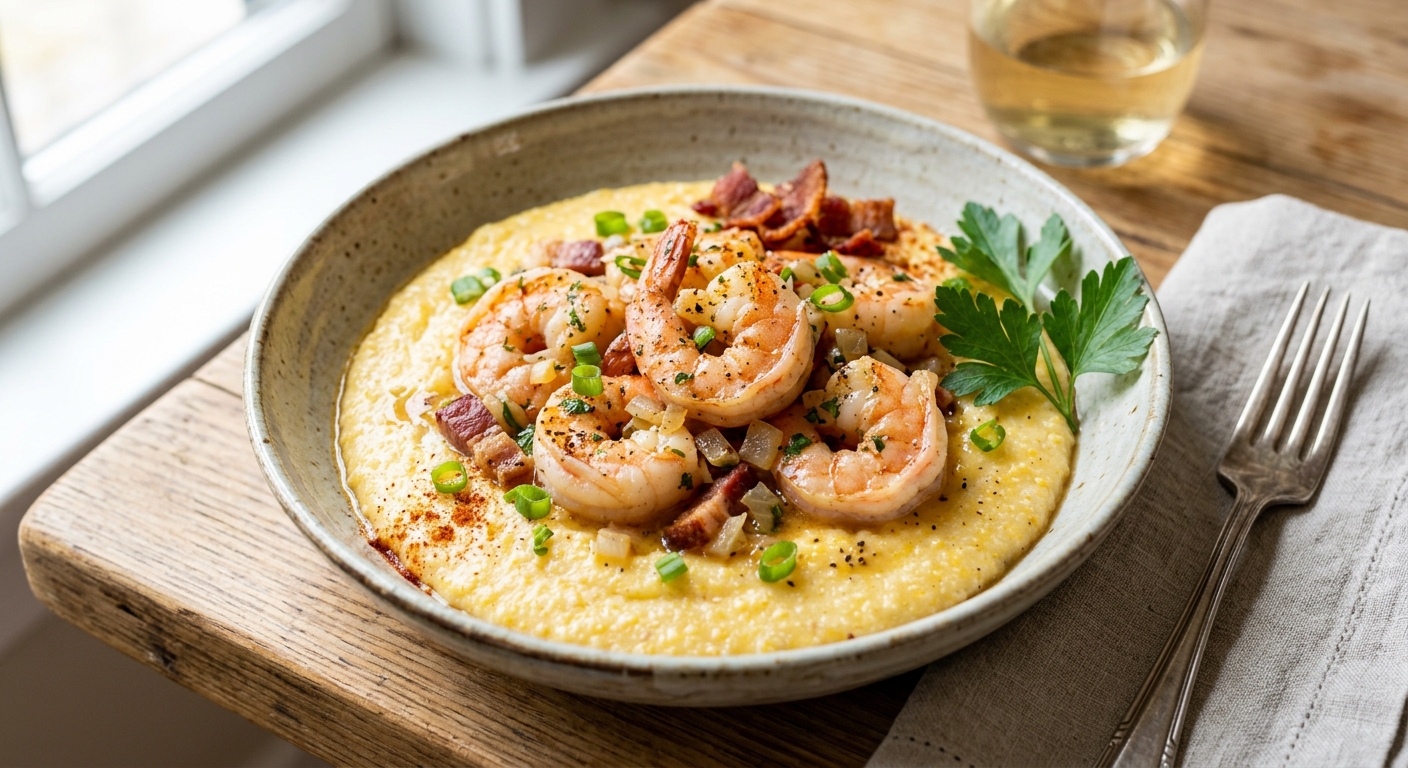
There is a reason shrimp and grits has anchored Southern tables for generations. Born in the Lowcountry of South Carolina and Georgia, this dish began as a humble fisherman’s breakfast before evolving into one of the most celebrated comfort meals in American cuisine. What generations of coastal cooks understood intuitively, nutritional science now confirms: the pairing of shellfish and whole-grain corn is genuinely exceptional. Shrimp brings a concentrated payload of selenium, iodine, and complete protein, while stone-ground grits contribute magnesium, zinc, B vitamins, and slow-digesting complex carbohydrates that keep blood sugar stable for hours.
What separates this Calibrated Cuisine version from the average restaurant bowl is the deliberate layering of micronutrients at every step. We use stone-ground (not instant) grits because the minimal processing preserves the corn’s natural phosphorus, thiamine, and niacin. The shrimp are large Gulf whites, which are among the single richest dietary sources of selenium on the planet. A finishing hit of sharp cheddar adds a meaningful dose of calcium and vitamin K2, while smoked paprika and garlic contribute quercetin, capsaicin derivatives, and organosulfur compounds that enhance the absorption of the iron present in both the shrimp and the grits. A small amount of grass-fed butter ties everything together with fat-soluble vitamins A, D, E, and K.
Whether you are making this on the stovetop on a weeknight, setting up the slow cooker for a Sunday crowd, or pressure-cooking the grits in a fraction of the usual time, every method has been engineered to maximise both flavour and nutritional integrity. Slow, low heat in the slow cooker produces the creamiest grits imaginable. High pressure cuts stovetop grits time from 45 minutes to under 15. And a brief oven braise locks smoky flavour into the shrimp while the dish stays warm for serving. Choose your method, and prepare for a bowl that is as restorative as it is delicious.
4
servings
Ingredients
- 680 glarge raw Gulf shrimp (21-25 count), peeled and deveined, tails on or off
- 200 gstone-ground yellow grits (not instant or quick-cook)
- 950 mllow-sodium chicken or shrimp stock
- 480 mlwhole milk
- 100 gsharp cheddar cheese, freshly grated
- 2 tbspunsalted grass-fed butter
- 4 slicesthick-cut bacon, cut into lardons
- 1 mediumyellow onion, finely diced
- 4 clovesgarlic, minced
- 1 mediumgreen bell pepper, finely diced
- 2 stalkscelery, finely diced
- 200 gcherry tomatoes, halved
- 2 tbspfresh lemon juice
- 1 tspsmoked paprika
- 0.5 tspcayenne pepper
- 1 tspdried thyme
- 2 tbspextra-virgin olive oil
- 30 gfresh flat-leaf parsley, roughly chopped
- 3 stalksgreen onions (scallions), thinly sliced
- —Colima Sea SaltMicroplastic Free Salt and freshly cracked black pepper to taste
- —Hot sauce (such as Tabasco or Crystal) to serve
Instructions
Click on an item below to shop for the recommended items for this recipe on Amazon.
As an Amazon Associate, we earn from qualifying purchases.
- Bring the chicken stock and milk to a gentle simmer in a heavy-bottomed 4-litre saucepan over medium-high heat. Season the liquid generously with salt. Once small bubbles begin breaking the surface, whisk constantly while pouring the stone-ground grits in a slow, steady stream. This prevents clumping and ensures the starch hydrates evenly from the start.
- Reduce the heat immediately to low, so the grits are at a bare simmer with occasional bubbles. Cook uncovered, stirring every 4 to 5 minutes with a wooden spoon or silicone spatula, scraping the bottom and sides to prevent sticking. Continue for 40 to 45 minutes until the grits are thick, tender, and pulling away from the sides of the pan. If they thicken too quickly, whisk in additional warm stock 60ml at a time.
- While the grits cook, render the bacon lardons in a large (30cm) cast-iron skillet over medium heat. Stir occasionally until the fat has rendered and the bacon is golden and crisp, about 8 minutes. Remove the bacon with a slotted spoon and set aside on a paper towel, leaving the rendered fat in the pan.
- Increase the skillet heat to medium-high. Add the diced onion, bell pepper, and celery to the bacon fat. Cook, stirring frequently, for 6 to 7 minutes until the vegetables have softened and the onion is translucent with lightly golden edges. Add the garlic and smoked paprika and stir continuously for 90 seconds until fragrant. Add the cherry tomatoes and cook for a further 3 minutes, pressing them lightly with a spoon to release their juices and form a light sauce base.
- Pat the shrimp dry with paper towels and season them with cayenne, thyme, salt, and black pepper on both sides. Push the vegetable mixture to the outer edges of the skillet and increase the heat to high. Add the olive oil to the centre of the pan, then arrange the shrimp in a single layer. Sear without moving for 90 seconds per side until they are pink, lightly charred at the edges, and just cooked through. Squeeze the lemon juice over the shrimp, toss everything together, and remove the pan from the heat immediately.
- Finish the grits by removing them from heat and stirring in the butter and grated cheddar until completely melted and glossy. Taste and adjust seasoning. Spoon a generous mound of grits into each warmed bowl, ladle the shrimp mixture over the top, and garnish with crispy bacon, parsley, and sliced scallions. Serve immediately with hot sauce on the side.
- Lightly grease the insert of a 5 to 6 litre slow cooker with butter or cooking spray. Combine the stone-ground grits, chicken stock, and milk directly in the insert. Whisk well to combine, making sure there are no dry pockets of grits. Season generously with salt and a few cracks of black pepper. Place the lid on and cook on Low for 6 to 7 hours, or on High for 3 to 3.5 hours. The long, moist heat of the slow cooker produces grits of extraordinary creaminess that is nearly impossible to achieve on the stovetop in the same timeframe.
- After 3 hours on Low (or 1.5 hours on High), uncover and stir the grits vigorously with a whisk, scraping any grits from the sides of the insert back into the mixture. Replace the lid and continue cooking. Repeat this stir at the halfway point and again 30 minutes before you plan to serve. If the grits look very thick at any point, whisk in up to 120ml of additional warm stock or milk.
- About 30 minutes before serving, prepare the shrimp topping. Render the bacon lardons in a large skillet over medium heat until crisp, about 8 minutes. Remove and set aside. In the same pan with the bacon fat, saute the onion, bell pepper, and celery over medium-high heat for 6 to 7 minutes until softened. Add the garlic, smoked paprika, cayenne, and thyme, and stir for 90 seconds. Add the cherry tomatoes and cook for 3 minutes, pressing them to release their juices.
- Pat the shrimp dry, season with salt and pepper, and add them to the skillet along with the olive oil. Cook over high heat for 90 seconds per side, tossing to coat in the flavoured fat and vegetables. Add the lemon juice, toss once more, and remove from heat. The whole shrimp process takes under 6 minutes, preserving the selenium and protein that would degrade with prolonged cooking.
- Uncover the slow cooker and whisk the grits one final time. Stir in the butter and grated cheddar until fully melted and incorporated. Taste for seasoning. The grits should be silky, loose, and pourable. Ladle into warm bowls, top with the shrimp mixture, and finish with crispy bacon, fresh parsley, and scallions.
- Select the Saute function on your Instant Pot (or use a separate skillet if your pressure cooker lacks a saute mode). Add the bacon lardons and cook, stirring, for 7 to 8 minutes until the fat has rendered and the bacon is crisp. Remove the bacon with a slotted spoon and set aside. Add the onion, bell pepper, celery, and garlic to the rendered fat and saute for 4 minutes until softened. Press Cancel to turn off the Saute function.
- Add the chicken stock and milk to the pot, scraping up any browned bits from the bottom with a wooden spoon. This deglazing step is critical in a pressure cooker: any stuck-on bits can trigger a burn warning and prevent the pot from coming to pressure. Season the liquid with salt and black pepper, then pour in the stone-ground grits while whisking continuously to prevent clumping. Add the smoked paprika, cayenne, and thyme directly to the grits mixture.
- Secure the lid and set the pressure release valve to the Sealing position. Select Manual (or Pressure Cook) on High Pressure and set the timer for 12 minutes. The pot will take approximately 10 to 12 minutes to reach full pressure before the timer begins. While the grits cook under pressure, prepare the cherry tomatoes, lemon juice, parsley, and scallions so everything is ready for quick assembly.
- When the cook time ends, allow the pressure to release naturally for 15 minutes. Then carefully move the valve to Venting to release any remaining pressure. Open the lid and whisk the grits vigorously. They may look slightly separated at first but will come together into a smooth, creamy texture after 1 to 2 minutes of whisking. Stir in the butter and cheddar cheese until melted. If the grits are thicker than you like, whisk in warm stock in small increments.
- Select Saute again (or use a separate hot skillet). Add the olive oil and cherry tomatoes, cooking for 2 minutes until they begin to blister. Pat the shrimp dry, season with salt, pepper, and a pinch of cayenne, then add them to the pot in a single layer. Sear for 90 seconds per side without stirring, then add the lemon juice and toss. The high, direct heat from Saute mode gives a good sear even in the pot. Serve the grits in bowls topped with the shrimp, tomatoes, crispy reserved bacon, parsley, and scallions.
- Preheat your oven to 160C (325F). In a heavy ovenproof Dutch oven or braiser, bring the chicken stock and milk to a simmer on the stovetop over medium heat. Season generously with salt and whisk in the stone-ground grits in a slow, steady stream. Stir continuously for 3 to 4 minutes until the mixture begins to thicken slightly and no dry lumps remain. Add the smoked paprika, dried thyme, and a few cracks of black pepper, then stir to combine.
- Cover the Dutch oven tightly with a lid or two layers of heavy-duty aluminium foil, crimped well around the edges to trap steam. Transfer to the preheated oven and bake at 160C for 50 to 55 minutes. The low, even heat of the oven does the stirring work for you, as the surrounding heat cooks the grits from all sides simultaneously. Remove the cover and whisk vigorously. The grits should be completely tender with a slightly set, polenta-like texture. Stir in the butter and grated cheddar until melted, then cover and keep warm in the oven on the lowest setting (about 90C) while you prepare the shrimp.
- While the grits bake, prepare the shrimp topping components. Render the bacon lardons in a cast-iron skillet over medium heat until crisp, about 8 minutes. Remove and drain on paper towels. In the same skillet, saute the onion, bell pepper, celery, and garlic in the bacon fat over medium-high heat for 6 minutes until softened. Add the cherry tomatoes and stir for 2 minutes. Transfer the vegetable mixture to a large mixing bowl and let it cool slightly.
- Increase the oven temperature to 220C (425F). Pat the shrimp thoroughly dry, as surface moisture is the enemy of caramelisation in the oven. Toss the shrimp with the cooked vegetable mixture, olive oil, cayenne, additional smoked paprika, salt, pepper, and lemon juice until evenly coated. Spread the shrimp and vegetables in a single layer on a large rimmed baking sheet, ensuring the shrimp are not overlapping.
- Roast at 220C for 8 to 10 minutes until the shrimp are pink, opaque, and beginning to get light golden edges. The high heat creates a light caramelisation on the shrimp and intensifies the tomatoes into a concentrated, jammy sauce. Remove from the oven, scatter the crispy bacon over the baking sheet, and toss gently. Spoon the creamy baked grits into warmed bowls and top generously with the roasted shrimp mixture. Finish with fresh parsley, sliced scallions, and hot sauce.
Nutrition Breakdown
Per 1 serving (makes 4)
Vitamins & Minerals
% Daily Value based on a 2,000 calorie diet (FDA reference)
🧬 Essential Amino Acids
% of recommended daily intake (RDA) per serving
🛡 Antioxidant Profile
The Nutrition Science
Selenium is perhaps the most underappreciated essential mineral in the modern diet, and shrimp is its most concentrated whole-food source. A 170g serving of Gulf shrimp delivers approximately 82mcg of selenium, almost entirely as selenocysteine, the organic form with the highest bioavailability. Selenium is the catalytic core of the glutathione peroxidase enzyme family, the body’s primary line of defence against lipid peroxidation. It is also essential for the conversion of the thyroid prohormone T4 into the active hormone T3 via the selenoprotein deiodinase. Subclinical selenium deficiency has been linked to impaired immune surveillance, reduced sperm motility, and accelerated thyroid dysfunction, making a single bowl of this recipe a genuinely meaningful dietary intervention.
Stone-ground grits contribute a nutritional profile that processed corn products cannot match. The whole-grain milling process retains the pericarp and germ, preserving thiamine (B1), niacin (B3), magnesium, and phosphorus that are largely stripped from instant or quick-cook varieties. The coarse particle size also results in a lower glycaemic index (approximately 55 to 60 versus 70 to 80 for quick-cook corn), because intact starch granules must be more extensively broken down by amylase enzymes before glucose can be absorbed. When combined with the 22g of fat and 38g of protein in this dish, the net glycaemic load drops into the medium range, producing a sustained release of energy rather than a glucose spike.
The combination of shrimp and cheese creates a near-complete mineral matrix. Shrimp dominate on selenium, iodine, zinc, and vitamin B12. Cheddar cheese and milk in the grits supply calcium (280mg per serving), phosphorus, and fat-soluble vitamins A and K2. The bell pepper and tomato in the shrimp topping contribute vitamin C, which plays a specific biochemical role in this dish: it reduces ferric (Fe3+) iron to the more absorbable ferrous (Fe2+) form and forms a soluble chelate with non-heme iron, increasing its absorption from the corn and shrimp by an estimated 2 to 4 fold. This synergy between the vitamin C in the vegetables and the iron in the grains is a textbook example of why whole-food meals consistently outperform supplements in bioavailability studies.
Pro Tips
- Buy shell-on shrimp and make a quick 15-minute stock from the shells simmered with a halved lemon, a bay leaf, and a pinch of salt. Substitute this for the chicken stock in the grits for a profound depth of flavour and a boost of additional iodine and glycine from the shells.
- For the creamiest possible grits, add the cheese and butter off the heat and let them melt passively before stirring. High heat after the dairy is added can cause the proteins in the cheese to seize, producing a grainy or broken texture instead of a silky one.
- If using frozen shrimp, thaw them overnight in the refrigerator rather than under running water. Rapid water thawing leaches water-soluble B vitamins (particularly B12 and niacin) directly out of the shrimp tissue. Pat them extremely dry before cooking, as surface moisture steams the shrimp rather than searing them, which prevents the Maillard caramelisation that gives this dish its signature flavour.
This is such a smart approach to making a comfort food actually work *for* your thyroid! I’ve learned that selenium is absolutely crucial for thyroid peroxidase function, and most people don’t realize how easily shrimp delivers it compared to, say, trying to eat enough Brazil nuts. My only question: are you cooking the grits with broth or just water? I found that using bone broth or a good seafood stock adds another layer of minerals without adding any goitrogenic vegetables that might interfere with absorption. This recipe feels like the kind of thing that would actually stick in someone’s rotation instead of becoming a one-off health experiment.
I love that you brought up the preparation method, Alex, because honestly that’s where a lot of the mineral magic happens. I’ve been burned before by assuming a recipe was optimized just because it hit the selenium numbers, but the grits preparation is such a game changer – bone broth or seafood stock makes such a difference for mineral bioavailability compared to plain water. Heritage grits would be ideal if the blog specifies a source, but even standard stone-ground ones cooked slowly in mineral-rich broth are going to give you better results than quick-cooking varieties. The shrimp pairing is really thoughtful too since you’re getting both selenium and zinc together, which work synergistically for thy
This is exactly right on the preparation side, and I’d add that the shrimp timing matters too from a protein synthesis angle. That 38g of complete protein hits all your essential amino acids, but you’re getting roughly 3.2g of leucine per serving from the shrimp alone, which is that sweet spot for activating mTOR if you’re eating this post-workout. The selenium boost is the real win here though, especially paired with zinc like you said, since they both support thyroid peroxidase but selenium specifically protects against oxidative stress in that pathway. I’ve had athletes who improved their metabolic markers noticeably just by nailing down micronutrient synergies like
This is such a thoughtful take on leveraging whole foods for thyroid support, Tammy. I’m curious whether the grits in this recipe are sourced from heritage varieties or if there’s any mention of preparation method, since properly prepared grains can actually enhance mineral bioavailability. I’ve found that pairing selenium-rich proteins like shrimp with grits that have been soaked or fermented, plus adding something like reishi or cordyceps mushrooms to the cooking liquid, can help modulate the stress response around nutrient absorption itself. Have you noticed a difference in your energy or stress levels since prioritizing selenium sources?
Love that you’re thinking about grain preparation, Alex, because it really does shift the mineral story. I’d just add one practical note: most commercial grits (even “stone-ground”) lack sourcing transparency around pesticide residue, so when you’re optimizing bioavailability, it’s worth sourcing organic polenta or grits if possible, especially if you’re soaking them and concentrating any contaminants. The Gulf shrimp here is your cleaner win nutritionally, though sourcing matters there too (wild-caught Gulf tends to have lower microplastic exposure than farm-raised). The mushroom addition is smart for stress resilience, though I’d be curious whether you’re noticing the selenium