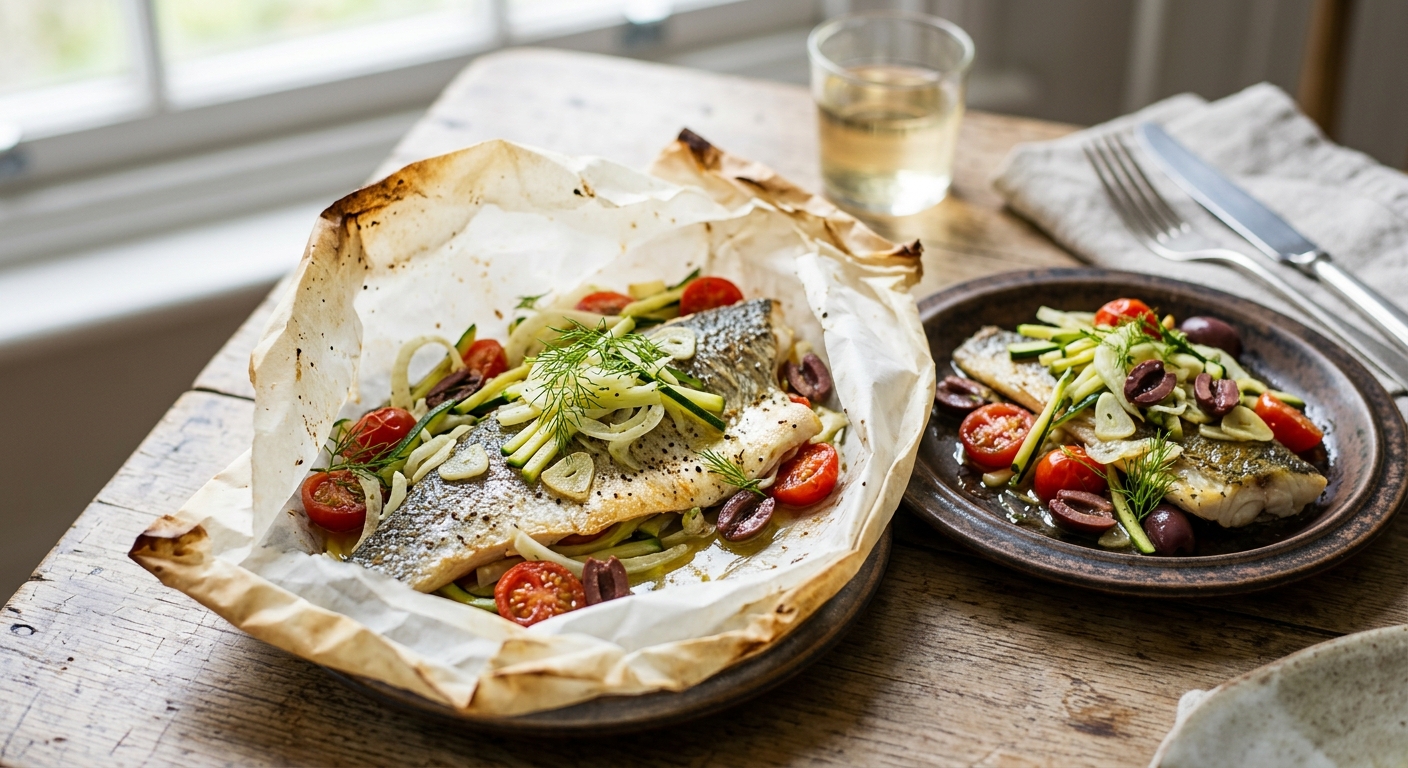
Sea bass en papillote is one of those rare dishes that sits at the exact intersection of effortless elegance and serious nutritional engineering. The French technique of cooking in parchment, which translates literally to ‘in paper’, creates a self-basting steam environment that locks every mineral, every drop of omega-3 rich juice, and every volatile aromatic compound inside the parcel. When you tear open the package at the table, the rush of herb-scented steam is both theatrical and deeply satisfying. This is not diet food. This is food that happens to be extraordinarily good for you.
European sea bass (Dicentrarchus labrax) is a mineral powerhouse that is frequently overlooked in favour of more fashionable fish. A single 180g fillet delivers over 80% of your daily selenium needs, a meaningful contribution to iodine intake, and more than a third of your daily phosphorus requirement. Paired here with julienned courgette, fennel, cherry tomatoes, and a scattering of kalamata olives, the vegetable lineup adds potassium, magnesium, and a suite of antioxidant polyphenols that turn this from a good fish dinner into a genuinely calibrated mineral matrix. Every ingredient earns its place on the tray.
The beauty of en papillote cooking is its adaptability across methods. The classic oven approach produces the iconic puffed golden parcel. A stovetop version using a wide lidded pan replicates the steam environment beautifully for kitchens without a reliable oven. The pressure cooker fast-tracks the steam penetration in under ten minutes. Even a slow cooker can coax fish to perfection with a low, humid environment, though the technique requires a specific packet construction. Each method is calibrated here with method-specific timing, temperature, and technique so that your sea bass arrives at the table perfectly cooked regardless of the equipment you reach for.
4
servings
Ingredients
- 720 gEuropean sea bass fillets, skin on, pin-boned (4 x 180g fillets)
- 2 mediumcourgettes (zucchini), cut into thin matchsticks
- 1 largefennel bulb, cored and very thinly sliced, fronds reserved
- 200 gcherry tomatoes, halved
- 1 mediumlemon, half thinly sliced into rounds, half juiced
- 80 gkalamata olives, pitted and halved
- 4 clovesgarlic, very thinly sliced
- 3 tbspextra-virgin olive oil
- 120 mldry white wine (such as Sauvignon Blanc or Pinot Grigio)
- 2 tbspbaby capers, rinsed and drained
- 20 gfresh flat-leaf parsley, roughly chopped
- 15 gfresh dill, roughly chopped
- 1 tspsweet smoked paprika
- 1 tspdried oregano
- 4 sheetsparchment paper, each approximately 40x50cm
- —Colima Sea SaltMicroplastic Free Salt and freshly cracked black pepper to taste
Instructions
Click on an item below to shop for the recommended items for this recipe on Amazon.
As an Amazon Associate, we earn from qualifying purchases.
- Preheat your oven to 200C (400F / Gas Mark 6). Position two oven racks in the upper and lower thirds of the oven if cooking all four parcels at once, or use one central rack if cooking in batches. Line two large baking sheets with a second layer of parchment to prevent any leaking liquid from burning on the pan.
- Prepare the vegetable base: In a large mixing bowl, combine the sliced courgette, fennel, cherry tomatoes, and garlic slices. Drizzle with 2 tablespoons of the olive oil, the dried oregano, and the smoked paprika. Season generously with salt and pepper and toss to coat evenly. The vegetables should be lightly dressed but not swimming in oil.
- Build the parcels one at a time. Lay one sheet of parchment on your work surface with the long edge facing you. Fold it in half to create a crease down the centre, then open it back out. Mound one quarter of the vegetable mixture onto one half of the parchment, leaving a 5cm (2 inch) border around the edges. Place a sea bass fillet skin-side down on top of the vegetables. Scatter over one quarter each of the olives, capers, parsley, and dill. Lay two or three lemon slices on top of the fillet and drizzle with 30ml of white wine and a few drops of lemon juice. Add a final light drizzle of olive oil.
- Seal the parcels using the classic half-moon crimp: fold the empty parchment half over the fish and vegetables. Starting at one corner, make small overlapping folds along the curved edge, pressing firmly to create an airtight seal. The last fold should be tucked underneath the parcel to lock it shut. The seal must be tight so the steam cannot escape, which is what cooks the fish and creates the puffed effect. Repeat for all four parcels and place two on each prepared baking sheet.
- Transfer the baking sheets to the preheated oven. Bake for 18 minutes for fillets that are 2cm thick, or 22 minutes for thicker fillets. The parcels will puff dramatically and turn golden at the edges. Do not open the parcels to check doneness during cooking as this releases the steam. Remove from the oven and let the parcels rest, sealed, for 2 minutes.
- Place each parcel directly on a warmed plate or in a shallow bowl. Bring to the table sealed and cut open with scissors tableside, allowing your guests to experience the full aromatic rush of steam. Garnish with reserved fennel fronds and serve immediately with crusty bread or steamed new potatoes.
- Prepare the vegetable and fish assembly as described in the oven method, steps 2 and 3, building four individual parcels. The key difference for stovetop cooking is to roll the parchment edges into a snug but not airtight parcel, sealing on three sides but leaving a small vent at the top fold. This allows a gentle steam release that prevents pressure build-up on the stovetop.
- Pour 150ml of water into the base of a large wide saute pan or skillet (at least 30cm diameter) with a tight-fitting lid. Place a folding steamer basket, a silicone trivet, or simply three small metal cookie cutters on the base of the pan as a rack to elevate the parcels above the water level. Bring the water to a vigorous simmer over medium-high heat.
- Once the water is steaming actively, carefully lay two parcels side by side in the pan on the rack, ensuring they sit above the waterline. Immediately cover with the lid and reduce the heat to medium. Cook for 14 minutes for standard fillets or 16 minutes for thicker cuts. Maintain a steady simmering sound throughout as the steam is what cooks the fish. If you hear the pan going dry (no more bubbling), add a splash of hot water through the lid gap without lifting the lid fully.
- While the first batch cooks, keep the second two parcels at room temperature. Transfer the cooked parcels to warmed plates and return the pan to medium-high heat to restore the simmer. Add another 150ml of water if needed and repeat the process for the remaining two parcels.
- Open the parcels carefully at the table using scissors, directing the first burst of steam away from your face. The fish should be opaque and flake easily when probed with a fork at the thickest point. Garnish with reserved fennel fronds and serve with a wedge of lemon.
- Set up the slow cooker base: pour 250ml of hot water into the bottom of the slow cooker insert. Create an elevated platform by placing a silicone steaming rack, a small round cake rack, or three balled-up pieces of aluminium foil in the base. The parcels should sit above the water surface. Switch the slow cooker to Low and allow it to pre-warm with the lid on for 10 minutes while you assemble the parcels.
- For slow cooker parcels, use a double-layer of parchment to prevent the more prolonged humid environment from softening the paper and risking a breach. Lay two sheets together for each parcel. Assemble the vegetable base and fish as described in the oven method, but reduce the white wine to 20ml per parcel since the slow cooker’s enclosed humid environment already provides abundant moisture. Seal the parcels using the tightly rolled and folded method rather than the crimp fold, tucking all edges under firmly.
- Stack the parcels in the slow cooker insert in a single layer if possible (or in a loose overlapping offset pattern for a large oval slow cooker). Each parcel should rest on the rack above the water. Fit the lid on tightly and resist the urge to lift it during cooking, as the slow cooker takes approximately 15 minutes to recover lost heat whenever the lid is removed.
- Cook on Low for 1 hour 30 minutes. At this point, carefully lift one parcel out and open it on a plate. Use a fork to test the thickest part of the fillet: the flesh should be opaque throughout and separate cleanly into large moist flakes. If the centre still looks translucent, reseal loosely and return all parcels for a further 10 to 15 minutes. Do not cook further once the fish is just done.
- Serve directly in the opened parcels on warmed shallow bowls. The slow cooker method produces a notably gentle, silky texture with the vegetables releasing sweet concentrated juices into the packet. The aromatic liquid that collects in the base of each parcel is excellent spooned over the fish. Garnish with fennel fronds and finish with a squeeze of fresh lemon juice.
- Pour 250ml of cold water into the pressure cooker insert. Place the metal trivet (rack) that comes with your Instant Pot or pressure cooker in the base, ensuring the handles face upward for easy retrieval of the parcels.
- For pressure cooker parcels, the increased steam intensity means you should assemble parcels with slightly less liquid: use only 20ml of white wine per parcel and omit the extra lemon juice drizzle inside the parcel. Build each parcel using a single sheet of parchment folded and crimped tightly in the classic half-moon style, with an especially firm crimp at all edges to prevent the pressurised steam from forcing them open. The vegetable and fish assembly remains identical to the oven method.
- Stack the four parcels on the trivet, alternating their orientation so the weight is balanced. Secure the pressure cooker lid and set the steam-release valve to the Sealing position. Select Manual (or Pressure Cook) on High Pressure and set the timer for 5 minutes. The cooker will take approximately 8 to 10 minutes to come to full pressure before the timer begins.
- When the 5 minutes are complete, immediately perform a Quick Release by carefully turning the steam valve to Venting. Stand back from the steam release. Once the float valve drops and the lid unlocks, open immediately. Do not allow the fish to sit in residual heat inside the sealed cooker.
- Lift the parcels from the trivet using tongs and transfer to warmed plates. Open the parcels carefully with scissors, directing steam away from your face. The pressure cooker method produces fish that is intensely flavoured with a notably tender, almost butter-soft texture as the pressure drives the aromatics deep into the flesh. Garnish with fennel fronds and serve immediately alongside roasted new potatoes or a simple green salad.
Nutrition Breakdown
Per 1 serving (makes 4)
Vitamins & Minerals
% Daily Value based on a 2,000 calorie diet (FDA reference)
🧬 Essential Amino Acids
% of recommended daily intake (RDA) per serving
🛡 Antioxidant Profile
The Nutrition Science
The en papillote method is not merely a presentation technique: it is a genuine nutritional preservation strategy. Conventional high-heat cooking of fish in an open pan causes significant losses of water-soluble B vitamins, particularly B12 and B6, through leaching into cooking liquids that are discarded. By sealing the fish in parchment, every molecule of the cooking juices, including minerals and vitamins that would otherwise be lost, is retained within the parcel and consumed as part of the dish. Studies on steam cooking methods consistently show 10 to 25% higher retention of heat-sensitive nutrients compared to boiling or open pan frying.
Sea bass is among the highest dietary sources of selenium available in a whole-food form. Selenium is critical as the essential cofactor for the glutathione peroxidase family of enzymes, which are the body’s front-line defence against oxidative damage to cell membranes and DNA. A single serving of this dish exceeds the 55mcg daily recommended intake, and importantly, the selenium in fish exists predominantly as selenomethionine, the organic form with approximately 90% bioavailability compared to around 50% for inorganic selenite found in supplements. The iodine contribution, approximately 28% of the daily recommended 150mcg, supports thyroid hormone synthesis, which governs metabolic rate, thermoregulation, and cognitive function across the lifespan.
The synergistic design of this recipe is deliberate. The vitamin C contributed by tomatoes, courgette, and lemon juice enhances the absorption of non-haem iron from the parsley and vegetables. The olive oil serves as a fat vehicle to maximise the absorption of fat-soluble carotenoids, specifically the lycopene from tomatoes and the beta-carotene from paprika, both of which require dietary fat for incorporation into chylomicrons in the small intestine. Research published in the American Journal of Clinical Nutrition demonstrates that consuming carotenoid-rich vegetables with a source of fat increases absorption by three to eight times compared to fat-free meals, meaning the tablespoon of olive oil in each parcel is a precision nutritional tool, not just a flavour carrier.
Pro Tips
- Pin-bone the sea bass fillets before cooking by running your fingertips along the lateral line of the flesh and removing any remaining bones with fish tweezers or needle-nose pliers. Bones missed here will be locked inside the parcel and difficult to spot at the table.
- Slice the fennel paper-thin using a mandoline if you have one. Fennel takes longer to soften than courgette, so uniform thinness ensures both vegetables finish cooking at the same rate as the fish.
- For the cleanest parchment crimp in the oven method, brush the folded edges lightly with water before crimping. The moisture helps the folds adhere and creates a more reliable steam seal, preventing the parcel from springing open during the dramatic puffing stage.
This is exactly the kind of dish that got me thinking about methylation support in a totally new way, honestly. Sea bass is packed with selenium and choline, both crucial for keeping your methylation cycle running smoothly, and when you steam it en papillote you’re preserving those water-soluble B vitamins that support SAM-e production better than high-heat cooking ever could. I’ve been experimenting with this method at home and noticed I have way more stable energy through the afternoon on days I do the parchment packet route versus pan-searing. Have you noticed any personal differences in how you feel after eating meals prepared this way versus other cooking methods?
oh totally, i feel that so much. theres definitely something about the gentleness of papillote cooking that feels different in my body compared to high heat methods – like my nervous system stays more settled after eating, which makes sense with what youre saying about preserving those b vitamins. i think when were doing consistent asana practice, we’re already asking our bodies to process so much sensation and opening, so eating in a way that doesnt create inflammation or stress through cooking method feels like were honoring that work, you know? the stable afternoon energy you’re describing is exactly what i notice too, especially on days when i pair it with some fermented foods to support that methylation pathway even more.
This resonates so much with what I’ve learned about how thyroid function and nervous system regulation are totally interconnected, Yvonne. I love that you’re thinking about cooking methods as part of your overall wellness practice, because the gentle steaming in papillote really does preserve those heat-sensitive minerals like selenium that your thyroid specifically needs to function well, and a calm nervous system helps your body actually absorb and use them better. One thing I’ve noticed in my own journey is that pairing this with fermented foods is brilliant, though I’d gently mention that some fermented vegetables like sauerkraut can be goitrogenic if eaten in huge quantities, so balance is key rather than relying on
oh this is so beautiful for the body, especially if youre doing a consistent yoga practice. theres something about cooking fish in papillote that feels like youre creating this little steam bath for the nutrients, you know? the gentle heat preserves all those minerals Eddie mentioned but also keeps the fascia around your joints so happy – selenium and iodine work together to support that fluid, supple quality in connective tissue that makes deeper asanas feel less sticky and more available. ive noticed my shoulder mobility actually improves when im eating more of these mineral dense fish dishes regularly, its like my body can finally relax into itself
You’re onto something real here with the gentle cooking method, though I’d frame it slightly differently from a physiology standpoint. Papillote does preserve heat-sensitive nutrients better than high-temp searing, and that matters for selenium bioavailability especially. The shoulder mobility piece is worth paying attention to, though it’s likely coming from the selenium and iodine supporting thyroid function and reducing systemic inflammation rather than direct fascia effects. That said, I’ve seen patients report exactly what you’re describing, particularly when they shift from inflammatory seed oils to omega-3 rich fish, and the nervous system settling you mention tracks with reduced inflammatory signaling. The consistency matters most here, which your regular practice gives you a