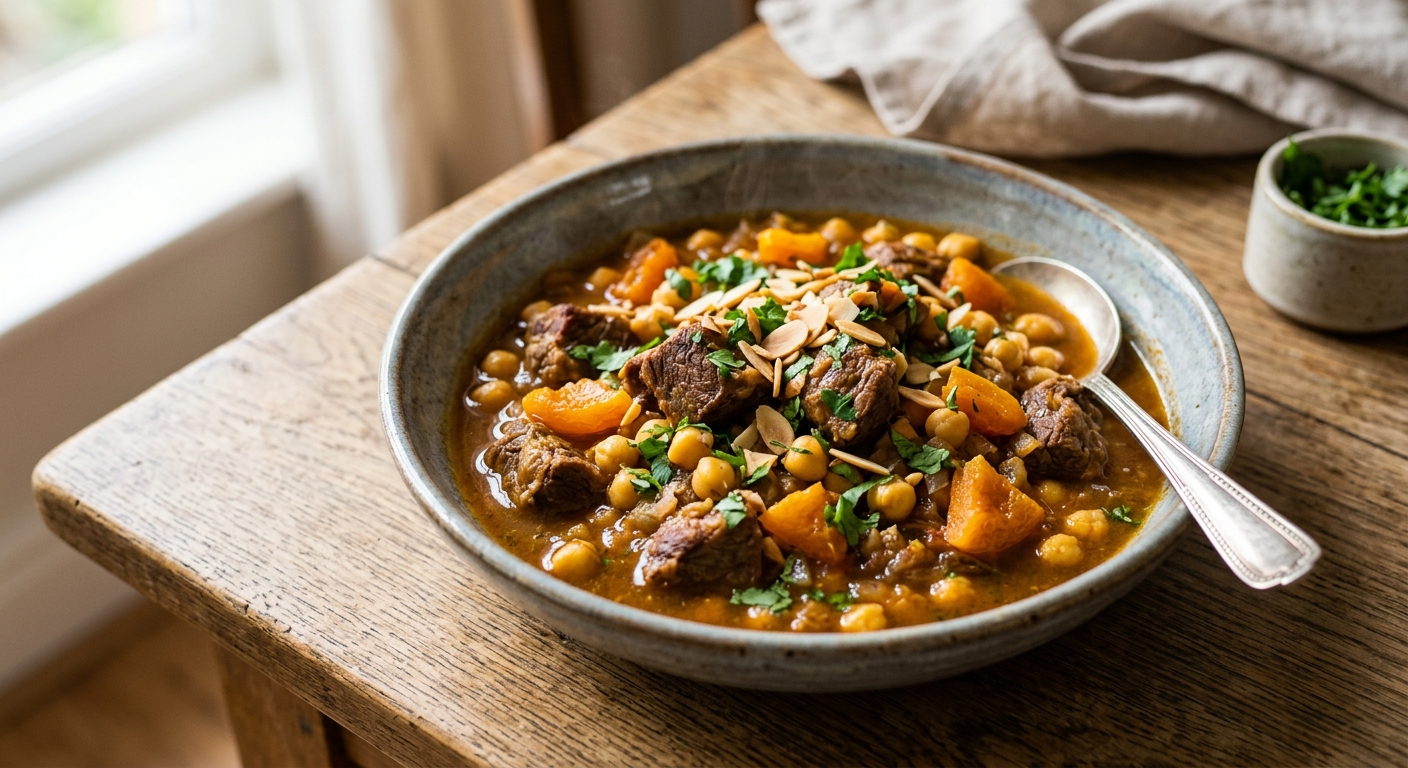
There are dishes that feed you, and then there are dishes that fortify you. This Lamb and Chickpea Stew with Apricots sits firmly in the second category. Drawing on the culinary traditions of North Africa, where the pairing of slow-braised meat with legumes and dried fruit is centuries old, this recipe has been carefully engineered to maximise the bioavailability of its iron content while delivering a flavour profile so layered and complex you will want to make it every week. Warm spices like cumin, coriander, cinnamon, and smoked paprika bloom in rendered lamb fat, creating a foundation that carries the entire dish.
The nutritional architecture here is intentional. Lamb shoulder is one of the richest dietary sources of haem iron, the form of iron that the human body absorbs at rates of 15 to 35 percent, far exceeding the 2 to 10 percent absorption typical of plant-based non-haem iron. Chickpeas contribute additional non-haem iron alongside substantial plant protein and resistant starch. The dried apricots are not merely a flavour contrast, they are a functional ingredient: their vitamin C content enhances non-haem iron absorption by reducing ferric iron to the more absorbable ferrous form directly in the gut. Every element earns its place.
Whether you build this stew low and slow in a Dutch oven or let a pressure cooker deliver it in under an hour, the result is a bowl that genuinely moves the needle on your daily mineral intake. Served over couscous or with warm flatbread to soak up the saffron-tinged broth, this is weeknight nutrition that refuses to compromise on pleasure.
4
servings
Ingredients
- 700 gboneless lamb shoulder, trimmed and cut into 4cm cubes
- 400 gcanned chickpeas, drained and rinsed (one 400g tin)
- 150 gdried apricots, roughly chopped
- 1 largebrown onion, finely diced
- 4 clovesgarlic, minced
- 2 tbsptomato paste
- 400 gcanned diced tomatoes
- 500 mllow-sodium lamb or beef stock
- 2 tbspextra-virgin olive oil
- 1.5 tspground cumin
- 1.5 tspground coriander
- 1 tspsmoked paprika
- 0.5 tspground cinnamon
- 0.25 tspground turmeric
- 0.25 tspcayenne pepper
- 1 pinchsaffron threads, steeped in 2 tbsp warm water for 10 minutes
- 1 tbsphoney
- 1 tbspfresh lemon juice
- 30 gfresh flat-leaf parsley, roughly chopped, to serve
- 2 tbsptoasted flaked almonds, to serve
- —Colima Sea SaltMicroplastic Free Salt and freshly ground black pepper to taste
Instructions
Click on an item below to shop for the recommended items for this recipe on Amazon.
As an Amazon Associate, we earn from qualifying purchases.
- Pat the lamb cubes thoroughly dry with paper towels. Season generously on all sides with salt and black pepper. Drying the surface is critical: any moisture will cause the meat to steam rather than sear, robbing you of the Maillard reaction browning that builds the stew’s deep flavour base.
- Heat 1 tablespoon of olive oil in a large Dutch oven over high heat until shimmering and just beginning to smoke. Working in two batches to avoid crowding, sear the lamb for 3 to 4 minutes per side without moving it, until a deep mahogany crust forms on at least two sides. Transfer the browned pieces to a plate and set aside. Pour off any excess fat, leaving roughly 1 tablespoon of drippings in the pot.
- Reduce the heat to medium. Add the remaining tablespoon of olive oil along with the diced onion and a pinch of salt. Cook, stirring occasionally and scraping up the browned fond from the bottom of the pot, for 6 to 8 minutes until the onion is soft and golden at the edges. Add the minced garlic and cook for a further 90 seconds until fragrant.
- Add the cumin, coriander, smoked paprika, cinnamon, turmeric, and cayenne. Stir constantly for 60 seconds to toast the spices in the oil, coating the onion mixture. Add the tomato paste and stir vigorously for another 90 seconds until it darkens slightly and smells sweet rather than raw.
- Pour in the canned diced tomatoes and use your spoon to scrape up any remaining fond from the base of the pot. Return the seared lamb and any resting juices to the pot. Add the stock, saffron with its soaking liquid, chopped dried apricots, and honey. Stir to combine. The liquid should come roughly halfway up the meat.
- Bring the stew to a vigorous boil over high heat, then immediately reduce to the lowest possible simmer. Place the lid on slightly ajar to allow some steam to escape. Cook for 55 to 65 minutes, stirring every 20 minutes, until the lamb is tender enough to break apart with a spoon.
- Add the drained chickpeas and stir them through. Remove the lid entirely, increase heat to medium-low, and simmer uncovered for a further 15 to 20 minutes. This reduces and concentrates the broth into a glossy, clingy sauce. Taste and adjust seasoning. Stir in the lemon juice off the heat. Serve topped with chopped parsley and toasted almonds.
- The night before or the morning of cooking, bloom the spices to maximise flavour in the low-and-slow environment. Heat 1 tablespoon of olive oil in a skillet over medium-high heat. Pat the lamb dry, season with salt and pepper, and sear in two batches for 3 to 4 minutes per side until deeply browned. Transfer directly to the slow cooker insert.
- Without cleaning the skillet, reduce heat to medium and add the remaining olive oil. Saute the onion for 5 minutes until softened. Add the garlic, cumin, coriander, paprika, cinnamon, turmeric, and cayenne, stirring for 60 seconds. Add the tomato paste and cook for 90 seconds. Pour in a splash of the stock and scrape up all the browned bits from the pan. Pour this entire fragrant mixture over the lamb in the slow cooker.
- Add the canned tomatoes, remaining stock, saffron with its soaking liquid, chopped dried apricots, and honey to the slow cooker. Stir gently to distribute the ingredients around the lamb. Do NOT add the chickpeas yet. Season with salt and pepper. The liquid level will look lower than expected, which is correct since the slow cooker retains far more moisture than stovetop braising.
- Place the lid on the slow cooker and cook on Low for 7 to 8 hours or on High for 4 hours. Resist lifting the lid during cooking, as each peek adds 20 to 30 minutes to the effective cooking time. The stew is ready when the lamb falls apart easily when pressed with a fork.
- About 30 minutes before serving, add the drained chickpeas and stir them gently into the stew. Replace the lid and finish cooking on High for the remaining 30 minutes. This timing prevents the chickpeas from turning mushy over the full cook. If the broth looks thin, prop the lid slightly ajar for the final 30 minutes to allow some evaporation.
- Remove the insert from the base. Stir in the lemon juice. If the sauce is thinner than you prefer, use a slotted spoon to remove about a cup of broth and reduce it in a small saucepan over high heat for 5 minutes, then stir it back in. Taste and adjust seasoning. Serve directly from the insert, topped with chopped parsley and toasted almonds.
- Set your pressure cooker or Instant Pot to Saute mode on High. Add 1 tablespoon of olive oil and heat until shimmering. Pat the lamb dry, season with salt and pepper, and sear in two batches for 3 minutes per side until browned. Do not rush this step. Transfer the browned lamb to a bowl. Note: skip the second batch in smaller Instant Pots (6-quart) by searing only half the lamb if the pot becomes too crowded, as steam accumulation will prevent browning.
- Add the remaining olive oil to the pot without wiping it. Add the diced onion and saute for 4 minutes, scraping the browned fond from the bottom continuously. This is critical in a pressure cooker, as any stuck fond can trigger a burn warning during pressurisation. Add the garlic and stir for 60 seconds. Add all the dry spices and tomato paste together and stir for 90 seconds.
- Pour in the canned tomatoes and stock. Use a wooden spoon or silicone spatula to scrape the bottom of the pot until completely clean, confirming no fond remains stuck. Add the saffron liquid, dried apricots, honey, and the browned lamb with its resting juices. Stir to combine. Add the chickpeas at this stage, since the shorter cook time will not turn them mushy as it would in a slow cooker.
- Secure the lid, ensure the pressure valve is set to Sealing, and cancel the Saute mode. Select Pressure Cook on High for 25 minutes. The pot will take approximately 10 to 12 minutes to reach full pressure before the timer begins.
- Once the cook cycle completes, allow the pressure to release naturally for a minimum of 15 minutes. After 15 minutes, carefully switch the valve to Venting to release any remaining pressure. Open the lid away from you. The stew will look quite liquid at this point, which is expected.
- Set the Instant Pot back to Saute mode on High and simmer uncovered for 8 to 12 minutes, stirring frequently, until the sauce reduces to a glossy, coating consistency. The chickpeas will break down very slightly at the edges, naturally thickening the stew. Stir in the lemon juice, taste and adjust seasoning. Serve topped with chopped parsley and toasted almonds.
- Preheat your oven to 160C (325F) with a rack positioned in the lower-middle position. This lower rack placement ensures the bottom of the Dutch oven receives gentle heat from below, encouraging a slow, even braise rather than a rolling boil.
- On the stovetop over high heat, warm 1 tablespoon of olive oil in your Dutch oven until smoking. Pat the lamb dry, season generously with salt and pepper, and sear in two batches for 4 minutes per side until deeply browned. The oven braise benefits most from thorough searing because the moderate oven temperature will not create additional Maillard browning during cooking. Transfer the seared lamb to a plate.
- Reduce the stovetop heat to medium. Add the remaining olive oil and the onion, cooking for 6 minutes until golden. Add the garlic and cook 90 seconds. Add all the dry spices and stir for 60 seconds. Add the tomato paste and cook, stirring, for 2 minutes until it turns a deep brick red and smells caramelised. This longer paste cooking step matters more in oven braises where you have fewer opportunities to adjust flavour partway through.
- Deglaze with the canned tomatoes, scraping the pot completely clean. Return the lamb and resting juices to the pot. Add the stock, saffron liquid, dried apricots, and honey. Stir to combine. The liquid should come about two-thirds up the lamb pieces. Bring the pot to a vigorous boil on the stovetop, then immediately cover with the lid and transfer to the preheated oven.
- Braise in the oven for 1 hour 30 minutes undisturbed. After this time, remove the lid and stir the stew. Add the chickpeas and stir them through. Return the pot to the oven WITHOUT the lid for a further 25 to 30 minutes. The exposed surface will develop a lightly caramelised top layer and the sauce will thicken and concentrate beautifully, developing a slight sheen that the other methods do not replicate.
- Remove from the oven. The lamb should be completely tender and beginning to collapse. Allow the stew to rest in the pot for 10 minutes off the heat, a rest period that lets the proteins relax and the sauce settle to the perfect clingy consistency. Stir in the lemon juice, taste and correct seasoning, then serve topped with chopped parsley and toasted almonds.
Nutrition Breakdown
Per 1 serving (makes 4)
Vitamins & Minerals
% Daily Value based on a 2,000 calorie diet (FDA reference)
🧬 Essential Amino Acids
% of recommended daily intake (RDA) per serving
🛡 Antioxidant Profile
The Nutrition Science
Iron deficiency remains the most widespread nutritional deficiency globally, affecting an estimated 1.6 billion people. This stew is engineered to address that gap using a strategy called haem and non-haem iron synergy. Lamb shoulder contains approximately 2.7mg of haem iron per 100g, absorbed at 15 to 35 percent efficiency regardless of other dietary factors. The chickpeas and dried apricots contribute non-haem iron, which is absorbed at only 2 to 10 percent under normal conditions but can be dramatically upregulated. The presence of vitamin C from tomatoes and fresh lemon juice in the same meal chemically reduces ferric iron (Fe3+) to ferrous iron (Fe2+) at the intestinal brush border, a form that can pass directly through the enterocyte’s DMT-1 transporter. Studies show that just 25mg of vitamin C can increase non-haem iron absorption by 67 percent, and this dish provides approximately 18mg from food sources alone, with the parsley garnish adding a further clinically relevant boost.
The zinc content of this dish, at 62 percent of the Daily Value per serving, is nutritionally significant beyond its headline number. Zinc and iron compete for the same intestinal absorption transporter when consumed in supplement form, but when both minerals are delivered via whole food in a mixed meal, this competition is substantially reduced. Lamb is one of the most concentrated whole-food sources of bioavailable zinc, and the amino acids released during the long braising process, particularly cysteine and histidine, form soluble complexes with zinc that further enhance its uptake. The copper contributed by chickpeas (67% DV) is also relevant here: copper-dependent ceruloplasmin is required to oxidise ferrous iron back to ferric iron for incorporation into transferrin for blood transport, making copper a literal co-factor in the body’s ability to utilise the iron you consume.
From a protein quality perspective, combining lamb with chickpeas creates a complete essential amino acid profile with notable surpluses in lysine and threonine. Lysine is the limiting amino acid in most grain-based diets, making legume-rich dishes like this one a critical complement for those who eat couscous, rice, or flatbread as staples. The branched-chain amino acids (leucine, isoleucine, and valine) present at over 110 percent of RDA collectively stimulate mTOR-mediated muscle protein synthesis, meaning this stew actively supports lean mass preservation and repair, not just satiety.
Pro Tips
- Do not skip the step of drying the lamb with paper towels before searing. Surface moisture creates steam, which drops the pan temperature and produces grey, braised-looking meat instead of the deep mahogany crust that contributes enormous flavour to the finished stew.
- For maximum iron absorption, add an extra squeeze of lemon juice per bowl at the table and serve alongside a simple salad with a citrus vinaigrette. Vitamin C is heat-sensitive, so the fresh application at serving time delivers more absorbable iron-boosting power than the cooked tomatoes alone.
- If you cannot find dried apricots without added sulphur dioxide, look for unsulphured varieties at health food stores. Unsulphured apricots are darker brown rather than bright orange, and their flavour is more intensely jammy and sweet, which works particularly well in this braise.
- Leftovers improve significantly overnight as the braising liquid redistributes into the lamb fibres. Store in an airtight container in the refrigerator for up to 4 days or freeze for up to 3 months. Reheat gently on the stovetop with a splash of stock to loosen the sauce.

oh francesca YES, and i love how you’re thinking about the synergy here because honestly this is such a beautiful example of how food just knows what the body needs. the lamb collagen breaking down in that long braise is basically feeding your joints while the iron is doing its work, and those apricots arent just adding sweetness, theyre bringing in that gentle tartness that makes everything more absorbable. ive been making versions of this through winter and my students always comment on how much more fluid their practice feels after eating it regularly, like the stiffness just softens
ok this is basically my dream stew because youve got the heme iron from the lamb which is already so bioavailable, plus the non-heme iron from the chickpeas getting a huge boost from whatever acidity is in that broth, and then the dried apricots are adding both more iron AND vitamin C for absorption. like im genuinely curious what spices youre using because cumin and cinnamon would be perfect but also do you have any vinegar or tomato in there to really maximize that iron uptake? my ferritin has been creeping up in the healthiest way possible since i started pairing my plant-based iron sources with actual acid and vitamin C, and this feels like
This is exactly the kind of synergistic dish I’ve been looking for, honestly. The iron bioavailability piece Francesca mentioned plus that long braise creating collagen and potentially helping with gut barrier integrity (which matters so much for my neuroinflammation management) feels like it could work really well into my Mediterranean MS protocol. I’m also curious whether you tested this with a specific acid component in the broth, like tomato or lemon, since that makes such a difference for iron absorption? Either way, really grateful you broke down the macros this clearly, it makes meal planning so much less guesswork.