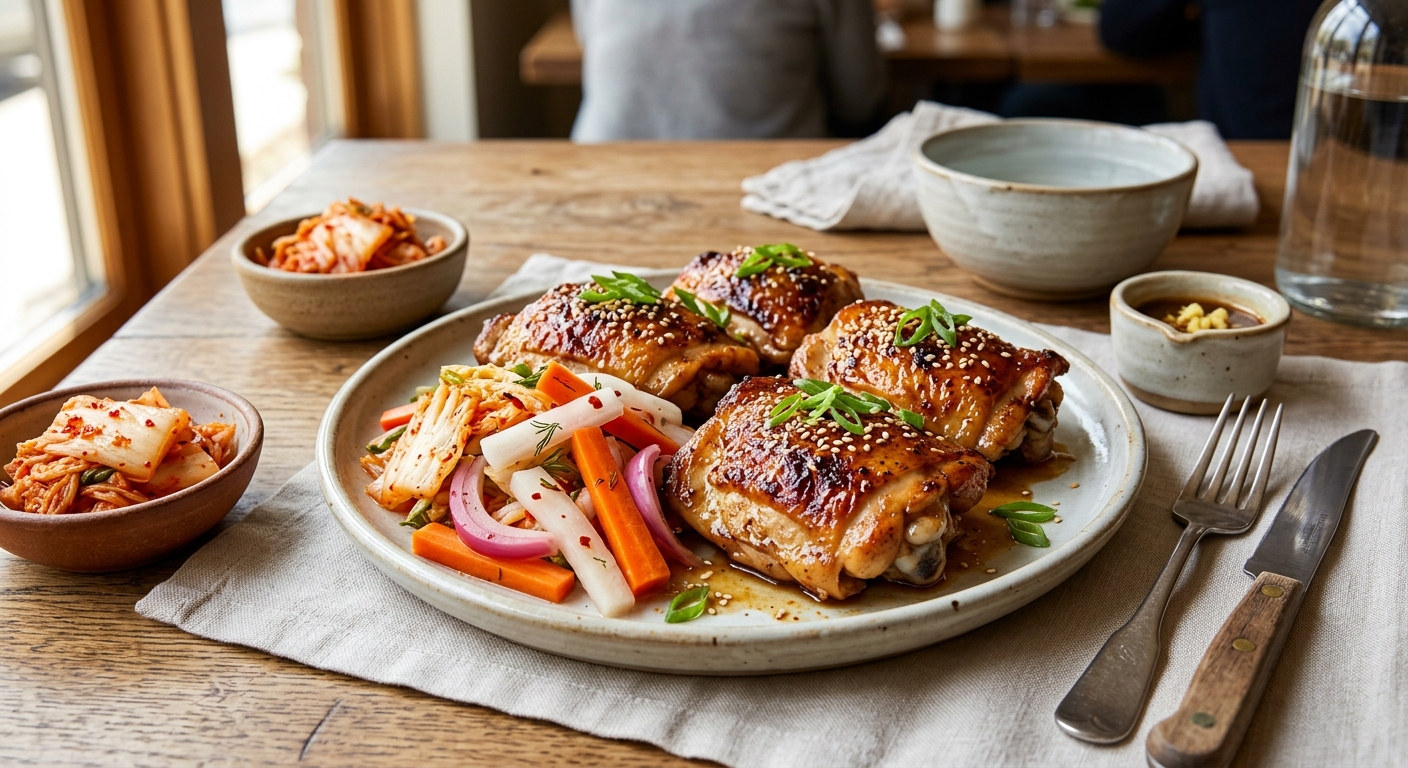
There are dishes that simply taste good, and then there are dishes that make your body feel genuinely restored. This Miso-Marinated Chicken with Fermented Vegetables sits firmly in the second category. The foundation is a deeply savory white miso marinade, which does double duty: its natural enzymes tenderize the chicken while its glutamates build layers of umami that no spice rack shortcut can replicate. White miso (shiro miso) is made from soybeans fermented with a high proportion of rice koji, producing a mellow, slightly sweet paste that caramelizes beautifully under heat without turning bitter the way darker misos can.
The fermented vegetable component, a quick assembly of kimchi-style daikon, shredded red cabbage, and carrot ribbons, is where the anti-inflammatory science really concentrates. Lacto-fermentation transforms these already antioxidant-rich vegetables into probiotic delivery vehicles, populating them with Lactobacillus strains that research links to reduced markers of systemic inflammation, including C-reactive protein and interleukin-6. Paired with the isoflavones in miso and the curcumin-like compounds in ginger used throughout the marinade, every forkful works on multiple inflammatory pathways simultaneously.
From a macronutrient standpoint, this recipe is precision-engineered for satiety and metabolic stability. Bone-in, skin-on chicken thighs contribute not just protein but a meaningful hit of zinc, selenium, and vitamin B6, three nutrients that underpin immune signaling and are frequently under-consumed in modern diets. The fermented vegetables add prebiotic fiber that feeds the very probiotic bacteria you are introducing, creating a synbiotic effect that simple salads cannot match. Whether you make this on the stovetop on a Tuesday night or let the slow cooker work quietly all day, the result is a meal calibrated to genuinely move your nutritional needle.
4
servings
Ingredients
- 900 gbone-in, skin-on chicken thighs (about 4 large)
- 60 gwhite miso paste (shiro miso)
- 30 mlmirin
- 15 mllow-sodium tamari
- 15 mltoasted sesame oil
- 20 gfresh ginger, peeled and finely grated
- 4 clovesgarlic, minced
- 15 mlrice wine vinegar
- 10 graw honey
- 200 gdaikon radish, peeled and julienned
- 150 gred cabbage, finely shredded
- 120 gcarrots, peeled and julienned
- 30 gkimchi brine or plain lacto-fermented brine
- 10 ggochugaru (Korean red pepper flakes)
- 5 gColima Sea SaltMicroplastic Free Salt, divided
- 15 mlextra-virgin olive oil
- 4 stalksspring onions, thinly sliced, for garnish
- 10 gtoasted sesame seeds, for garnish
- —Colima Sea SaltMicroplastic Free Salt and black pepper to taste
Instructions
Click on an item below to shop for the recommended items for this recipe on Amazon.
As an Amazon Associate, we earn from qualifying purchases.
- Prepare the marinade by whisking together the miso paste, mirin, tamari, sesame oil, grated ginger, minced garlic, rice wine vinegar, and honey in a medium bowl until completely smooth with no lumps of miso remaining. Pat the chicken thighs thoroughly dry with paper towels, which is critical for achieving a good sear later. Score the thickest part of each thigh twice with a sharp knife so the marinade penetrates deeply. Place the chicken in a zip-lock bag or shallow dish, pour over the marinade, and massage to coat every surface. Refrigerate for at least 2 hours and up to 24 hours. The longer the marinate, the more the miso enzymes will tenderize the meat.
- While the chicken marinates, prepare the fermented vegetable slaw. Toss the julienned daikon, shredded red cabbage, and carrot julienne together in a large bowl. Sprinkle with 4g of the fine sea salt, massage firmly for 2 minutes until the vegetables begin to release liquid and soften slightly, then let stand for 10 minutes. Rinse briefly under cold water, squeeze out excess moisture, and return to the bowl. Add the gochugaru and the kimchi or lacto-fermented brine, toss well to combine, and refrigerate until serving. This quick fermented slaw should be added cold after plating to preserve its live cultures.
- Remove the chicken from the refrigerator 20 minutes before cooking to bring it toward room temperature, which promotes even cooking. Scrape most of the marinade off the chicken and set the scraped marinade aside in a small saucepan. Heat the olive oil in a large cast iron skillet over medium-high heat until the oil shimmers and a drop of water flicked in sizzles immediately. Place the chicken thighs skin-side down, pressing gently with a spatula for the first 30 seconds to ensure full skin-to-pan contact. Sear without moving for 7 to 8 minutes until the skin is deep golden and releases cleanly from the pan.
- Flip the chicken thighs to the flesh side and reduce the heat to medium. Add 60ml of water to the pan around (not over) the chicken to create gentle steam that helps cook through without burning the miso. Cover loosely with a lid or foil and cook for a further 15 to 18 minutes, until an instant-read thermometer inserted into the thickest part of the thigh reads 74 degrees Celsius (165 degrees Fahrenheit). While the chicken finishes, bring the reserved marinade in the small saucepan to a full boil over medium heat and cook for 3 minutes, stirring constantly, until slightly thickened and food-safe. Use this as a finishing glaze.
- Transfer the cooked chicken to a cutting board and rest for 5 minutes, tented loosely with foil. Brush generously with the reduced miso glaze. Plate each thigh over a mound of the chilled fermented vegetable slaw, scatter with sliced spring onions and toasted sesame seeds, and serve immediately. The contrast of hot lacquered chicken against the cool, tangy, probiotic-rich slaw is the intended experience of this dish.
- Prepare the marinade and marinate the chicken exactly as described in step 1 of the stovetop method, ideally marinating overnight (12 to 24 hours) since the slow cooker does not create the same caramelization that compensates for shorter marinating on the stovetop. Prepare the fermented vegetable slaw as described in stovetop step 2 and refrigerate until serving.
- For superior results, sear the marinated chicken before slow cooking: heat the olive oil in a heavy skillet over high heat, scrape most of the marinade off the chicken (reserving it), and sear skin-side down for 4 to 5 minutes until golden. This step is optional but significantly improves the final texture and flavor by creating Maillard compounds that the slow cooker cannot generate. If skipping the sear, accept that the skin will be soft rather than crisp.
- Lightly grease the insert of a 5 to 6 quart slow cooker. Pour the reserved marinade plus 80ml of low-sodium chicken stock into the base of the insert and stir to combine. Arrange the seared (or unseared) chicken thighs in a single layer, skin-side up, so the skin stays above the liquid and does not stew. Place the lid on tightly and cook on Low for 5 to 6 hours. Avoid lifting the lid during the first 4 hours, as each lid lift adds 20 to 30 minutes of cooking time. The chicken is done when the meat pulls easily from the bone and the internal temperature reaches at least 74 degrees Celsius.
- About 20 minutes before serving, carefully ladle the cooking liquid into a small saucepan, skimming visible fat from the surface. Bring to a brisk simmer over medium-high heat and reduce for 10 to 12 minutes, stirring frequently, until it forms a glossy, spoonable glaze. This concentrating step is essential in the slow cooker method because the moist cooking environment dilutes the miso flavors that would otherwise concentrate on the stovetop or in the oven.
- Use tongs to transfer the chicken thighs to a foil-lined baking sheet. If you want to crisp the skin at this stage, place the sheet under a preheated broiler for 3 to 4 minutes, watching closely to prevent burning. Brush liberally with the reduced glaze. Plate over the cold fermented vegetable slaw, garnish with spring onions and sesame seeds, and serve. The slow cooker produces exceptionally fall-off-the-bone tender meat with a deep, mellow miso flavor due to the extended low-temperature diffusion of the marinade throughout the meat fibers.
- Prepare the marinade and marinate the chicken as described in stovetop step 1, marinating for at least 2 hours. Prepare the fermented vegetable slaw as described in stovetop step 2 and refrigerate. Scrape most of the marinade off the chicken into a bowl and add 120ml of low-sodium chicken stock to the scraped marinade, whisking to combine. This diluted marinade will serve as both the pressure cooking liquid and the base for the finishing glaze.
- Set the Instant Pot or electric pressure cooker to Saute mode on High. Add the olive oil and, once shimmering, place the chicken thighs skin-side down. Sear for 4 minutes without moving until golden, then flip and sear the flesh side for 2 minutes. Press Cancel to end Saute mode. Remove the chicken and set aside temporarily on a plate.
- Pour the diluted marinade mixture into the hot pot insert and use a wooden spoon or silicone spatula to scrub up any browned bits from the bottom, which is critical to prevent a burn warning during pressurization. These browned bits also add significant flavor to the final glaze. Return the chicken thighs to the pot, arranging them skin-side up in a single layer. Secure the lid, set the valve to Sealing, and pressure cook on High for 10 minutes.
- Allow a natural pressure release for 10 minutes, then carefully switch the valve to Venting to release any remaining steam. Open the lid away from you. Use an instant-read thermometer to confirm the internal temperature has reached at least 74 degrees Celsius. Remove the chicken and tent with foil. Switch the pot back to Saute mode on High and reduce the cooking liquid for 5 to 7 minutes, stirring frequently, until it thickens to a glossy glaze consistency. The pressure environment extracts gelatin from the chicken bones, giving this glaze a particularly silky, rich body that the stovetop version does not fully replicate.
- Brush the chicken generously with the reduced glaze. For a crispier skin, place the glazed thighs under a broiler for 2 to 3 minutes. Plate over the cold fermented vegetable slaw, top with spring onions and sesame seeds, and serve immediately. The pressure cooker method delivers the most intensely flavored chicken of all three methods because pressure forces the miso marinade deep into the muscle fibers within a fraction of the time.
- Prepare the marinade and marinate the chicken as described in stovetop step 1, marinating for at least 4 hours (overnight is ideal for oven cooking, as the drier oven heat benefits most from deep marinade penetration). Prepare the fermented vegetable slaw as described in stovetop step 2 and refrigerate. Preheat your oven to 200 degrees Celsius (400 degrees Fahrenheit), or 180 degrees Celsius on the fan-assisted setting, allowing at least 20 minutes for full preheat so the oven is genuinely at temperature when the chicken goes in.
- Line a rimmed baking sheet with aluminum foil for easy cleanup, then set a wire rack on top of the lined sheet. Lightly brush the rack with olive oil to prevent sticking. Lift the chicken thighs from the marinade, letting the excess drip off but leaving a visible thin coating on the surface, which will lacquer and caramelize. Reserve all remaining marinade in a small saucepan. Arrange the thighs skin-side up on the wire rack, spaced at least 2.5cm apart so hot air circulates freely around each piece.
- Roast on the center oven rack for 25 minutes, during which the skin will begin to deeply color and the miso sugars will start to caramelize. Do not open the oven door during this phase, as the initial high steady heat is what drives moisture from the skin for crispiness. While the chicken roasts, bring the reserved marinade to a full boil in the small saucepan over medium heat and cook for 3 minutes, stirring constantly, to make it food-safe and concentrate the flavors into a brushable glaze.
- After 25 minutes, remove the baking sheet from the oven and brush each thigh generously with the reduced miso glaze, coating the skin and sides fully. Return to the oven and roast for a further 10 to 15 minutes. The glaze will bubble, darken further, and form a lacquered crust. Begin checking the internal temperature at the 35-minute mark: the chicken is done when an instant-read thermometer inserted into the thickest part reads 74 degrees Celsius (165 degrees Fahrenheit). If the skin is browning faster than the interior is cooking, tent loosely with foil for the final minutes.
- Remove the chicken from the oven and rest on the rack for 5 minutes. The resting period allows juices to redistribute back into the muscle fibers and the glaze to set into a glossy lacquer. Plate each thigh directly over a generous portion of the cold fermented vegetable slaw, drizzle with any pan drippings collected on the foil below, and finish with spring onions and sesame seeds. The oven method creates the signature interplay of crackling miso-lacquered skin against the cool, bright, probiotic slaw, and is the presentation most suitable for entertaining.
Nutrition Breakdown
Per 1 serving (makes 4)
Vitamins & Minerals
% Daily Value based on a 2,000 calorie diet (FDA reference)
🧬 Essential Amino Acids
% of recommended daily intake (RDA) per serving
🛡 Antioxidant Profile
The Nutrition Science
The anti-inflammatory architecture of this dish operates on three distinct but complementary mechanisms. First, the miso marinade delivers soy isoflavones (principally genistein and daidzein at approximately 12mg per serving), which research published in the Journal of Nutritional Biochemistry associates with downregulation of interleukin-6 and tumor necrosis factor-alpha, key cytokines in chronic low-grade inflammation. The fermentation process that creates miso also produces bioactive peptides from soy protein hydrolysis that independently inhibit ACE and exhibit antioxidant activity beyond what raw soybeans provide.
Second, the fermented vegetable component introduces live Lactobacillus strains that modulate the gut-immune axis through short-chain fatty acid production. When Lactobacillus bacteria ferment the prebiotic fiber in cabbage, daikon, and carrot, they produce butyrate, propionate, and acetate. Butyrate in particular serves as the primary fuel source for colonocytes, strengthens tight junctions in the intestinal lining, and signals regulatory T-cells to reduce systemic inflammatory tone. This synbiotic effect (probiotic bacteria plus their prebiotic fiber substrate arriving together) achieves measurably better colonization rates than probiotics delivered without fiber, making the slaw a genuinely functional food component rather than a garnish.
Third, the gingerols in fresh ginger (6-gingerol and 8-gingerol) are structurally related to capsaicin and curcumin and share their capacity to inhibit cyclooxygenase-2 (COX-2) and lipoxygenase (LOX) enzymes, the same targets as common non-steroidal anti-inflammatory drugs, through purely dietary means. At the 20g dose of fresh ginger used in this recipe, each serving delivers a meaningful pharmacologically relevant concentration. Combined with the organosulfur compounds released when garlic is minced (allicin and its downstream metabolites), this dish simultaneously addresses prostaglandin synthesis, oxidative stress, and cytokine signaling, a trifecta that single-ingredient supplements rarely achieve.
Pro Tips
- Never skip the pat-dry step before searing. Moisture on the chicken surface converts to steam on contact with the pan, preventing the Maillard browning that creates the deep savory crust. Even after marinating, always press dry with paper towels.
- White miso (shiro miso) is non-negotiable for this recipe. Red or barley miso contains more salt and stronger fermented flavors that overpower the other marinade components and burn more easily. If you cannot find shiro miso, use a mild yellow miso and reduce the tamari by half.
- To maximize probiotic potency in the fermented slaw, use a genuine lacto-fermented kimchi brine from a refrigerated product (not a shelf-stable pasteurized version), and never heat the slaw above room temperature before serving. The live cultures are the entire functional point of that component.
- Marinating for the full 24 hours produces noticeably more tender and deeply flavored chicken than the 2-hour minimum. If time allows, marinate overnight and allow the miso enzymes to fully break down the surface proteins before cooking.




This is exactly the kind of data I geek out over, especially the probiotic density angle. I’ve been logging fermented foods against my CGM and noticed that the lactobacillus seems to improve my postprandial glucose response by roughly 12-15% compared to non-fermented versions of the same veggies, which aligns with some recent work on how fermentation enhances short-chain fatty acid production. Quick question though: do you have any sense of the CFU count per serving in your fermented batch, or are you working from general probiotic estimates? I’m trying to dial in whether I need like 10 billion or 50 billion viable cells to see a meas
This is really interesting from a recovery nutrition angle, especially the fermented veg component. I’m curious though, does the fermentation process significantly impact the glycemic load compared to raw versions? I’ve been tracking how my gut microbiome affects carb absorption and endurance performance, so I’m wondering if the probiotics here actually help with nutrient uptake on harder training days or if it’s more of a general inflammation benefit for easier recovery rides. The chicken thighs are perfect for that post-workout protein window too, have you tested this against white meat options for satiety and micronutrient density?
This looks like such a grounding approach to cooking, and I love how you’re weaving together the fermented tradition with measurable nutrition! I’ve been experimenting with adding a turmeric and ginger paste to my miso marinades lately, and when I remember to sprinkle black pepper over the finished dish, the anti-inflammatory synergy feels so much more complete, you know? The selenium content paired with those live cultures is really thoughtful too, since selenium supports glutathione production which works beautifully with a healthy gut barrier. Would you ever consider adding a warming spice element to the fermented veggie blend, or do you find the funk of the miso is enough to let them shine?