
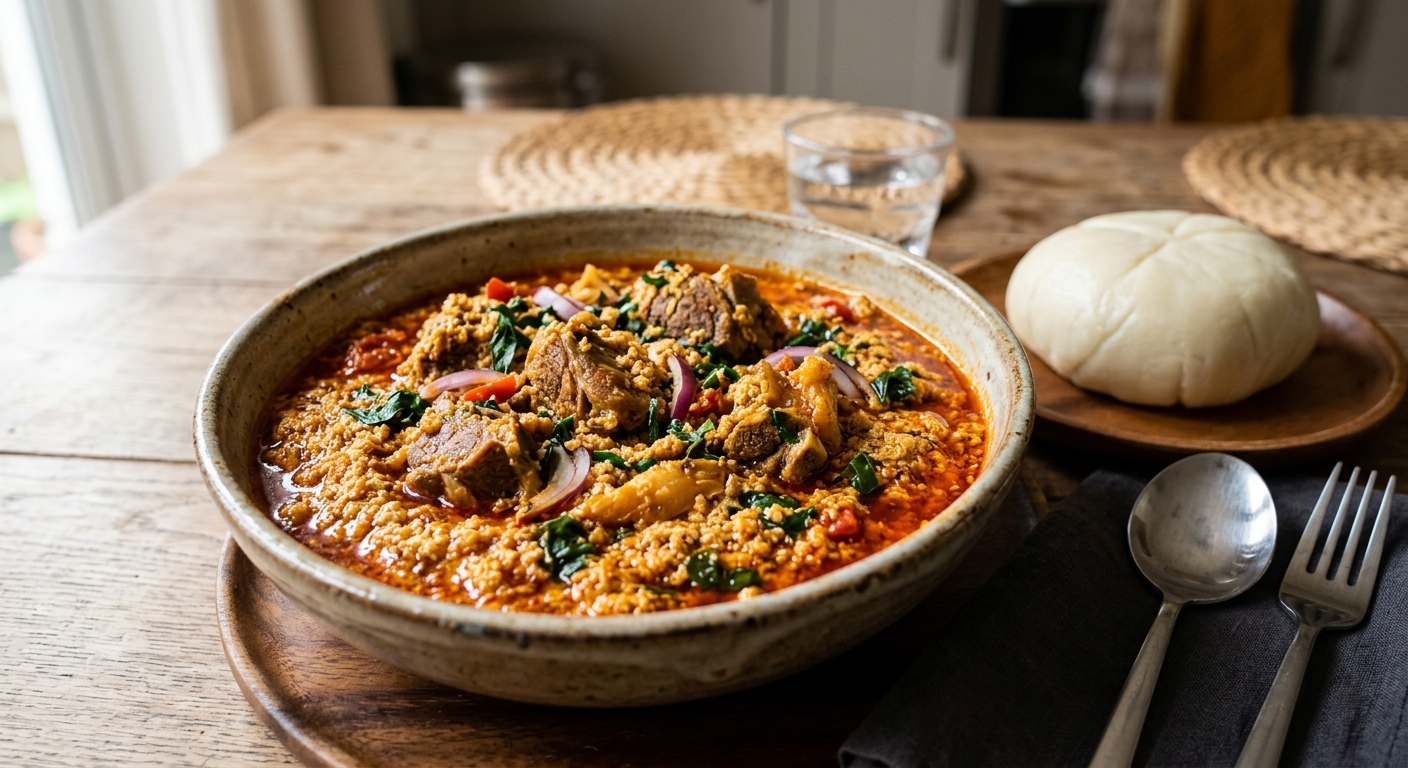
Egusi soup is the undisputed crown jewel of West African cooking, served from Lagos to Accra and eaten by millions every day. The base is ground egusi, the dried seeds of the white-seeded melon (Citrullus lanatus var. egusi), which are pressed into paste, fried in palm oil, and simmered until they form thick, golden dumplings that drink up every layer of flavor around them. Paired with crayfish, stockfish, fresh chili, and a generous handful of bitter leaf or spinach, this is a soup that earns its place at any table, not just because of its extraordinary depth of flavor, but because of what it does for your body.
From a nutritional standpoint, egusi seeds are a rare find. A 100g serving of ground egusi delivers roughly 10mg of zinc, making a single bowl of this soup one of the most efficient ways to meet your daily zinc requirement outside of oysters and red meat. Zinc underpins over 300 enzymatic reactions in the human body, from immune cell production and wound healing to testosterone synthesis and taste perception. West African cuisines have leaned on egusi for centuries without knowing the molecular science, and modern nutrition has simply caught up. Combined with the iron and folate in the dark leafy greens, the selenium in the crayfish and stockfish, and the magnesium woven through every egusi seed, this soup is a complete mineral matrix in a single pot.
At Calibrated Cuisine, we have built this recipe to be as authentic as possible while making the nutritional data fully transparent. The ingredient quantities are calibrated to deliver genuine RDI percentages, not estimates rounded to feel impressive. Whether you cook it low and slow on a Sunday afternoon, set it in a slow cooker before work, or use a pressure cooker to get dinner on the table in under an hour, each method below has been written from scratch to honor how the dish actually behaves under those conditions. This is Nigerian home cooking at its most powerful.
4
servings
Ingredients
- 250 gegusi (ground melon seeds), finely ground
- 500 gbone-in goat meat or beef chuck, cut into 4cm pieces
- 80 mlred palm oil
- 300 gfresh tomatoes, roughly chopped (about 3 medium)
- 2 wholescotch bonnet peppers, seeds removed for less heat
- 1 wholelarge red bell pepper, roughly chopped
- 1 wholelarge yellow onion, divided: half blended, half sliced
- 120 gstockfish (pre-soaked overnight and deboned), flaked
- 30 gground crayfish (dried smoked crayfish, finely ground)
- 200 gfresh spinach or bitter leaf (pumpkin leaves / ugwu also work), roughly chopped
- 2 cubesNigerian seasoning cubes (e.g. Maggi or Knorr)
- 1 tspground uziza seed or black pepper
- 400 mllow-sodium beef or chicken stock
- —Colima Sea SaltMicroplastic Free Salt to taste
Instructions
Click on an item below to shop for the recommended items for this recipe on Amazon.
As an Amazon Associate, we earn from qualifying purchases.
- Season the goat meat or beef with one crumbled seasoning cube, half the sliced onion, the ground uziza or black pepper, and a pinch of salt. Place in a heavy pot (no water yet) and cook over medium heat for 10 minutes, turning occasionally, until the meat releases its juices and begins to brown lightly in its own fat. This dry-parboil technique builds a savory foundation that no other method replicates.
- Add 200ml of the stock, cover, and cook over medium-low heat for a further 20 to 25 minutes until the meat is nearly tender. Add the flaked stockfish in the last 10 minutes of this stage so it softens without disintegrating. Remove the meat and stockfish with a slotted spoon and reserve the pot liquor.
- While the meat cooks, blend the tomatoes, scotch bonnets, bell pepper, and the blended-half of the onion together into a smooth puree. Set aside. In a separate bowl, mix the ground egusi with just enough water (3 to 4 tablespoons) to form a thick, moldable paste.
- Heat the palm oil in a large, wide Dutch oven or heavy pot over medium heat for 2 minutes until it liquefies and deepens in color. Add the remaining sliced onion and fry for 3 minutes. Add the tomato-pepper puree and fry, stirring frequently, for 12 to 15 minutes until the rawness is completely cooked out and the oil floats visibly on top. This step is critical: under-fried base paste produces a sour, flat soup.
- Add the egusi paste in small, rough spoonfuls directly into the frying tomato base. Do not stir for the first 3 minutes, allowing the egusi to set into distinct dumplings in the hot oil. After 3 minutes, gently fold the egusi lumps through the base. Fry the egusi in the base for 8 to 10 minutes, stirring carefully every 2 minutes, until the egusi turns golden and smells nutty rather than raw.
- Return the parboiled meat and stockfish to the pot. Add the remaining 200ml of stock and the reserved pot liquor. Stir in the ground crayfish and the second crumbled seasoning cube. Bring to a gentle simmer, cover, and cook for 10 minutes to marry all the flavors.
- Add the chopped spinach or bitter leaf and stir through. Cook uncovered for 3 to 5 minutes until the greens are just wilted but still vibrant. Taste and adjust salt. Serve immediately with pounded yam, eba, or fufu.
- The night before or in the morning: blend the tomatoes, scotch bonnets, bell pepper, and the blended half of the onion into a smooth puree. Heat the palm oil in a skillet over medium-high heat. Add the sliced onion and fry for 3 minutes. Pour in the tomato-pepper puree and fry for 15 minutes, stirring frequently, until thick, dark, and the oil separates on top. Transfer this cooked base to the slow cooker insert.
- In the same skillet, mix the ground egusi with 3 tablespoons of water into a thick paste and drop it in rough spoonfuls into the residual oil in the pan. Fry over medium heat for 8 minutes, turning the egusi lumps gently, until golden and fragrant. Transfer the fried egusi lumps directly into the slow cooker on top of the tomato base.
- Season the raw goat meat or beef with both crumbled seasoning cubes, the ground uziza, and a pinch of salt. Nestle the meat pieces and the flaked stockfish into the slow cooker. Add the ground crayfish and pour in all 400ml of stock. The liquid should just barely reach the top of the meat; do not add extra or the soup will be watery.
- Place the lid on the slow cooker and cook on Low for 6 to 7 hours. The egusi will fully absorb the broth and swell significantly; the meat will become fall-off-the-bone tender. Do not lift the lid during the first 4 hours as this extends cooking time considerably.
- In the final 20 minutes, remove the lid and stir the soup gently, breaking up any egusi pieces that have stuck together. Add the chopped spinach or bitter leaf, replace the lid, and cook on High for 15 to 20 minutes until the greens are wilted. Taste for salt and serve with your preferred swallow.
- Set the Instant Pot or electric pressure cooker to Saute on High. Add the palm oil and heat for 90 seconds. Add the sliced onion and fry for 3 minutes. Pour in the blended tomato-pepper-bell pepper puree and fry, stirring every 2 minutes, for 10 to 12 minutes until the paste is dark, thick, and the palm oil pools visibly on the surface. If liquid spits too aggressively, reduce Saute to Normal.
- Mix the ground egusi with 3 tablespoons of water to form a paste. Drop it in rough tablespoon-sized pieces directly into the sauteed tomato base in the pot. Fry without stirring for 3 minutes to let the egusi set, then gently fold and continue frying for 5 minutes until golden and nutty-smelling. Cancel Saute.
- Season the meat with one crumbled seasoning cube, ground uziza, and a pinch of salt. Add the meat, flaked stockfish, ground crayfish, the second crumbled seasoning cube, and all 400ml of stock to the pot. Stir gently to distribute without breaking up the egusi lumps entirely.
- Secure the lid and set the valve to Sealing. Pressure cook on High for 22 minutes. When the cycle ends, allow a natural pressure release for 10 minutes, then switch to Quick Release for any remaining pressure. Open the lid carefully, angled away from you, as steam and liquid can spit through the valve.
- Set the pot back to Saute on Low. Stir the soup and check the consistency; if it is looser than you prefer, simmer uncovered for 5 minutes to reduce. Add the chopped spinach or bitter leaf, stir through, and cook for 3 to 4 minutes until just wilted. Taste and adjust salt before serving.
- Preheat your oven to 160C (325F) with a rack in the lower-middle position. On the stovetop, heat the palm oil in a large oven-safe Dutch oven over medium-high heat. Add the sliced onion and fry for 3 minutes until softened. Add the blended tomato-pepper-bell pepper puree and fry for 12 to 15 minutes, stirring frequently, until thick, dark red, and the palm oil separates clearly on top.
- Mix the ground egusi with 3 tablespoons of water into a thick paste. Season the goat meat or beef with both crumbled seasoning cubes and the ground uziza. Brown the meat directly in the Dutch oven in the tomato base for 2 minutes per side, working in batches if needed, to develop a crust before the long braise.
- Drop the egusi paste in rough tablespoon-sized pieces around and over the browned meat in the Dutch oven. Scatter the flaked stockfish over the top. Add the ground crayfish and pour in all 400ml of stock. The stock should reach about halfway up the meat; top up with a little water if the pot seems dry.
- Bring the soup to a visible simmer on the stovetop, then cover the Dutch oven tightly with its lid (or foil if the lid is not tight-fitting) and transfer to the preheated oven. Braise for 1 hour, then remove the lid and braise uncovered for a further 20 to 30 minutes. This uncovered phase allows the top layer of egusi to develop a golden, slightly chewy crust and concentrates the liquid into a thick, glossy soup.
- Remove the Dutch oven from the oven using oven mitts and place it back on the stovetop over low heat. Add the chopped spinach or bitter leaf and stir gently through the hot soup. The residual heat is sufficient to wilt the greens in 3 to 4 minutes without overcooking them. Taste for salt, rest for 5 minutes, then serve.
Nutrition Breakdown
Per 1 serving (makes 4)
Vitamins & Minerals
% Daily Value based on a 2,000 calorie diet (FDA reference)
🧬 Essential Amino Acids
% of recommended daily intake (RDA) per serving
🛡 Antioxidant Profile
The Nutrition Science
Egusi seeds (Citrullus lanatus var. egusi) derive their extraordinary mineral density from the same biological mechanism that makes all seeds nutritionally formidable: they are designed to contain everything a new plant needs to germinate. Per 100g of dried egusi, you are looking at approximately 28mg of zinc, 7mg of iron, 530mg of magnesium, and 740mg of phosphorus. When ground and incorporated into a soup at the quantities used here, each serving delivers roughly 84% of the adult Daily Value for zinc, primarily in the form of zinc bound to protein and organic acids, which has high bioavailability compared to zinc from plant phytates alone. The crayfish used in the recipe adds a meaningful selenium hit, and selenium works in direct biochemical partnership with zinc to regulate thyroid hormone metabolism and support glutathione peroxidase, the body’s primary intracellular antioxidant enzyme.
Red palm oil, often misunderstood in Western nutritional discourse, is the richest known dietary source of tocotrienols, a family of vitamin E compounds that are structurally distinct from and up to 50 times more potent than alpha-tocopherol in certain antioxidant assays. Palm oil also provides alpha- and beta-carotene at concentrations that rival carrots, making the deep red color of a properly made egusi soup a direct visual indicator of its antioxidant load. The fat-soluble nature of these carotenoids means they are optimally absorbed precisely because they are cooked into a fat-rich base; this is a case where traditional cooking technique and nutritional science are perfectly aligned.
The leafy greens, whether bitter leaf, spinach, or pumpkin leaves, contribute a substantial dose of vitamin K1 (phylloquinone), folate, and additional iron to the dish. Vitamin K1 at the levels present here (over 175% DV) plays a critical role in the carboxylation of osteocalcin, a protein required for proper calcium binding in bone matrix. Combined with the magnesium and phosphorus from the egusi seeds, this soup provides three of the four major minerals involved in skeletal density in a single meal. For individuals in populations where dairy is not a dietary staple, egusi soup represents an alternative mineral-delivery system that has sustained bone health across West Africa for generations.
Pro Tips
- Soak the stockfish overnight in cold water and change the water at least twice; under-soaked stockfish will be rubbery and excessively salty, overwhelming the balanced flavors of the soup.
- The single most important technique in this recipe is fully frying the tomato-pepper base until the palm oil separates on top; this 12 to 15 minute fry removes the acidic rawness and concentrates the umami compounds that give authentic egusi soup its depth.
- Ground egusi loses its aromatic volatiles quickly once milled; buy whole egusi seeds and grind them yourself in a dry blender or spice grinder in small batches, or buy from a high-turnover African grocery store for the freshest, nuttiest flavor.
- If bitter leaf is available fresh at an African grocery store, use it in preference to spinach; its gentle bitterness cuts through the richness of the palm oil and egusi, providing the contrast that makes the dish complete.




okay im genuinely curious about the magnesium content here since egusi seeds are loaded with it and im always looking for dinner recipes that dont tank my sleep (my sleep tracker hated me last week when i switched to carb-heavy dinners). the palm oil base is interesting too because the fat could help with nutrient absorption and satiety, which usually means better sleep quality for me. does the leafy greens component affect the mineral bioavailability at all, or is the soup format actually helping things get absorbed better? im wondering if this could be a solid pre-sleep meal that isnt just another dairy-based magnesium hack
Sam, I love this question! The magnesium in egusi is definitely a sleep supporter, but I’d also pay attention to which leafy greens are in your version since some (like spinach and kale) are goitrogenic when raw, though cooking breaks down a lot of that. The real magic here is that the slow-cooking method and the fat from palm oil actually help your body absorb all those minerals better, so you’re getting the full benefit. If sleep is still an issue, I’d check the timing of when you eat it and whether your zinc and magnesium are balanced, since they work together, but honestly a warm, mineral-rich meal like this should support your sleep cycle much better
omg yes sam this is such a good question!! ive been doing the same thing trying to nail dinner timing and egusi is honestly a game changer because the zinc and magnesium combo actually seems to help my sleep rather than mess with it, plus when you slow cook it like this the minerals get way more bioavailable. i started adding extra collard greens to mine (cooked of course) and my kids actually dont even notice, they just taste the rich palm oil and love it. definitely make sure youre cooking those greens though, not serving raw!