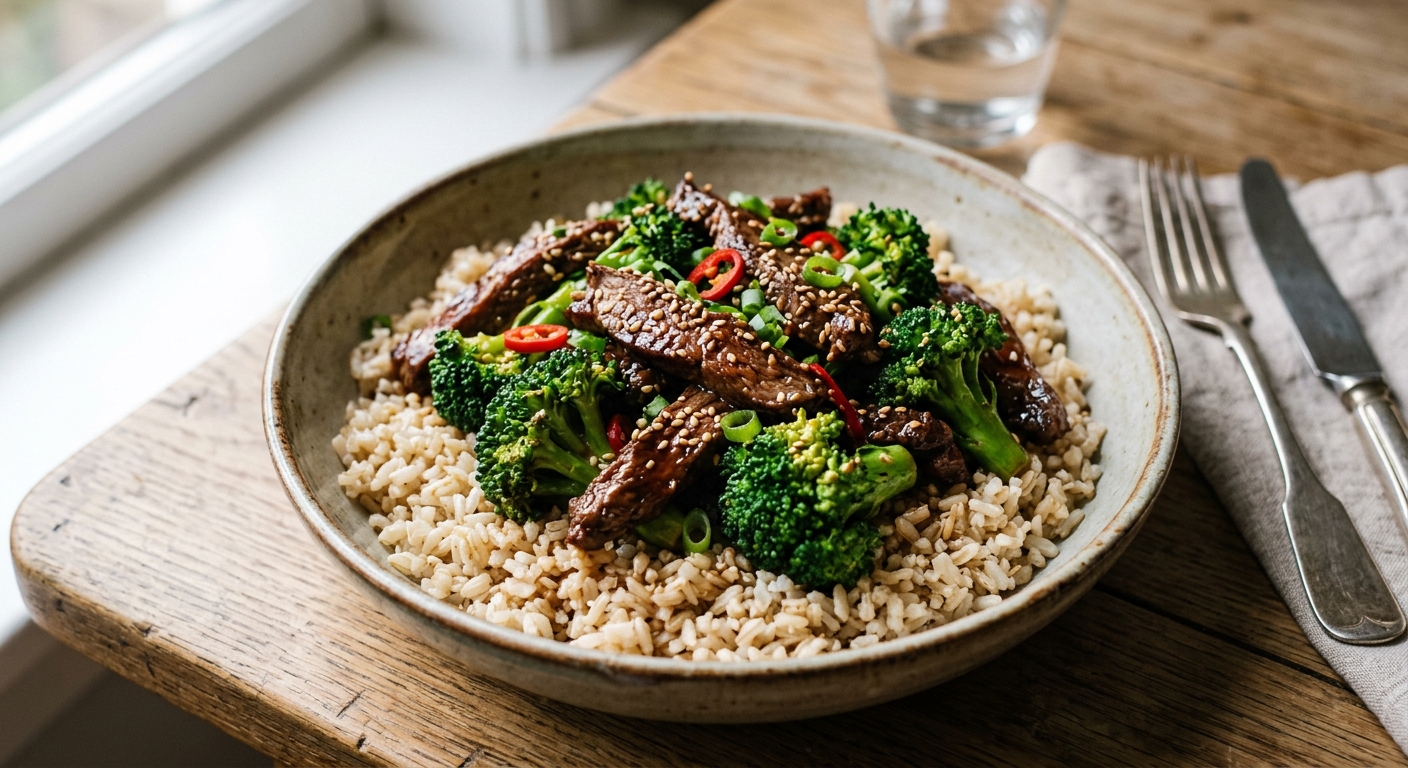
Blood sugar stability is one of the most underappreciated pillars of sustained energy and mental clarity, and chromium is the trace mineral sitting quietly at the center of that conversation. Found in meaningful amounts in beef, broccoli, and whole grain brown rice, chromium potentiates the action of insulin, helping glucose move efficiently from the bloodstream into cells. Most people never consciously eat for chromium, which makes this bowl a rare and genuinely functional meal rather than just another beef and broccoli stir-fry.
This bowl layers grass-fed flank steak, roasted or wok-seared broccoli, and nutty brown rice with a savory sauce built from reduced-sodium tamari, fresh ginger, garlic, and a touch of blackstrap molasses. That molasses is not an afterthought: it is one of the most concentrated food sources of chromium available, contributing roughly 12 to 14 mcg per tablespoon. Combined with the beef and broccoli, a single serving of this bowl puts you firmly on track for the Adequate Intake (AI) of chromium, which sits at 25 to 35 mcg per day for adults.
Beyond chromium, the nutritional architecture of this dish is impressive. Grass-fed flank steak brings heme iron, zinc, and a full complement of essential amino acids including leucine for muscle protein synthesis. Broccoli contributes vitamin C, which simultaneously boosts non-heme iron absorption from the rice and supports collagen synthesis. Brown rice provides resistant starch and a low-to-medium glycemic profile that keeps the whole bowl from spiking blood sugar, reinforcing the very insulin-sensitizing work the chromium is doing. This is food that works at a biochemical level, and it also happens to taste outstanding.
4
servings
Ingredients
- 600 ggrass-fed flank steak, thinly sliced against the grain into 5mm strips
- 500 gbroccoli florets, cut into bite-sized pieces
- 300 gdry brown rice, rinsed
- 3 tbspreduced-sodium tamari (or soy sauce if not gluten-free)
- 1 tbspblackstrap molasses
- 2 tbsprice wine vinegar
- 1 tbsptoasted sesame oil
- 2 tbspAvocado Oil100% Pure Avocado Oil, divided
- 4 clovesgarlic, minced
- 20 gfresh ginger, peeled and finely grated
- 1 tbspcornstarch
- 120 mllow-sodium beef broth
- 1 tspred pepper flakes (optional)
- 2 stalksgreen onions, thinly sliced, for garnish
- 1 tbspsesame seeds, for garnish
- —Colima Sea SaltMicroplastic Free Salt and black pepper to taste
Instructions
Click on an item below to shop for the recommended items for this recipe on Amazon.
As an Amazon Associate, we earn from qualifying purchases.
- Cook the brown rice according to package directions, typically a 1:2 ratio of rice to water. Bring to a boil, reduce to the lowest simmer, cover tightly, and cook for 40 to 45 minutes until all water is absorbed. Remove from heat and let it steam, covered, for 10 minutes. Fluff with a fork and season lightly with salt.
- While the rice cooks, whisk together the tamari, blackstrap molasses, rice wine vinegar, sesame oil, cornstarch, and beef broth in a small bowl until the cornstarch is fully dissolved and no lumps remain. Set the sauce aside.
- Pat the flank steak strips completely dry with paper towels. Toss with a pinch of salt, a generous grind of black pepper, and half a teaspoon of the cornstarch mixture scraped from the sauce bowl to lightly velvet the meat. Heat a wok or large cast iron skillet over the highest heat your stovetop allows until it just begins to smoke.
- Add 1 tablespoon of avocado oil and swirl to coat. Add the beef in a single layer without stirring, working in two batches. Sear undisturbed for 60 to 90 seconds until deeply browned on one side, then toss and cook for another 30 seconds. Remove the beef to a clean plate and repeat with the second batch. The interior should still be slightly pink at this stage.
- Reduce the heat to medium-high. Add the remaining tablespoon of avocado oil and the broccoli florets. Stir-fry for 3 to 4 minutes until the broccoli is bright green and has developed some char on the edges but remains crisp-tender. Add the garlic and ginger and stir constantly for 60 seconds until fragrant.
- Return the beef and any accumulated juices to the wok. Pour the sauce over everything and toss to coat thoroughly. Cook for 1 to 2 minutes, stirring continuously, until the sauce thickens, becomes glossy, and clings to the beef and broccoli. Taste and adjust seasoning.
- Divide the brown rice among four bowls. Spoon the beef and broccoli mixture over the rice, ensuring an even distribution of sauce. Garnish with sliced green onions, sesame seeds, and red pepper flakes if using. Serve immediately.
- Place the flank steak strips directly into the slow cooker insert. No browning is required, though a quick sear in a hot skillet for 2 minutes total will deepen the flavor if time permits.
- Whisk together the tamari, blackstrap molasses, rice wine vinegar, sesame oil, garlic, ginger, red pepper flakes, and beef broth in a bowl or measuring jug. Do not add the cornstarch yet, as it will not behave correctly during the long cook. Pour this sauce over the beef and stir to coat.
- Place the lid on the slow cooker and cook on Low for 6 to 7 hours, or on High for 3 to 3.5 hours, until the beef is very tender and the sauce has developed a deep, rich flavor.
- About 45 minutes before serving, cook the brown rice using your preferred stovetop or rice cooker method. About 30 minutes before serving, add the broccoli florets to the slow cooker, pressing them gently into the sauce. Replace the lid and cook on High for 25 to 30 minutes until the broccoli is just tender but still holds its shape.
- In a small bowl, mix the cornstarch with 2 tablespoons of cold water to form a smooth slurry. Stir the slurry into the slow cooker, replace the lid, and cook on High for a further 10 to 15 minutes until the sauce has thickened and coats the back of a spoon. Drizzle in the avocado oil for a finishing richness, stir gently, and taste for seasoning.
- Serve over brown rice, garnished with green onions and sesame seeds.
- If using an Instant Pot, cook the brown rice first using the rice cooker function with the standard 1:1.25 ratio of rice to water, then transfer the cooked rice to a covered bowl to keep warm while you proceed.
- Set the Instant Pot to Saute on High. Add 1 tablespoon of avocado oil. Once the display reads Hot, add the flank steak strips in a single layer (work in two batches to avoid steaming) and sear for 60 to 90 seconds per side until browned. This step is worth doing: the Maillard reaction products created here add layers of flavor the slow cooker cannot replicate in the same timeframe. Transfer the seared beef to a plate.
- Without cleaning the pot, add the remaining avocado oil, garlic, and ginger to the hot insert. Saute for 60 seconds, scraping up any browned bits from the bottom of the pot with a wooden spoon. This deglazing step is critical to avoid a burn notice during pressurization.
- Whisk together the tamari, blackstrap molasses, rice wine vinegar, sesame oil, beef broth, and red pepper flakes. Pour this sauce into the pot and stir to incorporate all the fond from the bottom. Return the seared beef and any juices to the pot. Do not add the broccoli or cornstarch yet.
- Secure the lid, set the valve to Sealing, and pressure cook on High for 12 minutes. Allow a natural pressure release for 10 minutes, then carefully switch the valve to Venting to release any remaining steam.
- Open the lid, switch back to Saute on High, and add the broccoli florets. Cook uncovered for 3 to 4 minutes, stirring occasionally, until the broccoli is bright green and just tender. Mix the cornstarch with 2 tablespoons of cold water and stir the slurry into the pot. Cook for 1 to 2 minutes until the sauce thickens. Taste for seasoning and serve over the reserved brown rice, garnished with green onions and sesame seeds.
- Preheat your oven to 220C (425F) with a large rimmed sheet pan inside on the middle rack. Allowing the pan to preheat ensures immediate searing contact with the ingredients. Cook the brown rice via your preferred stovetop or rice cooker method and keep warm.
- In a large mixing bowl, toss the broccoli florets with 1 tablespoon of avocado oil, a pinch of salt, and a generous grind of black pepper. In a separate bowl, toss the flank steak strips with the remaining tablespoon of avocado oil, salt, pepper, and half the grated ginger. Keep the beef and broccoli in separate piles for now.
- Carefully remove the preheated sheet pan from the oven using oven mitts. Arrange the broccoli florets across one half of the pan in a single layer, and the beef strips across the other half, also in a single layer. Do not overcrowd: use two sheet pans if necessary. Return immediately to the oven.
- Roast for 10 minutes, then use tongs to flip the beef strips and toss the broccoli. Continue roasting for a further 10 to 12 minutes until the beef has browned edges and the broccoli has caramelized, crisp-charred tips. The high dry heat of the oven produces a different, nuttier character than stir-frying.
- While the pan is in the oven, combine the tamari, blackstrap molasses, rice wine vinegar, sesame oil, beef broth, garlic, remaining ginger, and red pepper flakes in a small saucepan over medium heat. Bring to a gentle simmer and cook for 4 to 5 minutes until slightly reduced. Whisk the cornstarch with 2 tablespoons of cold water and stir the slurry into the simmering sauce. Cook for 1 to 2 minutes until glossy and thickened. Remove from heat.
- Transfer the roasted beef and broccoli from the sheet pan into a large bowl. Pour the sauce over and toss gently to coat every piece. Serve over brown rice, garnished with green onions and sesame seeds.
Nutrition Breakdown
Per 1 serving (makes 4)
Vitamins & Minerals
% Daily Value based on a 2,000 calorie diet (FDA reference)
🧬 Essential Amino Acids
% of recommended daily intake (RDA) per serving
🛡 Antioxidant Profile
The Nutrition Science
Chromium functions in the body primarily through a low-molecular-weight oligopeptide called chromodulin, which binds to the insulin receptor after chromium is absorbed and amplifies the receptor’s tyrosine kinase activity by up to 8-fold. This potentiation effect means that each insulin molecule already circulating in the blood becomes more effective at facilitating glucose uptake into skeletal muscle and adipose tissue. When dietary chromium is consistently adequate, the pancreas can achieve equivalent blood glucose control with lower insulin secretion, reducing the long-term burden on beta cells. The Adequate Intake for chromium is set at 35 mcg per day for adult men and 25 mcg for adult women by the Institute of Medicine, and surveys consistently show that most Western diets fall below these values.
The combination of beef and broccoli in this dish is synergistic beyond chromium alone. The heme iron from the flank steak (roughly 2.5mg per serving in its highly bioavailable Fe2+ form) is absorbed at rates of 15 to 35%, far exceeding the 2 to 8% absorption rate of non-heme plant iron. The 82mg of vitamin C per serving from the broccoli provides additional benefit by reducing Fe3+ (ferric) iron from the rice to the more absorbable Fe2+ (ferrous) form. Furthermore, beef is one of the richest food sources of zinc, and adequate zinc status is independently associated with improved insulin sensitivity, partly through its role in insulin hexamer crystallization within pancreatic beta cell granules.
Brown rice occupies an interesting metabolic role in this bowl. Its whole-grain structure means the bran and germ layers are intact, slowing amylase digestion and resulting in a glycemic index of approximately 50 to 55 compared to 72 for white rice. The 6g of fiber per serving from the combined rice, broccoli, and green onions further blunts the postprandial glucose response. The blackstrap molasses in the sauce is often overlooked as a functional ingredient, but a single tablespoon delivers roughly 12 to 14 mcg of chromium alongside meaningful amounts of iron, calcium, and manganese, making it a genuinely nutrient-dense sweetener that earns its place in a blood-sugar-conscious recipe.
Pro Tips
- Freeze the flank steak for 20 to 25 minutes before slicing. A partially frozen steak is dramatically easier to cut into uniformly thin 5mm strips against the grain, which is the single most important technique for keeping the beef tender in all three cooking methods.
- Do not substitute regular molasses for blackstrap. Blackstrap is the third boiling of sugarcane and contains the highest concentration of minerals including chromium, iron, and calcium. Regular molasses has a milder flavor but far less nutritional density.
- For maximum sulforaphane yield from the broccoli, chop the florets and let them sit at room temperature for 10 to 15 minutes before cooking. Cutting the broccoli activates myrosinase enzymes that begin converting glucoraphanin to sulforaphane. Heat deactivates myrosinase, so allowing this conversion to begin before cooking significantly increases the final sulforaphane content of the dish.
This is such a solid approach to blood sugar stability, especially pairing chromium sources with the vitamin C from broccoli to boost absorption. I’m curious whether you considered adding any adaptogens to this bowl, like a medicinal mushroom powder stirred into the beef broth or even some ashwagandha to the cooking liquid? I’ve found that combining chromium-focused meals with stress-responsive adaptogens really helps dial in my HPA axis function, since cortisol dysregulation can totally sabotage glucose metabolism regardless of how dialed in your micronutrients are. Either way, this recipe hits the mark for sustained energy without the afternoon crash.
ok so this is such a smart pairing for blood sugar, but im wondering if theres any tryptophan benefit here too since steady glucose actually helps with serotonin synthesis? beef has some tryptophan and broccoli’s got the indoles, so theoretically this could be a solid pre-sleep meal if eaten a few hours before bed, not just a daytime energy thing. my sleep tracker data actually showed better sleep efficiency on nights when i ate heavier protein/veggie combos like this vs my usual late snack spiral, so im definitely gonna test this recipe and see if the chromium stability translates to less middle-of-the-night cortisol spikes
This bowl is exactly my kind of meal! I’ve found that pairing chromium-rich foods with vitamin C really does make a difference in how my body responds, and the beef and broccoli combo is something I rotate into my weekly meals for joint support too. The zinc in beef has been a game changer for my inflammation markers alongside the chromium benefits. I haven’t experimented much with adaptogens in bowls like this, but I’m intrigued by your question, Alex – do you find they help with blood sugar stability, or are you more interested in the stress response angle?