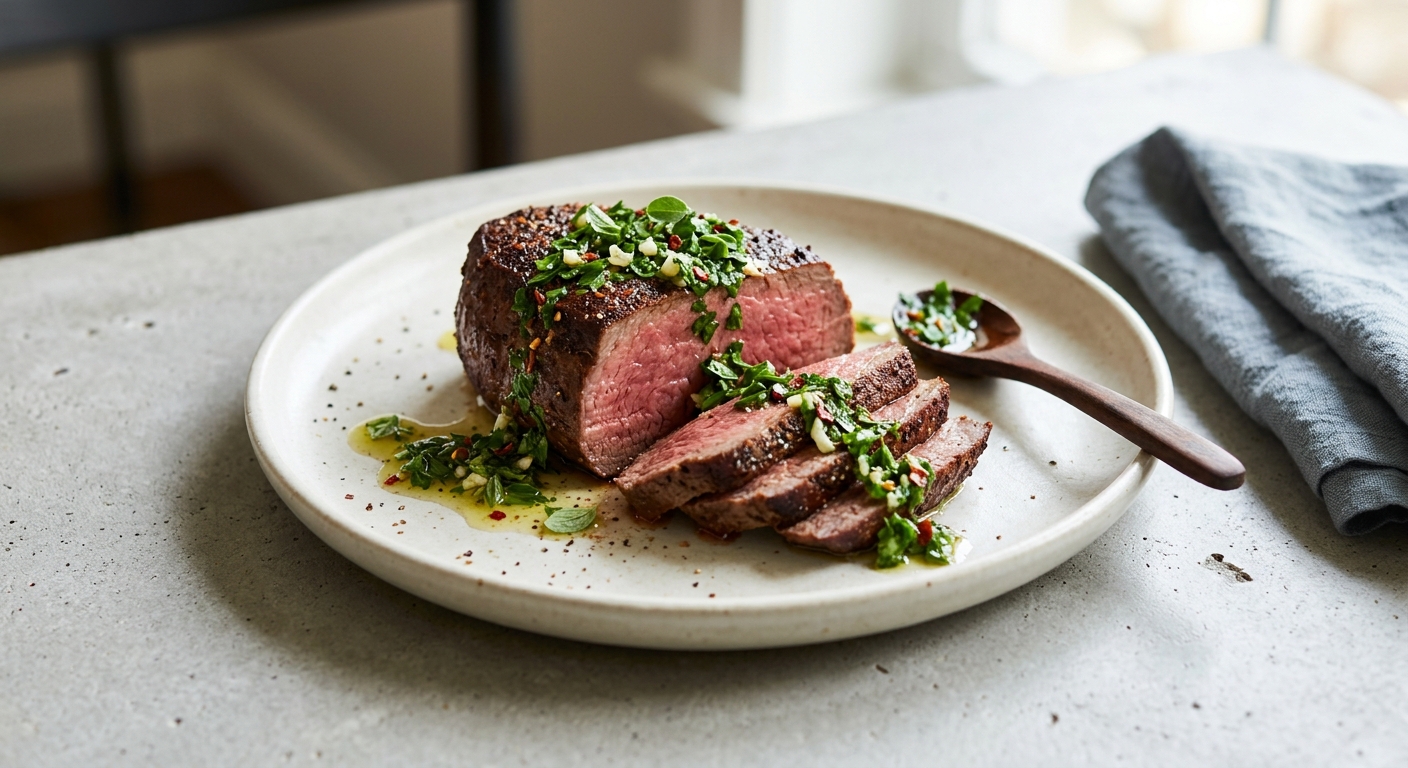
Beef tenderloin is the undisputed king of lean, nutrient-dense red meat. Cut from the psoas major muscle, which bears almost no load during the animal’s life, it is extraordinarily tender, low in connective tissue, and rich in heme iron, the form of iron that your body absorbs at two to three times the rate of plant-based non-heme iron. Paired with a classic Argentine chimichurri built on flat-leaf parsley, oregano, garlic, and red wine vinegar, this dish does double nutritional duty: the vitamin C in the herbs actively enhances iron absorption by reducing ferric iron to its more bioavailable ferrous form right at the gut wall.
What separates this recipe from a standard steakhouse plate is the calibration philosophy behind every ingredient. The tenderloin portion is sized to deliver a precise hit of complete protein and a full spectrum of essential amino acids, including lysine and leucine at levels that comfortably exceed adult RDA requirements. The chimichurri is not an afterthought. At two generous tablespoons per serving, it contributes meaningful amounts of vitamin K1 from parsley, polyphenols from oregano, and anti-inflammatory oleocanthal from the extra-virgin olive oil that carries the sauce. Every element earns its place on the plate.
Calibrated Cuisine presents this dish in four genuinely distinct cooking methods because the technique changes everything about texture, crust development, and moisture retention. The stovetop sear delivers the deepest Maillard crust. The oven method gives even edge-to-edge doneness through a reverse-sear approach. The pressure cooker produces a fork-tender braise that redefines the cut entirely. And the slow cooker transforms tenderloin into a meltingly soft centerpiece that works beautifully for meal prep and entertaining. Choose your method, follow the science, and cook with confidence.
4
servings
Ingredients
- 700 gcenter-cut beef tenderloin, trimmed of silverskin
- 2 tbspextra-virgin olive oil, divided
- 1 tspColima Sea SaltMicroplastic Free Salt
- 0.5 tspfreshly cracked black pepper
- 0.5 tspsmoked paprika
- 60 gfresh flat-leaf parsley leaves and tender stems, packed
- 10 gfresh oregano leaves
- 4 clovesgarlic, roughly chopped
- 1 smallshallot, roughly chopped
- 0.5 tspred pepper flakes
- 3 tbspred wine vinegar
- 4 tbspextra-virgin olive oil (for chimichurri)
- 2 tbspcold water
- —Colima Sea SaltMicroplastic Free Salt and black pepper to taste
Instructions
Click on an item below to shop for the recommended items for this recipe on Amazon.
As an Amazon Associate, we earn from qualifying purchases.
- Remove the tenderloin from the refrigerator 30 minutes before cooking to allow it to come to room temperature. This ensures even cooking from edge to center. Pat the surface completely dry with paper towels, as any surface moisture will steam the meat rather than sear it. Tie the roast at 2-inch intervals with butcher twine if it has uneven thickness, folding the thin tail end under and securing it so the roast is roughly uniform in diameter throughout.
- Combine the kosher salt, cracked black pepper, and smoked paprika in a small bowl. Rub 1 tablespoon of olive oil evenly over the entire surface of the tenderloin, then press the spice mixture firmly into all sides to form a thin, even crust.
- While the beef rests with its seasoning, make the chimichurri. Combine the parsley, oregano, garlic, shallot, and red pepper flakes in the bowl of a food processor. Pulse 8 to 10 times until the herbs are roughly chopped but not pureed. Scrape into a bowl, stir in the red wine vinegar, 4 tablespoons of olive oil, and 2 tablespoons of cold water. Season with sea salt and pepper. Cover and set aside at room temperature so the flavors meld while you cook the beef.
- Heat a large cast iron skillet over high heat for 3 full minutes until it is smoking vigorously. Add the remaining 1 tablespoon of olive oil and swirl to coat. Lay the tenderloin in the pan away from you. Sear without moving for 3 to 4 minutes until a deep mahogany crust forms on the first side. Rotate the roast a quarter turn and sear for another 2 to 3 minutes. Continue rotating and searing until all four long sides are browned. Use tongs to stand the roast on each short end for 30 seconds to sear the caps.
- Reduce heat to medium and continue cooking, rotating every 2 minutes, until an instant-read thermometer inserted into the thickest part reads 52 degrees Celsius (125 F) for medium-rare or 57 degrees Celsius (135 F) for medium. This final stage takes approximately 4 to 6 minutes depending on the diameter of your roast. Transfer immediately to a cutting board and tent loosely with foil. Rest for 8 to 10 minutes, during which the carryover heat will raise the internal temperature a further 3 to 5 degrees. Remove twine, slice into 4 equal medallions, and spoon chimichurri generously over each portion.
- Preheat your oven to 120 degrees Celsius (250 F) with a rack set in the center position. Line a rimmed baking sheet with a wire rack. Remove the tenderloin from the refrigerator 30 minutes before cooking. Pat completely dry with paper towels and tie with butcher twine at 2-inch intervals for uniform thickness. Combine the salt, pepper, and smoked paprika, rub 1 tablespoon olive oil over the meat, then press the spice blend firmly into all surfaces.
- Place the seasoned tenderloin on the wire rack over the baking sheet. Insert an oven-safe probe thermometer into the thickest part of the roast if you have one. Transfer to the preheated oven and cook at 120 degrees Celsius (250 F), checking the internal temperature after 20 minutes. Continue until the internal temperature reaches 46 degrees Celsius (115 F) for a medium-rare finish, or 51 degrees Celsius (124 F) for medium. This typically takes 25 to 35 minutes depending on roast diameter. The slow oven also evaporates surface moisture, perfectly preparing the meat for the final sear.
- While the beef is in the oven, prepare the chimichurri. Combine parsley, oregano, garlic, shallot, and red pepper flakes in a food processor. Pulse 8 to 10 times for a rough chop. Transfer to a bowl, stir in red wine vinegar, 4 tablespoons olive oil, and cold water. Season to taste, cover, and rest at room temperature.
- When the beef reaches the target low-oven temperature, remove it from the oven and let it rest uncovered on the rack for 5 minutes. Meanwhile, heat a large cast iron skillet over the highest flame your stovetop allows for at least 3 minutes until it is smoking. Add the remaining 1 tablespoon olive oil. Place the tenderloin in the screaming-hot pan. Sear each of the four long sides for just 45 to 60 seconds per side, using tongs to rotate quickly. The surface should be already so dry from the oven that a deep, even crust forms rapidly without any gray banding underneath.
- Transfer the seared tenderloin to a cutting board and rest uncovered for 5 minutes. Because most of the cooking happened in the low oven, carryover heat is minimal and resting time is shorter. Remove twine and slice into 4 equal medallions. The cross-section should show a uniform rosy pink color from edge to edge with only a thin, crisp brown crust. Plate and spoon chimichurri liberally over each piece.
- Pat the tenderloin completely dry with paper towels. Combine the salt, pepper, and smoked paprika, rub 1 tablespoon olive oil over the entire surface, and press the spice blend in firmly. Heat a large skillet over high heat until smoking, add the remaining tablespoon of olive oil, and sear the tenderloin for 2 minutes per side on all four long sides. You are not cooking the interior here, only building a flavor crust. Transfer the seared roast to the slow cooker insert.
- Add 3 tablespoons of the red wine vinegar to the hot skillet still over medium heat, scraping up all the browned fond (the caramelized protein deposits) from the bottom of the pan with a wooden spoon. Pour this deglazing liquid directly over the tenderloin in the slow cooker. This step captures the Maillard compounds from the sear and adds them to the braising liquid, preserving flavor that would otherwise be left behind in the pan.
- Prepare a simplified aromatics base by scattering the chopped garlic and shallot from the chimichurri ingredients directly around the tenderloin in the slow cooker. Add 3 tablespoons of olive oil over the top. Do not add large amounts of water or stock as the tenderloin will release its own moisture. Cover and cook on Low for 3 to 4 hours. Begin checking the internal temperature at 3 hours. For a moist, fork-tender result, pull at 71 degrees Celsius (160 F). Avoid cooking beyond 74 degrees Celsius (165 F) or the tenderloin will become dry.
- While the beef finishes in the slow cooker, make a fresh chimichurri using the remaining parsley, oregano, red pepper flakes, 1 tablespoon of fresh red wine vinegar, and 4 tablespoons olive oil. Pulse in a food processor, season, and set aside. Separately, spoon 2 tablespoons of the braising juices from the slow cooker into the chimichurri and stir to combine. This creates a hybrid herb sauce with a roasted, savory backbone that complements the braise-cooked beef.
- Remove the tenderloin from the slow cooker and transfer to a cutting board. Rest for 5 minutes. Slice into thick medallions or pull gently with two forks if the texture is very soft. Drizzle with the braising-chimichurri sauce and serve immediately over your preferred base. Skim excess fat from the braising liquid and offer it alongside as a jus.
- Select the Saute function on your pressure cooker or Instant Pot and set it to High. Allow the pot to heat for 3 to 4 minutes until the display reads Hot. Pat the tenderloin completely dry and season as directed, rubbing 1 tablespoon olive oil over the surface and pressing in the salt, pepper, and paprika blend. Add the remaining tablespoon of olive oil to the hot pot and sear the tenderloin for 2 minutes per side, rotating to brown all four long sides. Use long tongs to hold the ends upright for 30 seconds each. Press Cancel to turn off the Saute function.
- Remove the tenderloin and set aside briefly on a plate. Add the chopped garlic and shallot directly to the pot and stir for 30 seconds using the residual heat. Pour in 3 tablespoons of red wine vinegar and 60 ml (1/4 cup) of water, scraping the bottom of the pot thoroughly to release all browned bits. This deglazing step is mandatory when pressure cooking, as any stuck-on fond can trigger a Burn warning during pressurization and will also contribute off-flavors if left carbonized.
- Return the seared tenderloin to the pot, positioning it on the bottom with the browned side facing up. Scatter a handful of the fresh parsley stems (reserved from the chimichurri) into the liquid around the roast for additional flavor. Secure the lid and set the pressure release valve to Sealing. Select Pressure Cook (Manual) on High Pressure for 8 minutes. Note that the pot will take approximately 8 to 10 minutes to come to full pressure before the cook timer begins.
- When the cook cycle ends, perform a Quick Release by carefully switching the valve to Venting. Stand back as steam is released rapidly. Once the float valve drops, open the lid away from you. Check the internal temperature: it should read 65 to 71 degrees Celsius (150 to 160 F) for a moist, fully cooked but not dry result. If it reads below 60 degrees Celsius (140 F), reseal and pressure cook for an additional 3 minutes with another quick release.
- Transfer the tenderloin to a cutting board and rest for 5 minutes. While it rests, prepare the chimichurri by combining the parsley leaves, oregano, red pepper flakes, remaining red wine vinegar, and 4 tablespoons olive oil in a food processor. Pulse to a coarse sauce and season well. Optionally, strain 2 tablespoons of the cooking liquid from the pot into the chimichurri for a deeply savory herb sauce. Slice the rested tenderloin into four portions and serve topped generously with chimichurri.
Nutrition Breakdown
Per 1 serving (makes 4)
Vitamins & Minerals
% Daily Value based on a 2,000 calorie diet (FDA reference)
🧬 Essential Amino Acids
% of recommended daily intake (RDA) per serving
🛡 Antioxidant Profile
The Nutrition Science
The most nutritionally significant feature of this dish is the interplay between heme iron from beef and the vitamin C matrix of the chimichurri. Heme iron, bound within myoglobin and hemoglobin proteins in muscle tissue, is absorbed via the HCP1 (heme carrier protein 1) transporter at an estimated efficiency of 15 to 35 percent, making it up to three times more bioavailable than the non-heme iron in plant foods. A single 175g serving of beef tenderloin provides approximately 6.5mg of iron. Crucially, vitamin C (ascorbic acid) from the fresh parsley in the chimichurri does not enhance heme iron absorption directly as it does for non-heme iron, but it does contribute to total iron status by boosting the uptake of any incidental non-heme iron in the meal and by supporting the reduction of stored ferritin back to circulating transferrin.
Beef tenderloin is one of the most concentrated dietary sources of vitamin B12, providing over 120 percent of the adult daily requirement in a single serving. B12 is required for DNA synthesis, red blood cell maturation, and the maintenance of myelin sheaths around nerve fibers. Deficiency, which is common among older adults and exclusive plant-based eaters, presents as megaloblastic anemia, peripheral neuropathy, and cognitive decline. Animal-derived B12 is bound to protein and released by gastric acid and pepsin during digestion, making the well-seasoned, properly rested tenderloin an efficient delivery vehicle. Zinc from the beef further supports immune function and protein synthesis, while selenium acts as a cofactor for the antioxidant enzyme glutathione peroxidase.
The chimichurri is a delivery system for fat-soluble and water-soluble micronutrients alike. Vitamin K1 from flat-leaf parsley, at approximately 110mcg per serving, contributes 92 percent of the daily adequate intake and is essential for carboxylation of osteocalcin in bone matrix and for the clotting cascade proteins factors II, VII, IX, and X. The extra-virgin olive oil in the sauce is the critical transport medium: vitamins K1 and beta-carotene are fat-soluble and require dietary fat for micellar incorporation and absorption in the small intestine. Consuming the herb sauce with fat is not just a flavor decision but a nutritional one, increasing the bioavailability of these micronutrients by an estimated two to four-fold compared to consuming the herbs without fat.
Pro Tips
- Always pat the tenderloin bone dry before seasoning. Surface moisture is the single biggest enemy of crust formation, and even a small amount of water will drop pan temperature and cause steaming rather than searing during the first critical 60 seconds of contact.
- Make the chimichurri at least 20 minutes before serving and keep it at room temperature. Refrigerating it causes the olive oil to solidify and dulls the bright herbal flavors. Letting it rest at room temperature allows the garlic and vinegar to mellow and the herbs to fully infuse the oil.
- For the oven reverse-sear method, resist the temptation to rush the low-oven phase. The goal is a dry surface and an internal temperature of 46 to 51 degrees Celsius before the pan sear. A meat thermometer is not optional here; it is the difference between a perfectly pink center and an overcooked gray one.
- The slow cooker and pressure cooker methods produce a braised tenderloin that is nutritionally equivalent to the seared methods but texturally distinct. Slice thickly (at least 3 cm) rather than thinly for these versions, as the softer texture benefits from a substantial mouthful rather than thin slices that may fall apart.
- If you want to maximize the iron-absorption benefit of this meal, avoid drinking coffee or black tea within one hour before or after eating. Both contain tannins and chlorogenic acids that can reduce non-heme iron absorption by up to 60 percent, partially counteracting the nutritional work the chimichurri is doing.

Oh, this is exactly the kind of recipe I’m planning to feature in next month’s class on mineral absorption! I’ve been making chimichurri for years, but I love how you’re pairing it here with the heme iron science in mind, and that B12 percentage is just beautiful for folks who need that bioavailable boost. The sear technique you describe reminds me of why I always tell my students that cooking method matters as much as ingredient quality, and I’m curious about your thoughts on resting time before that final sear – does that affect the iron retention at all, or is that more of a texture thing?
This is such a smart pairing, and Chris makes a great point about the acid enhancing absorption. I’m curious though, what herbs are going into your chimichurri base? If you’re using parsley, oregano, or cilantro, there’s actually some interesting potential there beyond just flavor and bioavailability, especially if those herbs are sourced with their antioxidant and adaptogenic qualities in mind. I’ve found that incorporating something like dried reishi or medicinal mushroom powders alongside iron-rich meals genuinely supported my own iron metabolism after I recovered from burnout, possibly because the polysaccharides seemed to support overall nutrient utilization. Either way, the B12 preservation
Love this angle Sue, the herb-acid combo in chimichurri actually enhances heme iron bioavailability even further, especially if you’re using raw garlic and citrus. I’ve been searing tenderloin at exactly 130F internal temp to preserve the B12 (heat-sensitive vitamin) while still getting that crust for flavor, then finishing with the chimichurri off heat so those delicate volatile compounds don’t cook off. Your students will dig knowing the *why* behind every technique choice, not just the nutrition facts.