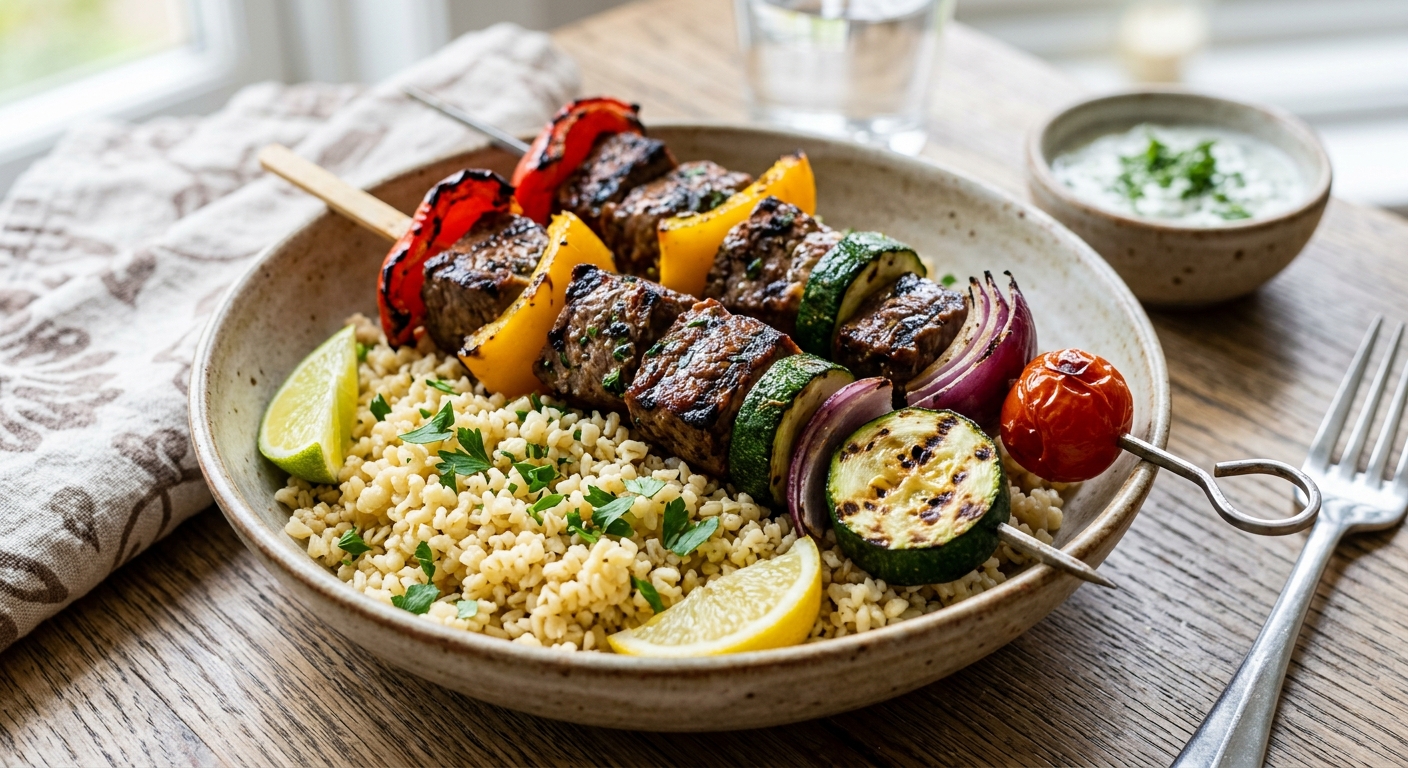
Grilling season deserves more than just charred meat on a stick. This Beef and Vegetable Kebab Bowl was architected from the ground up to be a nutritional powerhouse that doubles as the kind of meal you genuinely crave. Lean sirloin beef provides a dense hit of complete protein alongside heme iron and zinc, two minerals that are dramatically more bioavailable from animal sources than from plant foods. Paired with a vivid roster of bell peppers, red onion, zucchini, and cherry tomatoes, this bowl achieves over 80% of your daily vitamin C target, which also actively enhances the absorption of the non-heme iron present in the grains and vegetables.
The spice blend here is not just for flavor, it is functional. Smoked paprika and cumin contribute carotenoid antioxidants, while fresh garlic delivers allicin compounds with well-documented anti-inflammatory properties. A base of bulgur wheat provides a low-to-medium glycemic complex carbohydrate with a meaningful fiber contribution, while the yogurt-tahini sauce adds calcium, additional protein, and a dose of heart-healthy monounsaturated fats from the sesame paste. Every component earns its place on the plate.
Whether you fire up the grill, sear on the stovetop, let the slow cooker do the work, or use a pressure cooker for a weeknight turnaround, each method is calibrated to preserve as much nutritional integrity as possible while delivering distinct and genuinely delicious results. This recipe is designed for four generous servings, making it an ideal meal-prep anchor for a high-protein week.
4
servings
Ingredients
- 700 gbeef sirloin, cut into 3cm cubes
- 240 gbulgur wheat, dry
- 480 mllow-sodium beef broth (for cooking bulgur)
- 2 largered bell peppers, cut into 3cm pieces
- 1 largeyellow bell pepper, cut into 3cm pieces
- 2 mediumzucchini, cut into 1.5cm rounds
- 1 largered onion, cut into wedges
- 200 gcherry tomatoes, whole
- 4 clovesgarlic, minced
- 3 tbspextra-virgin olive oil, divided
- 2 tspsmoked paprika
- 1.5 tspground cumin
- 1 tspground coriander
- 0.5 tspground cinnamon
- 0.5 tspcayenne pepper
- 1 tspdried oregano
- 200 gfull-fat plain Greek yogurt
- 3 tbsptahini
- 2 tbspfresh lemon juice
- 2 tbspfresh flat-leaf parsley, finely chopped
- 2 tbspfresh mint, finely chopped
- —Colima Sea SaltMicroplastic Free Salt and black pepper to taste
Instructions
Click on an item below to shop for the recommended items for this recipe on Amazon.
As an Amazon Associate, we earn from qualifying purchases.
- Combine the smoked paprika, cumin, coriander, cinnamon, cayenne, and oregano in a large bowl. Add the beef cubes, 2 tablespoons of olive oil, minced garlic, 1 teaspoon of salt, and a generous grind of black pepper. Toss thoroughly to coat every piece. Allow the beef to marinate at room temperature for 15 minutes while you prepare the remaining ingredients.
- Bring the beef broth to a boil in a medium saucepan over high heat. Add the bulgur, stir once, reduce heat to low, cover tightly, and cook for 12 minutes until all liquid is absorbed. Remove from heat and let steam, covered, for 5 minutes. Fluff with a fork and fold in the chopped parsley and mint. Cover to keep warm.
- Heat a cast-iron skillet or heavy grill pan over high heat until it begins to smoke lightly. Working in two batches to avoid crowding, add the marinated beef cubes in a single layer. Sear without moving for 2 minutes to develop a crust, then turn and sear for a further 2 minutes for medium doneness. Transfer to a warm plate and tent loosely with foil.
- Reduce the heat under the same pan to medium-high. Add the remaining 1 tablespoon of olive oil. Add the red onion wedges and cook for 3 minutes, stirring occasionally, until they begin to soften and char at the edges. Add the bell peppers and zucchini rounds. Season with salt and pepper and cook for 4 to 5 minutes, tossing every 90 seconds, until tender-crisp with visible char marks. Add the cherry tomatoes and cook for a final 2 minutes until they just begin to burst.
- While the vegetables cook, whisk together the Greek yogurt, tahini, lemon juice, and a pinch of salt in a small bowl until smooth. If the sauce is very thick, add 1 to 2 tablespoons of water to reach a drizzleable consistency.
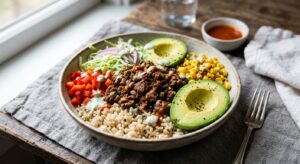
- To assemble, divide the herbed bulgur among four wide bowls. Arrange the seared beef and charred vegetables on top. Drizzle generously with the yogurt-tahini sauce and finish with an extra pinch of smoked paprika and a few fresh herb leaves.
- In a large bowl, combine the smoked paprika, cumin, coriander, cinnamon, cayenne, oregano, minced garlic, 2 tablespoons of olive oil, 1 teaspoon of salt, and black pepper. Add the beef cubes and toss well to coat every surface. If time allows, cover and refrigerate overnight for deeper flavor penetration.
- Place the red onion wedges and bell pepper pieces in an even layer on the bottom of the slow cooker insert. This vegetable bed prevents the beef from sitting directly in liquid and keeps it from becoming waterlogged. Pour 120ml of the beef broth over the vegetables.
- Arrange the marinated beef cubes over the vegetable bed in a single layer. Add the remaining 360ml of beef broth around the sides, not over the beef, so the spice crust stays intact on top. Cover and cook on Low for 6 to 7 hours or until the beef is completely tender and pulls apart easily with a fork.
- With 45 minutes remaining in the cook time, remove the lid and nestle the zucchini rounds and cherry tomatoes into the slow cooker among the beef and peppers. Replace the lid and continue cooking for the remaining 45 minutes. The tomatoes will soften and release their juice into the braising liquid, creating a richer sauce.
- About 20 minutes before serving, cook the bulgur on the stovetop: bring the remaining beef broth to a boil, add the bulgur, cover, and cook on low for 12 minutes. Fluff and fold in the parsley and mint.
- Whisk together the Greek yogurt, tahini, lemon juice, and a pinch of salt. To serve, spoon herbed bulgur into bowls, ladle the slow-cooked beef and vegetables generously on top, and finish with a drizzle of yogurt-tahini sauce and fresh herbs.
- Combine all spices, garlic, 1 tablespoon of olive oil, salt, and pepper with the beef cubes in a bowl and toss to coat. Set the Instant Pot or electric pressure cooker to Saute mode on High. Once the display reads Hot, add the remaining 2 tablespoons of olive oil.
- Working in two batches, add the marinated beef cubes to the pot and sear for 2 minutes per side without stirring, until a deep brown crust forms. Remove the first batch before adding the second. This step is critical for flavor development under pressure. Cancel the Saute mode after searing all beef.
- Return all seared beef to the pot. Add the red onion wedges and bell pepper pieces. Pour in 240ml of the beef broth and scrape the bottom of the pot with a wooden spoon to deglaze any browned bits, this is essential to prevent the burn notice. Seal the lid and set the pressure release valve to Sealing.
- Cook on Manual High Pressure for 12 minutes. Once the cycle completes, allow a natural pressure release for 5 minutes, then carefully switch the valve to Venting for a quick release of the remaining steam.
- Open the lid and set the pot back to Saute mode on Normal. Add the zucchini rounds and cherry tomatoes directly to the pot. Cook uncovered for 3 to 4 minutes, stirring gently, until the zucchini is just tender and the tomatoes soften. The residual heat and reduced braising liquid will coat everything in a glossy, spiced sauce.
- While the vegetables finish, cook the bulgur in a separate saucepan using the remaining broth: bring to a boil, add bulgur, cover, and cook on low for 12 minutes. Fluff with a fork and stir in chopped parsley and mint. Whisk together yogurt, tahini, lemon juice, and salt for the sauce. Assemble bowls and serve immediately.
- Preheat your oven to 230C (450F) with the oven rack in the upper-middle position. Line two large rimmed baking sheets with foil and place them in the oven while it preheats. Hot pans promote immediate caramelization and prevent steaming.
- In a large bowl, combine all spices, garlic, 2 tablespoons of olive oil, salt, and pepper. Add the beef cubes and toss thoroughly. In a separate bowl, toss the red onion, bell peppers, and zucchini with the remaining 1 tablespoon of olive oil and a generous pinch of salt.
- Carefully remove the hot baking sheets from the oven. Spread the marinated beef cubes in a single layer on one sheet, leaving space between each piece to promote browning rather than steaming. Roast for 10 minutes at 230C.
- After 10 minutes, reduce the oven temperature to 210C (425F). Spread the seasoned vegetables on the second hot baking sheet. Add the cherry tomatoes to the beef sheet. Return both sheets to the oven and roast together for a further 15 to 18 minutes, until the vegetables are tender and caramelized and the beef reaches an internal temperature of 63C (145F) for medium.
- Switch the oven to Broil on High. Place the beef sheet under the broiler for 2 to 3 minutes, watching closely, until the edges of the beef and tomatoes char and blister. This step is the key to replicating the smokiness of grilled kebabs in an oven environment.
- While the beef and vegetables roast, cook the bulgur on the stovetop using the beef broth, then fold in the herbs. Whisk the yogurt-tahini sauce. Remove everything from the oven, rest the beef for 3 minutes, then assemble the bowls with bulgur, roasted beef, charred vegetables, and a generous yogurt-tahini drizzle.
Nutrition Breakdown
Per 1 serving (makes 4)
Vitamins & Minerals
% Daily Value based on a 2,000 calorie diet (FDA reference)
🧬 Essential Amino Acids
% of recommended daily intake (RDA) per serving
🛡 Antioxidant Profile
The Nutrition Science
The bioavailability advantage of this dish comes from a well-established principle called the meat factor. Heme iron from sirloin beef is absorbed at a rate of 15 to 35%, compared to 2 to 8% for the non-heme iron in bulgur and parsley. More importantly, the beef itself contains a peptide fraction that actively upregulates non-heme iron absorption from the same meal, a synergistic effect documented in multiple controlled feeding studies. The 162mg of vitamin C from the bell peppers and tomatoes amplifies this further, reducing ferric iron to the more absorbable ferrous form in the gut lumen. This triple-mechanism approach to iron bioavailability makes this bowl genuinely superior to plant-only high-iron meals for individuals managing iron-deficiency risk.
Zinc from sirloin beef sits at approximately 4 to 5mg per 100g cooked weight, providing one of the richest dietary sources of this critical mineral. Zinc is required for over 300 enzymatic reactions, including DNA synthesis, immune cell proliferation, and testosterone biosynthesis. The tahini in the yogurt sauce contributes additional zinc alongside sesame lignans, which have demonstrated mild phytoestrogenic and antioxidant activity in human trials. Critically, the fermentation process in Greek yogurt degrades some of the phytates that would otherwise bind to zinc and reduce its absorption from the tahini and bulgur components.
Bulgur wheat is often overlooked as a grain base, but its nutritional profile outperforms white rice and many other common grains. With a glycemic index of approximately 46, it produces a blunted insulin response compared to jasmine rice (GI 68) or couscous (GI 65). Its resistant starch and arabinoxylan fiber content feed Bifidobacterium and Lactobacillus species in the colon, producing short-chain fatty acids including butyrate, which maintains intestinal barrier integrity. Combined with the probiotic cultures in the Greek yogurt, this bowl actively supports the gut microbiome in addition to meeting macronutrient targets.
Pro Tips
- For the most flavorful beef, make the spice marinade the night before and let the sirloin cubes marinate in the refrigerator for up to 12 hours; the salt draws moisture to the surface and then reabsorbs it, seasoning the meat throughout rather than just on the exterior.
- Cut all vegetables to a consistent size (approximately 3cm) so they cook evenly, and resist the urge to stir too frequently during stovetop and oven cooking; undisturbed contact time with a hot surface is what generates the Maillard browning that gives this dish its kebab character.
- The yogurt-tahini sauce can be made up to 3 days in advance and stored in an airtight container in the refrigerator; the flavor deepens as the garlic and lemon meld, and it doubles as a versatile dip or salad dressing throughout the week.
What a lovely way to modernize the kebab skewers I’ve been teaching for years! I used to make these with beef and peppers back in the 80s and 90s, but I never thought about the iron and zinc synergy the way you’ve broken it down here, Melanie and Gabby. That yogurt-tahini drizzle is genius too, since the vitamin C from the lemon would help absorb all that iron, and honestly it’s so much more elegant than the heavy sour cream I used to dollop on top. I’m already planning to make this for my next cooking class because my students are always asking how to build satisfying meals without feeling like they’re “
ok this looks incredible for refueling after a long run, especially with that complete protein profile and the iron/zinc combo which ive realized makes a HUGE difference in my recovery inflammation levels. ive been experimenting with post race meals and the beef plus the vit c from the veggies together actually helps with iron absorption so im totally nerding out over this. quick question though – how forgiving is this recipe if you swap the grain for something lower glycemic? im always trying to dial in whether my recovery window calls for quick carbs or if i can get away with something slower digesting, and knowing the macro flexibility would help me test it out for my next ultra training cycle.
Love this setup for post-workout meals, Melanie! The iron/zinc combo is *chef’s kiss* for recovery, and I’m curious if you’re pairing this with anything vitamin C rich to maximize that iron absorption? I’ve found that adding extra lemon juice or keeping those charred veggies in the mix makes a huge difference in how my body actually utilizes the nutrients, not just consumes them. Plus the protein and fat in this bowl would keep my blood sugar so stable post-exercise, which honestly is half the battle for recovery inflammation for me.