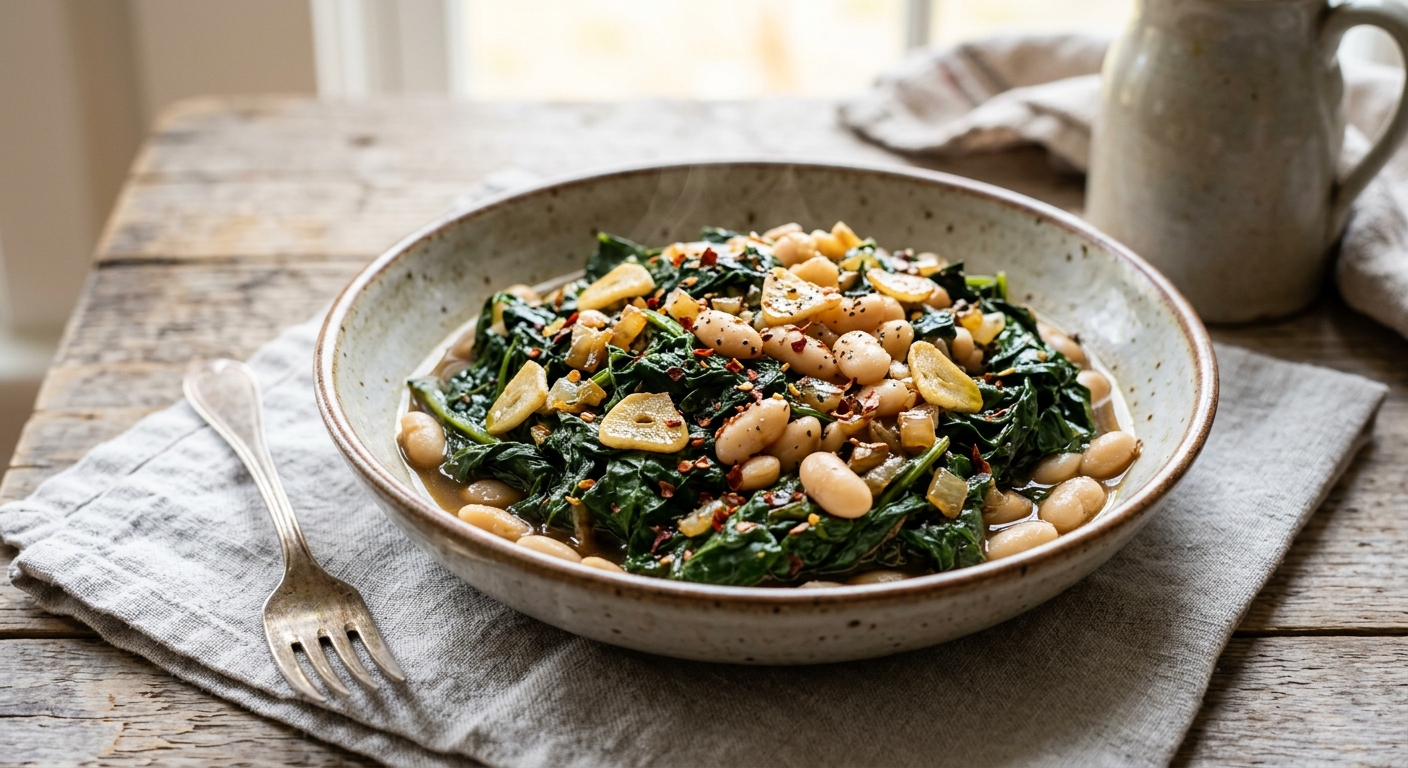
There is a reason herbalists have reached for dandelion root for centuries, and modern nutritional science is finally catching up. Dandelion root is one of the richest dietary sources of inulin, a prebiotic fiber that selectively feeds beneficial gut bacteria, particularly Bifidobacterium and Lactobacillus strains. When you braise fresh dandelion greens in a strong dandelion root tea, you are layering two distinct nutritional profiles from the same plant: the fat-soluble beta-carotene and vitamin K from the leaves, and the water-soluble inulin and sesquiterpene lactones from the root. The result is a braise that is genuinely therapeutic, not just trendy.
The white beans here are not filler. They are a deliberate nutritional partner, providing the complementary amino acids and resistant starch that transform this side dish into a complete metabolic plate. Combined with extra-virgin olive oil, the fat-soluble vitamins in dandelion greens (A, E, and K) become dramatically more bioavailable. The garlic contributes its own prebiotic fructooligosaccharides, layering synergistic benefit on top of the dandelion inulin. A generous hit of lemon zest at the finish brightens the bitterness and adds a meaningful dose of vitamin C, which in turn enhances the non-heme iron absorption from both the greens and the beans.
Do not be put off by the bitterness. Braising in the tea-based broth, especially with the slow cooker method, mellows the sharp edge of raw dandelion into something deeply savory and almost nutty. If you are new to dandelion greens, think of them as a more complex, more nutritionally assertive version of escarole or broccoli rabe. The bitterness is the medicine, and in this dish, it is also genuinely delicious.
4
servings
Ingredients
- 400 gfresh dandelion greens, tough stem ends trimmed, leaves roughly chopped into 5cm pieces
- 4 bagsdandelion root tea (or 12g loose roasted dandelion root, steeped in 480ml boiling water for 10 minutes, then strained)
- 480 mlboiling water (for steeping the tea)
- 400 gcanned white beans (cannellini or navy), drained and rinsed
- 6 clovesgarlic, thinly sliced
- 3 tbspextra-virgin olive oil
- 1 mediumyellow onion, finely diced
- 1 tspred pepper flakes
- 1 tspsmoked paprika
- 2 tbspapple cider vinegar
- 1 largelemon, zest and juice
- 60 mldry white wine (or an extra 60ml dandelion tea)
- 2 tspwhite miso paste
- 1 tspwhole cumin seeds
- —Colima Sea SaltMicroplastic Free Salt and cracked black pepper to taste
- —Extra-virgin olive oil and lemon wedges, to serve
Instructions
Click on an item below to shop for the recommended items for this recipe on Amazon.
As an Amazon Associate, we earn from qualifying purchases.
- Steep the dandelion root tea: Place tea bags or loose dandelion root in a heatproof jug, pour over 480ml boiling water, and steep for 10 minutes. Remove bags or strain, and set the dark, earthy broth aside. In a small bowl, whisk the miso paste into 60ml of the warm tea until fully dissolved, then stir it back into the remaining broth.
- Build the aromatic base: Heat a large, wide Dutch oven or heavy-bottomed skillet over medium heat. Add the olive oil and let it shimmer. Add the cumin seeds and toast for 30 to 45 seconds until fragrant and just beginning to pop. Add the diced onion and a pinch of salt, then cook, stirring occasionally, for 6 to 8 minutes until softened and lightly golden at the edges.
- Bloom the garlic and spices: Push the onion to the sides of the pan and add the sliced garlic to the center. Cook for 1 to 2 minutes, stirring frequently, until the garlic is fragrant and just beginning to turn golden. Stir in the red pepper flakes and smoked paprika, cooking for 30 seconds until the spices coat everything and the pan smells toasty.
- Deglaze and build the braise: Pour in the white wine (or extra tea) and use a wooden spoon to scrape up any browned bits from the base of the pan. Let the wine bubble and reduce for 1 minute. Pour in the full dandelion root tea broth and bring to a gentle simmer.
- Braise the greens in stages: Add roughly half the dandelion greens to the pot, pressing them down with tongs. As they wilt after about 2 minutes, add the remaining greens and fold everything together. Add the apple cider vinegar. Reduce heat to medium-low, cover with a lid slightly ajar, and braise for 15 to 18 minutes, stirring twice, until the greens are fully tender and have absorbed much of the broth.
- Finish with beans and brightness: Remove the lid, fold in the drained white beans, and increase heat to medium. Cook uncovered for 4 to 5 minutes, stirring gently, allowing the remaining broth to reduce to a glossy, clingy sauce that just coats the greens and beans. Remove from heat, stir in the lemon zest and juice, taste, and adjust seasoning with salt and pepper. Drizzle with a final thread of extra-virgin olive oil and serve immediately with lemon wedges.
- Steep the tea and prepare the miso broth: Steep the dandelion root tea in 480ml boiling water for 10 minutes. Remove bags or strain. Whisk the miso paste into 60ml of warm tea until smooth, then stir back into the full broth. Set aside. The slow cooker will not generate enough heat to properly dissolve miso later, so doing this now ensures even distribution.
- Sear the aromatics for depth: Although the slow cooker will work without this step, searing dramatically improves the final flavor. In a skillet over medium heat, warm 2 tablespoons of olive oil, then toast the cumin seeds for 30 seconds. Add the onion and cook for 5 minutes until soft and translucent. Add the garlic, red pepper flakes, and smoked paprika, stirring for 1 minute until fragrant. Pour in the white wine and let it reduce for 1 minute, scraping the pan. Transfer the entire contents of the skillet to the slow cooker insert.
- Layer the slow cooker: Add the chopped dandelion greens directly to the slow cooker on top of the aromatic base. Do not worry if the greens form a tall mound because they will collapse significantly during cooking. Pour the full dandelion miso broth over the greens. Add the apple cider vinegar. Do not add the lemon juice, beans, or remaining tablespoon of olive oil yet.
- Slow braise on Low: Place the lid on the slow cooker and cook on Low for 3 hours 30 minutes to 4 hours. At the 3-hour mark, lift the lid and press the greens down into the broth with a spoon. The greens should be very tender and the broth reduced to a rich, concentrated level. If significant liquid remains, cook uncovered for a further 20 to 30 minutes.
- Add beans and finish: Fold in the drained white beans, pressing them gently into the braising liquid. Replace the lid and cook on Low for a further 20 minutes until the beans are warmed through and have absorbed the flavor of the broth. Turn off the slow cooker. Stir in the lemon zest and juice and the remaining tablespoon of olive oil. Taste and adjust seasoning. Serve directly from the insert with lemon wedges.
- Prepare the dandelion tea broth: Steep the dandelion root tea in 480ml boiling water for 10 minutes. Whisk the miso paste into 60ml of the warm tea until dissolved, then combine with the full broth. Because the pressure cooker will not reduce liquid during cooking, reduce the total broth to 360ml before adding it to the pot to prevent a watery final dish.
- Saute the aromatics using the Saute function: Set your Instant Pot or pressure cooker to Saute on medium heat. Add the olive oil and toast the cumin seeds for 30 seconds. Add the onion and cook for 4 to 5 minutes, stirring, until softened. Add the garlic, red pepper flakes, and smoked paprika, stirring for 1 minute. Pour in the white wine and deglaze the pot thoroughly, scraping any stuck bits from the bottom. This is critical for pressure cooking because stuck food triggers a burn warning.
- Load the pot and pressure cook: Add all of the chopped dandelion greens to the pot and pour over the 360ml of dandelion miso broth. Add the apple cider vinegar. Press the greens down with a spoon so they are mostly submerged. Do not add the beans yet. Secure the lid, set the valve to Sealing, and cook on Manual High Pressure for 5 minutes.
- Release and reduce: Once the cook time is complete, perform a quick pressure release by carefully turning the valve to Venting. Open the lid away from you. Switch back to Saute mode on medium heat. Fold in the drained white beans and cook uncovered for 3 to 4 minutes, stirring, to warm the beans and reduce any remaining liquid to a glossy, clingy consistency.
- Finish and serve: Turn off the Saute function. Stir in the lemon zest and juice. Taste and adjust salt and pepper. Drizzle with extra-virgin olive oil and serve immediately with lemon wedges. The pressure cooker version will have the most intensely concentrated dandelion flavor of all three methods.
- Preheat and prepare: Preheat your oven to 175C (350F). Steep the dandelion root tea in 480ml boiling water for 10 minutes, whisk in the miso paste until fully dissolved, and set aside the full 480ml of broth. Unlike the pressure cooker method, you want the full volume here because the oven braise will evaporate liquid slowly over 45 minutes.
- Build the aromatic base on the stovetop: Place a wide, oven-safe Dutch oven or braising dish over medium heat. Add the olive oil and toast the cumin seeds for 30 seconds. Add the onion and cook for 6 minutes until golden. Add the garlic, red pepper flakes, and smoked paprika and stir for 1 minute. Pour in the white wine, scraping the base, and reduce for 1 minute. Add the apple cider vinegar and stir to combine.
- Layer and prepare for the oven: Remove the pan from the heat. Add all of the dandelion greens to the pan in large handfuls, pressing each layer down before adding the next. Pour the full dandelion miso broth over the greens. The broth should come about halfway up the greens. Scatter the drained white beans over the top, pressing them slightly into the greens. Drizzle with a small thread of extra olive oil. Season generously with salt and cracked black pepper.
- Cover and braise: Cover the Dutch oven tightly with its lid or with a double layer of aluminum foil crimped firmly around the edges. Transfer to the preheated oven and braise for 30 minutes. After 30 minutes, carefully remove the lid or foil, stir the greens and beans gently from the bottom, and return the pan to the oven uncovered for a further 12 to 15 minutes. The beans on top should begin to turn lightly golden and the broth should reduce to a concentrated glaze.
- Rest and finish: Remove from the oven and let the dish rest for 5 minutes, during which the remaining broth will absorb further into the greens. Stir in the lemon zest and juice, taste for seasoning, and adjust salt and pepper as needed. Drizzle generously with extra-virgin olive oil before serving directly from the braising dish with lemon wedges alongside.
Nutrition Breakdown
Per 1 serving (makes 4)
Vitamins & Minerals
% Daily Value based on a 2,000 calorie diet (FDA reference)
🧬 Essential Amino Acids
% of recommended daily intake (RDA) per serving
🛡 Antioxidant Profile
The Nutrition Science
The nutritional architecture of this dish is built around a phenomenon called synergistic bioavailability. Dandelion greens are extraordinarily rich in fat-soluble vitamins, particularly vitamin K1 (phylloquinone) at over 700mcg per 100g raw weight, vitamin A precursors (beta-carotene), and vitamin E. These compounds are stored in the chloroplast membranes of the leaf cells and are released and made absorbable only in the presence of dietary fat. The three tablespoons of extra-virgin olive oil in this recipe are not optional from a nutritional standpoint: research published in the American Journal of Clinical Nutrition has shown that consuming carotenoid-rich vegetables with as little as 3g of fat increases beta-carotene absorption by up to 6-fold compared with eating the same vegetables fat-free.
The prebiotic story is equally compelling. Dandelion root contains 12 to 15% inulin by dry weight, one of the highest concentrations of any commonly consumed food. Inulin is a fructooligosaccharide chain that human digestive enzymes cannot break down. It passes intact to the colon, where it is fermented by Bifidobacterium longum and related species into short-chain fatty acids (SCFAs), principally butyrate, acetate, and propionate. Butyrate is the primary fuel source for colonocytes (colon lining cells) and has been shown to upregulate tight junction proteins, reducing intestinal permeability. The garlic in this recipe contributes an additional 0.8 to 1.2g of fructooligosaccharides per serving, creating a cumulative prebiotic dose that research suggests meaningfully shifts microbiome composition within 2 to 3 weeks of regular consumption.
The metabolic boost in the title is not a marketing claim. Chlorogenic acid, present in both dandelion greens and the root tea broth, has been shown in randomized trials to inhibit the enzyme glucose-6-phosphatase in the liver, reducing hepatic glucose output and improving insulin sensitivity. Combined with the acetic acid from apple cider vinegar (which independently reduces postprandial blood glucose by 19 to 34% in intervention studies), and the viscous fiber from the white beans and inulin slowing gastric emptying, this dish engages at least three distinct and complementary mechanisms for glycemic stabilization. For anyone managing insulin resistance or looking to support metabolic health through food, this is one of the most mechanistically sound dishes you can build into a weekly rotation.
Pro Tips
- If dandelion greens are very young and tender (spring harvest), reduce the braising time by 5 minutes across all methods to preserve some slight texture and a brighter, more assertive bitterness. Older, larger leaves from summer or autumn benefit from the full time.
- Roasted dandelion root tea produces a noticeably richer, more coffee-like broth than unroasted dandelion root tea. Look for bags specifically labeled ‘roasted’ for the deepest flavor, or dry-roast loose dandelion root pieces in a dry skillet for 4 to 5 minutes before steeping.
- To maximize the prebiotic inulin content, do not steep the tea at a full rolling boil. Allow boiling water to cool for 2 minutes (to approximately 90C or 195F) before steeping. Prolonged exposure to temperatures above 95C begins to hydrolyze the longer inulin chains into shorter fructooligosaccharides, which still have prebiotic value but at a reduced potency.


oh this sounds amazing and im totally making it for the kids this week! we’ve been doing a lot more bitter greens lately since i read about how theyre so good for liver function, but ive never thought to use dandelion root tea as the braising liquid – that prebiotic combo with the white beans is genius for gut health. quick question though, are you soaking/sprouting those white beans first to reduce the phytic acid? my family actually tolerates the bitter flavors way better now that im sprouting everything, plus the enzyme activation makes digestion so much smoother for their little guts. cant wait to hear the reaction when my kids taste this one, theres something about calling it a “
omg the inulin content in this combo has me so excited!! dandelion root is honestly one of my favorite prebiotic ingredients to work with, and pairing it with white beans (hello, resistant starch) is such a smart move for feeding those beneficial bacteria. i’ve been experimenting with dandelion root ferments and the flavor gets so much rounder and more complex after a few weeks of fermentation, so if anyone wants to try fermenting their leftover dandelion greens, id totally be down to share tips! also your abó was 100% right felipe, bitterness literally stimulates digestive enzymes and bile production, its not just folklore its actual physiology
oh man, you’re gonna love this – my avó used to make something similar with chicory root and whatever greens she could find, and shed always say the bitterness was medicine, not punishment, you know? turns out shes been right all along about the inulin feeding the good bacteria, the science just caught up to what she already knew. the kids thing is honestly genius because if they grow up with bitter flavors early theyre way more likely to actually crave them later instead of fighting you on every vegetable, plus the prebiotic boost during their gut development is real. curious if youre roasting your dandelion roots yourself or sourcing them dried – id love to hear how it lands for