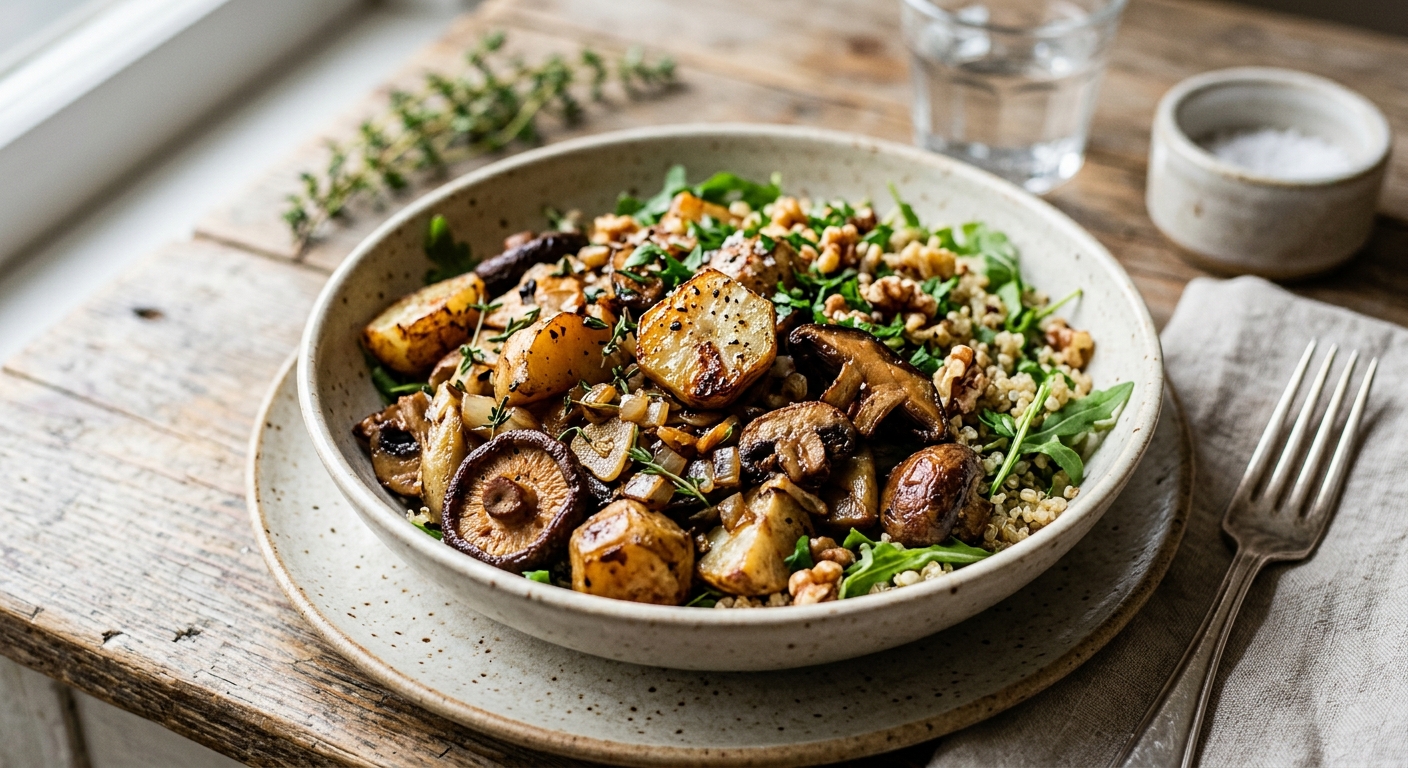
Jerusalem artichokes, also called sunchokes, are one of the most underutilized vegetables in the modern kitchen, and one of the most nutritionally remarkable. A single 200-gram serving provides roughly 40 to 47 grams of inulin, a prebiotic fiber that selectively feeds Bifidobacterium and Lactobacillus species in the gut. This fermentation cascade produces short-chain fatty acids, butyrate in particular, which strengthen the intestinal lining, regulate blood sugar response, and support the gut-brain axis. Paired with a medley of shiitake, cremini, and oyster mushrooms, each loaded with beta-glucans and ergothioneine, this bowl becomes a genuine functional food rather than just a comforting weeknight dinner.
The real genius of this recipe is in how the cooking method shapes both flavor and nutrient retention. Roasting sunchokes at high heat drives Maillard reactions across their irregular, knobby surfaces, producing nutty, caramel-forward notes that would never emerge from boiling. Mushrooms, handled separately and cooked hot and dry, lose moisture rapidly and concentrate their glutamates into intensely savory, almost meaty bites. A finishing drizzle of cold-pressed olive oil adds oleocanthal, a natural COX inhibitor with anti-inflammatory properties comparable to ibuprofen at culinary doses, while toasted pumpkin seeds contribute a complete mineral complement including zinc, magnesium, and manganese.
Every cooking method in this recipe, whether the high-heat stovetop and oven finish, the long gentle braise of the slow cooker, or the rapid pressure-cook, has been calibrated to preserve the heat-sensitive B vitamins in the mushrooms while still fully softening the sunchokes, whose tough cell walls require real heat to break down. Whichever method you choose, you are looking at a single bowl that covers more than 35% of your daily value for iron, copper, potassium, and phosphorus, plus meaningful amounts of B2, B3, B5, and folate, all in under 420 calories.
4
servings
Ingredients
- 600 gJerusalem artichokes (sunchokes), scrubbed and cut into 3cm chunks
- 250 gshiitake mushrooms, stems removed, caps thickly sliced
- 200 gcremini mushrooms, quartered
- 150 goyster mushrooms, torn into large pieces
- 3 tbspextra-virgin olive oil, divided
- 1 mediumyellow onion, finely diced
- 4 clovesgarlic, thinly sliced
- 1 tbspfresh thyme leaves (or 1 tsp dried)
- 1 tbspfresh rosemary, finely chopped (or 1 tsp dried)
- 720 mllow-sodium vegetable broth
- 120 mldry white wine (or additional broth)
- 100 gbaby spinach or torn kale leaves
- 60 gpumpkin seeds (pepitas), raw
- 2 tbspwhite miso paste
- 1 tbspapple cider vinegar
- 1 tspsmoked paprika
- 0.5 tspground black pepper
- —Colima Sea SaltMicroplastic Free Salt to taste
- —Fresh flat-leaf parsley, roughly chopped, to serve
- —Lemon wedges to serve
Instructions
Click on an item below to shop for the recommended items for this recipe on Amazon.
As an Amazon Associate, we earn from qualifying purchases.
- Toast the pumpkin seeds in a dry large skillet or Dutch oven over medium heat, stirring frequently, for 3 to 4 minutes until they begin to pop and turn golden. Transfer to a small bowl and set aside.
- Return the pan to medium-high heat and add 1 tablespoon of the olive oil. When it shimmers, add the cremini and shiitake mushrooms in a single layer, resisting the urge to stir for the first 3 minutes. Let them develop a deep golden crust on one side, then toss and cook for 2 more minutes. Season lightly with salt, then transfer mushrooms to a plate. Add the oyster mushrooms to the same dry pan, cook for 2 minutes per side until their edges crisp, and add them to the plate with the other mushrooms.
- Reduce heat to medium and add another tablespoon of olive oil. Add the diced onion and cook, stirring occasionally, for 5 to 6 minutes until softened and beginning to turn golden at the edges. Add the garlic, thyme, rosemary, and smoked paprika and stir for 90 seconds until fragrant.
- Add the sunchoke chunks and stir to coat in the aromatics. Pour in the white wine and let it bubble vigorously, scraping up any browned bits from the bottom of the pan. Cook for 2 minutes until the wine reduces by half.
- Pour in the vegetable broth, bring to a boil, then reduce to a steady simmer. Cover partially with a lid and cook for 18 to 22 minutes, stirring occasionally, until the sunchokes are completely tender when pierced with a knife and the broth has reduced by about a third.
- Whisk the miso paste into 3 tablespoons of the hot broth in a small bowl until smooth, then stir this mixture back into the pan along with the apple cider vinegar. Taste and adjust salt. Return the cooked mushrooms to the pan and stir gently to combine.
- Add the spinach or kale in handfuls, folding it into the hot mixture for 1 to 2 minutes until just wilted. Remove from heat, drizzle with the remaining tablespoon of olive oil, and serve immediately in warmed bowls topped with toasted pumpkin seeds, fresh parsley, and a squeeze of lemon.
- Toast the pumpkin seeds in a dry skillet over medium heat for 3 to 4 minutes until golden and popping. Transfer to a bowl. In the same skillet, heat 1 tablespoon of olive oil over medium-high heat, add the onion, and cook for 4 minutes until softened. Add the garlic, thyme, rosemary, and smoked paprika and stir for 60 seconds. Scrape everything into the slow cooker insert.
- Add the sunchoke chunks directly to the slow cooker insert along with all three varieties of mushrooms. Stir to distribute the aromatics evenly throughout the vegetables.
- Whisk together the vegetable broth, white wine, apple cider vinegar, and black pepper in a measuring jug, then pour over the vegetables. The liquid should come about two-thirds of the way up the vegetables, not fully submerge them. Place the miso paste on top without stirring (it will incorporate as it cooks).
- Set the slow cooker to Low and cook for 6 to 7 hours, or until the sunchokes are very tender and the mushrooms have melded into the broth. Avoid opening the lid during the first 4 hours to maintain temperature.
- When the cook time is complete, stir the now-softened miso into the broth. Taste and adjust salt. Fold in the spinach or kale, replace the lid, and cook on High for 5 to 8 minutes until the greens are just wilted. Drizzle with the remaining 2 tablespoons of olive oil, ladle into bowls, and finish with toasted pumpkin seeds, fresh parsley, and lemon wedges.
- Set your Instant Pot or electric pressure cooker to Saute on High. Once hot, add the pumpkin seeds and dry-toast for 2 to 3 minutes, stirring constantly, until golden. Remove and set aside. Add 1 tablespoon of olive oil to the pot.
- Add all three mushroom varieties to the hot pot in as close to a single layer as possible. Do not stir for 2 minutes, allowing the base layer to brown. Stir once and cook for another 2 minutes. The mushrooms will release liquid; continue cooking on Saute until most of that liquid has evaporated and the mushrooms look glossy and concentrated, about 3 more minutes. Push the mushrooms to the sides of the pot.
- Add the remaining olive oil to the center of the pot, then add the onion and cook for 3 minutes until softened. Add the garlic, thyme, rosemary, and smoked paprika, stirring constantly for 60 seconds. Deglaze with the white wine, scraping the bottom of the pot thoroughly to prevent a burn warning. Cook for 90 seconds until the wine reduces.
- Add the sunchoke chunks and pour in the vegetable broth. Stir briefly, then press the sunchokes down so they are mostly submerged. Dissolve the miso paste into 2 tablespoons of the broth before adding (this ensures even distribution). Add the apple cider vinegar. Cancel Saute mode.
- Secure the lid and set the pressure release valve to Sealing. Cook on Manual High Pressure for 9 minutes. When the cycle completes, allow a 5-minute natural pressure release, then carefully switch to Quick Release for the remaining pressure.
- Open the lid away from you. The sunchokes should be very tender. Stir in the spinach or kale using the residual heat, folding until wilted, about 2 minutes. Adjust seasoning, ladle into bowls, and top with toasted pumpkin seeds, fresh parsley, and lemon.
- Preheat your oven to 220 degrees C (425 degrees F) with two racks positioned in the upper-middle and lower-middle positions. Line a large rimmed baking sheet with parchment paper. Toss the sunchoke chunks with 1.5 tablespoons of olive oil, smoked paprika, a generous pinch of salt, and the black pepper. Spread in a single layer on the baking sheet, making sure the cut sides face down for maximum browning.
- Roast the sunchokes on the upper-middle rack for 22 to 25 minutes, flipping once halfway through, until deeply golden-brown and caramelized on the cut surfaces and completely tender when pierced. Remove from oven and set aside. Reduce oven temperature to 175 degrees C (350 degrees F).
- While the sunchokes roast, heat 1 tablespoon of olive oil in a Dutch oven or oven-safe casserole over medium-high heat on the stovetop. Add all three mushroom varieties and cook undisturbed for 3 minutes to develop browning, then toss and cook for 2 more minutes. Add the onion and cook for 4 minutes, then add the garlic, thyme, and rosemary, stirring for 60 seconds. Deglaze with the white wine, scraping up any browned bits, and cook for 2 minutes.
- Pour in the vegetable broth and bring to a simmer. Whisk the miso paste with 3 tablespoons of hot broth in a small bowl until smooth, then stir back in along with the apple cider vinegar. Nestle the roasted sunchokes into the Dutch oven among the mushrooms and broth.
- Toast the pumpkin seeds on a small dry baking sheet at 175 degrees C for 6 to 8 minutes until golden, watching carefully. Cover the Dutch oven with its lid and transfer to the oven. Bake for 15 to 18 minutes until the broth is fragrant and the flavors have fully melded.
- Remove the Dutch oven from the oven. Scatter the spinach or kale over the top, replace the lid for 3 minutes to let the residual heat wilt the greens without cooking them through. Drizzle with the remaining half tablespoon of olive oil, serve directly from the pot into warmed bowls, and finish with toasted pumpkin seeds, fresh parsley, and lemon wedges.
Nutrition Breakdown
Per 1 serving (makes 4)
Vitamins & Minerals
% Daily Value based on a 2,000 calorie diet (FDA reference)
🧬 Essential Amino Acids
% of recommended daily intake (RDA) per serving
🛡 Antioxidant Profile
The Nutrition Science
The nutritional architecture of this dish is built around two complementary gut-health mechanisms. First, the inulin-type fructans in Jerusalem artichokes, present at approximately 8 to 10 grams per 150g serving of raw sunchoke, are fermented exclusively in the colon by beneficial bacteria, bypassing small intestinal digestion entirely. This fermentation produces butyrate, acetate, and propionate, three short-chain fatty acids that colonocytes use as their primary fuel source. Butyrate in particular has been shown in clinical studies to downregulate pro-inflammatory cytokines including TNF-alpha and IL-6, reinforce tight junction proteins in the gut epithelium, and even reduce the risk of colorectal cancer via histone deacetylase inhibition. Second, the beta-glucans from shiitake and oyster mushrooms bind to Dectin-1 receptors on dendritic cells and macrophages, triggering a trained immunity response that enhances pathogen defense without promoting the chronic low-grade inflammation associated with metabolic syndrome.
From a mineral metabolism standpoint, this bowl is remarkably well constructed. The copper content at over 100% DV is supplied primarily by the shiitake and cremini mushrooms, and copper plays an irreplaceable role in iron transport (as a cofactor for ceruloplasmin), collagen cross-linking, and the function of superoxide dismutase, the body’s frontline enzymatic antioxidant. Pumpkin seeds contribute zinc, magnesium, and manganese, three minerals that work synergistically in over 300 enzyme systems related to glucose regulation, protein synthesis, and bone mineralization. Critically, the vitamin C provided by the parsley and lemon finish, even at a garnish-level dose, meaningfully enhances the absorption of non-heme iron from the sunchokes and mushrooms by reducing ferric iron (Fe3+) to the more bioavailable ferrous form (Fe2+) in the gut lumen.
The miso paste in this recipe is more than a flavor enhancer. Unpasteurized or minimally processed white miso carries viable Aspergillus oryzae cultures and a significant concentration of isoflavones including daidzein and genistein. While the cooking process does reduce live probiotic counts, the fermentation-derived compounds, including glutamate, nucleotides, and organic acids, contribute to the umami intensity of the broth and provide preformed glutathione that survives digestion and contributes to the liver’s detoxification capacity. Apple cider vinegar rounds out the metabolic profile: its acetic acid content has been documented in peer-reviewed trials to reduce postprandial blood glucose by up to 20% when consumed with a carbohydrate-containing meal, making it a particularly well-suited finishing acid for a dish centered on inulin-rich sunchokes.
Pro Tips
- If you are new to sunchokes, start with a 200g portion and build up over a week or two. Their high inulin content can cause significant gas and bloating in people whose gut microbiome is not yet adapted. Cooking them fully tender (not al dente) also breaks down some of the inulin chains, reducing fermentation intensity.
- Never skip the dry-sear step for mushrooms. Mushrooms are up to 92% water, and adding oil too early creates steam that prevents browning. A dry pan on high heat forces rapid moisture evaporation, and only once the surface is dry do the Maillard reactions begin that create the deep, meaty flavor this dish depends on.
- For maximum nutrient retention, stir the miso paste into warm but not boiling broth. Sustained temperatures above 70 degrees C denature the beneficial enzymes and reduce the isoflavone content. Always dissolve it in a small amount of liquid pulled off the heat before adding it back to the dish.
oh man this sounds incredible, especially the inulin focus since thats where the real magic happens for gut health. what mushroom species are you using here? im guessing something earthy like cremini or maybe oyster for that umami depth, but id be stoked if its something like lion’s mane since the beta-glucans paired with sunchoke’s prebiotic fiber is basically a one-two punch for your microbiome. ive been growing king trumpet at home specifically for these kinds of broths because the polysaccharide content is just different, and honestly roasting them first before simmering develops so much more complexity than just throwing them raw into stock.
okay so im totally here for the microbiome science you’re laying out, and king trumpet is such a solid choice for broth work – that roasting step really does change the game. my question is how long youre simmering the mushrooms because ive noticed in my own recovery meals that longer cook times can boost the extractable beta-glucans but also sometimes make things too soft texture-wise, and im always trying to dial in that sweet spot between nutrient density and actually wanting to eat it post-race haha. have you experimented with different cook times to see if theres a point where you get diminishing returns on the polysaccharide extraction?
Love this concept, and Mike’s question about mushroom species is spot on! Just a heads up for anyone with histamine sensitivities like me, though: mushrooms (especially if they’re cooked down or stored for a few days) can be pretty high-histamine, and the longer they sit, the higher they climb. Fresh cremini or oyster are definitely better than older varieties, but I’d still monitor how you feel. For my own version, I’ve had success swapping in fresh zucchini or cauliflower for some of the mushroom volume to keep that umami-rich earthiness while being gentler on mast cell symptoms. The sunchokes and broth sound like they’d