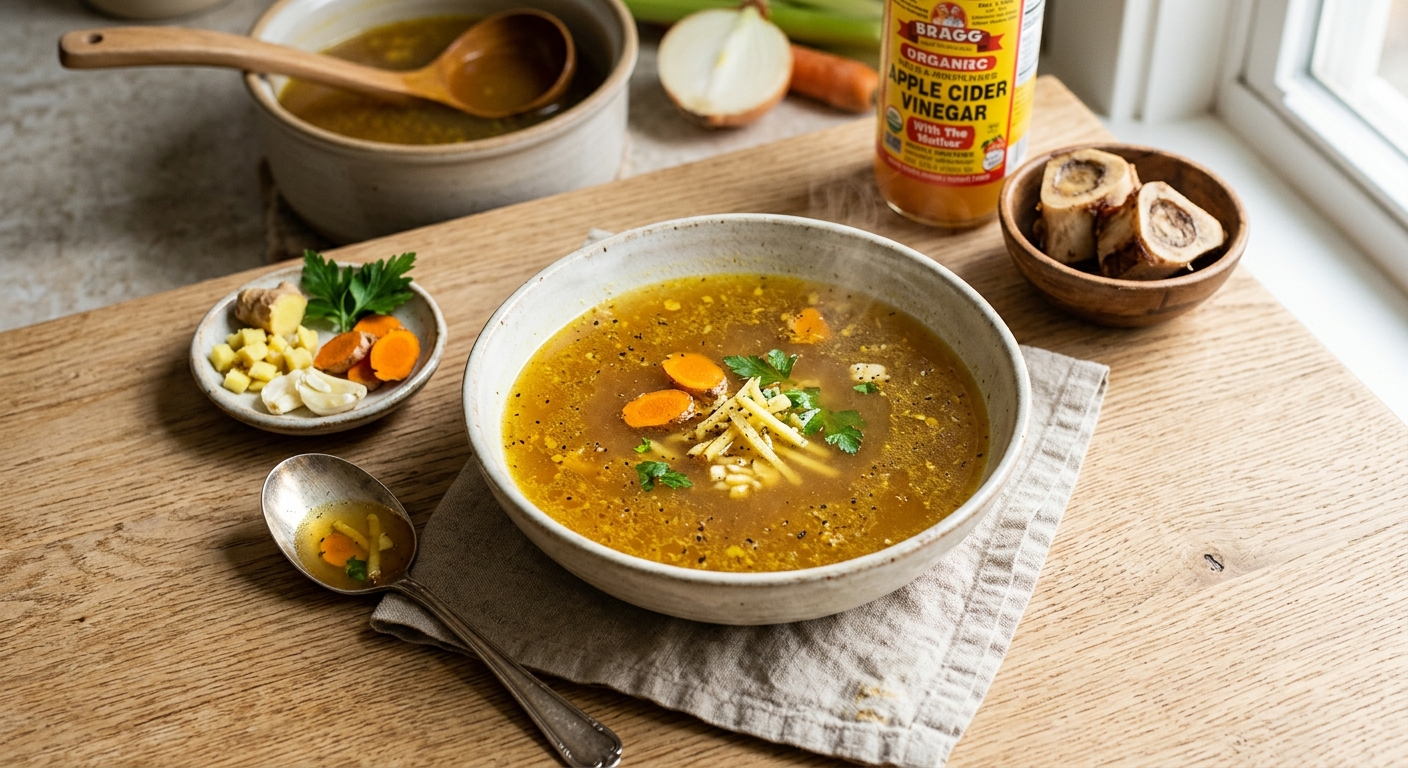
Most morning beverages offer caffeine or sugar. This one offers architecture, specifically the raw materials your bones, joints, and connective tissue use to rebuild themselves every single day. This Bone Broth Tonic with Turmeric and Ginger was designed from the ingredient list up to maximize the mineral density of a single serving, combining roasted marrow-rich beef bones with apple cider vinegar, which draws calcium, phosphorus, and magnesium out of the bone matrix and into the liquid where your body can absorb them. The result is a savory, golden, slightly spiced drink that feels like the most nourishing thing you have consumed all week, because it genuinely is.
The turmeric and ginger pairing is not decorative. Curcumin, the active compound in turmeric, has been shown in clinical studies to inhibit NF-kB signaling, a key pathway in joint inflammation. Gingerols and shogaols in fresh ginger complement this action through separate COX-2 inhibition pathways. The addition of freshly cracked black pepper is non-negotiable: piperine increases curcumin bioavailability by up to 2,000 percent by slowing its hepatic metabolism. Together, these three ingredients create a synergistic anti-inflammatory matrix that no supplement stack can easily replicate.
We have calibrated this recipe for four 240ml servings per batch, using 1.2kg of mixed beef bones including marrow bones and knuckle joints. Knuckle bones contribute the most glycosaminoglycans and collagen precursors, while marrow bones add richness and fat-soluble vitamins. The three cooking methods below, stovetop, slow cooker, and pressure cooker, each produce a distinct character: the slow cooker yields the most gelatinous, collagen-dense result; the pressure cooker delivers speed without sacrificing mineral extraction; and the stovetop gives you the most control over reduction and flavor development. All three are scientifically effective.
4
servings
Ingredients
- 1200 gmixed beef bones (marrow bones and knuckle joints), cut into 3 to 4 inch pieces
- 2 tbspapple cider vinegar (with the mother)
- 30 gfresh turmeric root, peeled and thinly sliced (or 2 tsp ground turmeric)
- 40 gfresh ginger root, peeled and thinly sliced
- 4 clovesgarlic, smashed
- 1 mediumyellow onion, halved (unpeeled for colour and quercetin)
- 2 stalkscelery, roughly chopped
- 1 mediumcarrot, scrubbed and roughly chopped
- 1 tspwhole black peppercorns
- 2 wholebay leaves
- 1 tspColima Sea SaltMicroplastic Free Salt, plus more to taste
- 1 tspfreshly cracked black pepper (added at the end, for bioavailability)
- 1800 mlcold filtered water
- —Optional garnish: thin lemon slice, fresh turmeric grating, pinch of cayenne
Instructions
Click on an item below to shop for the recommended items for this recipe on Amazon.
As an Amazon Associate, we earn from qualifying purchases.
- Preheat your oven to 220C (425F). Arrange the beef bones in a single layer on a rimmed baking sheet lined with foil. Roast for 20 to 25 minutes, turning once halfway through, until deeply browned on all sides. Do not skip this step: the Maillard reaction creates hundreds of flavour compounds and contributes to a richer, darker mineral broth.
- Transfer the roasted bones to a large, heavy-bottomed stockpot or Dutch oven (at least 6 litres). Deglaze the baking sheet with 120ml of the measured cold water, scraping up all browned bits with a wooden spoon, and pour that liquid into the pot. These fond remnants are concentrated flavour and minerals.
- Add the apple cider vinegar to the pot along with all remaining cold water. Let the bones sit in this acidulated cold water for 30 minutes without heat. This cold-acid soak is the single most important step for mineral extraction: the acetic acid begins to break the calcium phosphate bonds in the bone matrix before any heat is applied.
- Place the pot over medium-high heat and bring slowly to a gentle boil. As the liquid heats, grey-brown foam and impurities will rise to the surface. Skim this scum diligently with a fine-mesh skimmer every few minutes for the first 20 minutes. Removing this foam results in a cleaner, clearer tonic with better flavour.
- Once skimming is complete and the surface is relatively clear, reduce the heat to the lowest possible setting. The liquid should show only a lazy bubble breaking the surface every few seconds, what cooks call a bare simmer. Add the sliced turmeric, ginger, smashed garlic, onion halves, celery, carrot, whole peppercorns, and bay leaves. Do not stir aggressively.
- Partially cover the pot with a lid slightly ajar and simmer undisturbed for 3 to 4 hours. For a gelatinous, collagen-rich result, aim for the full 4 hours. Check the water level every hour and add a small splash if the bones become exposed, though some evaporation and concentration is desirable.
- Remove the pot from heat and allow to cool for 15 minutes. Strain the broth through a fine-mesh strainer lined with a single layer of cheesecloth into a large heatproof bowl or pitcher. Press gently on the solids. Discard solids. Season with sea salt, then stir in the freshly cracked black pepper (adding pepper post-strain maximises piperine content as high heat degrades it over long periods). Taste and adjust seasoning. Serve warm in mugs with optional garnishes.
- This method benefits from pre-blanching the bones rather than roasting, to remove impurities without drying out the slow cooker environment. Place the raw bones in a large stockpot, cover with cold water, and bring to a vigorous boil over high heat. Boil for 5 minutes. Drain and rinse each bone under cold running water, scrubbing off any grey residue. This blanching step replaces the foam-skimming phase that is difficult to manage in a slow cooker.
- Transfer the cleaned bones to a 6-litre or larger slow cooker. Add the apple cider vinegar and all 1800ml of cold filtered water. Leave the slow cooker off and let the bones soak in the acidulated water for 30 minutes. This cold-acid presoak remains essential regardless of cooking method.
- Add the sliced turmeric, ginger, smashed garlic, onion halves, celery, carrot, whole peppercorns, and bay leaves directly to the slow cooker. Do not add the sea salt or cracked pepper yet. Place the lid on and set to Low. Cook for a minimum of 18 hours and up to 24 hours. Resist the urge to lift the lid during cooking, as each opening releases heat and extends the required time.
- With about 30 minutes remaining, you can optionally remove the lid and set the slow cooker to High to encourage a final burst of gentle evaporation and concentration. This slightly deepens the flavour without affecting the mineral content.
- Turn off the slow cooker and allow the broth to cool for 20 minutes with the lid ajar. Carefully ladle or pour the broth through a fine-mesh strainer lined with cheesecloth into a large heatproof bowl. The liquid may be thick and syrupy when warm, which is a sign of abundant gelatin. Season with sea salt and stir in the freshly cracked black pepper. If the flavour is too mild, return the strained broth to a small saucepan and reduce over medium heat by 10 to 15 percent before seasoning.
- Blanch the bones first for a clean result in the sealed pressure cooker environment. Place bones in a large pot, cover with cold water, and boil vigorously for 5 minutes. Drain and rinse each bone thoroughly under cold running water. Pat bones dry with paper towels. Blanching is especially important here because you cannot skim foam during pressurised cooking.
- Place the cleaned bones in the pressure cooker insert. Add the apple cider vinegar and cold filtered water. Do not exceed the maximum fill line on your pressure cooker, typically two-thirds full for liquid-heavy recipes. Allow the bones to soak in the acidulated cold water for 20 minutes before sealing. Even a shorter cold-acid soak makes a measurable difference to mineral extraction.
- Add the sliced turmeric, ginger, smashed garlic, onion halves, celery, carrot, whole peppercorns, and bay leaves to the pot. Do not add sea salt before pressure cooking, as salt can interfere with collagen solubilisation at high pressure. Secure the lid and set the valve to Sealing. Select Pressure Cook (or Manual) on High Pressure and set the timer for 3 hours (180 minutes).
- When the cook time is complete, allow the pressure to release naturally for at least 30 minutes before carefully switching the valve to Venting for any remaining pressure. Natural pressure release continues the gentle cooking process and prevents the aggressive boiling that can cloud the broth. Never force-release a large batch of hot bone broth.
- Once the float valve has dropped and all pressure is fully released, open the lid carefully away from you. The broth should be a deep amber-gold colour with a strong, savoury aroma. Strain through a fine-mesh strainer lined with cheesecloth into a large heatproof bowl. Season with sea salt and stir in the freshly cracked black pepper after straining. Taste, adjust seasoning, and serve immediately or allow to cool before refrigerating. The broth will likely gel firmly in the refrigerator, confirming high collagen extraction.
- Preheat your oven to 230C (450F). Spread the raw bones in a single layer in a large roasting pan. Roast at high heat for 25 minutes, turning once, until the bones are deeply browned and caramelised. Pour off and discard any rendered fat that has pooled in the pan, but leave all the browned fond. Reduce the oven temperature to 150C (300F).
- Transfer the roasted bones to a large oven-safe pot or Dutch oven with a tight-fitting lid (at least 6 litres). Deglaze the roasting pan with 120ml of the cold water, scraping up all caramelised bits, and add this to the Dutch oven. Add the remaining cold water and the apple cider vinegar. Allow the pot to sit uncovered at room temperature for 30 minutes for the cold-acid presoak, during which time the oven will be cooling to 150C.
- Add the sliced turmeric, ginger, smashed garlic, onion halves, celery, carrot, whole peppercorns, and bay leaves to the pot. Bring the pot to a gentle simmer on the stovetop over medium heat, skimming any foam that rises, then cover tightly with the lid. Transfer the covered pot to the preheated 150C oven.
- Cook in the oven, undisturbed, for 6 to 8 hours. The low, even oven heat maintains a perfect sub-simmer (around 85 to 90C internally) that extracts collagen and minerals without the agitation that clouds broth. There is no need to check on it or adjust heat. This makes it ideal for an overnight cook or a long weekend afternoon.
- Remove the pot from the oven using heavy oven mitts and let it rest with the lid on for 20 minutes. Carefully strain the broth through a fine-mesh strainer lined with cheesecloth into a large heatproof bowl, pouring slowly to avoid disturbing the sediment at the bottom of the pot. Season with sea salt and stir in the freshly cracked black pepper. The broth should be beautifully clear with a luminous golden colour from the turmeric. Serve warm or cool and refrigerate for up to 5 days.
Nutrition Breakdown
Per 1 serving (makes 4)
Vitamins & Minerals
% Daily Value based on a 2,000 calorie diet (FDA reference)
🧬 Essential Amino Acids
% of recommended daily intake (RDA) per serving
🛡 Antioxidant Profile
The Nutrition Science
The nutritional architecture of this tonic is built on one key chemical reaction: acid-assisted mineral liberation from hydroxyapatite, the calcium-phosphate mineral that makes up roughly 70 percent of bone dry weight. Apple cider vinegar provides acetic acid (pH approximately 3.1), which protonates the phosphate groups in Ca10(PO4)6(OH)2, disrupting the crystal lattice and releasing free calcium and phosphorus ions into solution. The cold presoak before heat is applied maximises this extraction window. Studies measuring the calcium content of bone broths have found values ranging from 80mg to over 400mg per 240ml serving depending on bone type, acid addition, and cook time. This recipe is calibrated toward the high end using knuckle-rich mixed bones and the full acid presoak protocol.
Curcumin bioavailability is the most clinically discussed limitation of turmeric-based preparations. In its native form, curcumin has poor aqueous solubility and is rapidly glucuronidated in the liver, limiting systemic exposure. The addition of piperine from black pepper inhibits hepatic and intestinal glucuronidation, extending curcumin’s half-life in plasma and increasing peak serum concentration by a documented factor of up to 20 times in human trials. The fat present in this broth from marrow also contributes: curcumin is lipophilic and absorbs more readily in the presence of dietary fat, making the residual marrow lipids in this tonic a genuine bioavailability asset rather than a nutritional liability.
Collagen-derived amino acids, particularly glycine, proline, and hydroxyproline, have attracted significant research interest for their roles in joint health. Glycine is the primary amino acid in collagen (making up approximately 33 percent of its sequence) and serves as a substrate for the synthesis of new collagen fibrils in articular cartilage. A 2017 randomised controlled trial published in the British Journal of Nutrition found that hydrolysed collagen supplementation (10g daily) significantly reduced joint pain scores in athletes over 24 weeks. While this tonic is not a hydrolysed collagen supplement, the long simmering time denatures and partially hydrolyses collagen into bioavailable peptides and free amino acids, providing a functional food source of these same building blocks in a form that is both absorbed and genuinely delicious.
Pro Tips
- Freeze leftover bone broth in silicone ice cube trays and pop the cubes into zip-lock bags. Each standard cube is approximately 30ml, so you can defrost exactly the number of servings you need without waste.
- For the highest collagen yield, prioritise knuckle and joint bones over pure marrow bones. Knuckles are loaded with cartilage, which is almost pure collagen and glycosaminoglycans. Ask your butcher for a mix of at least 60 percent knuckle and 40 percent marrow for the best nutritional and textural result.
- If your finished broth does not gel when refrigerated, it is still nutritious but less collagen-rich than optimal. Next batch, extend the cook time, add more knuckle bones, or ensure your cold-acid presoak is at least 30 minutes. A broth that sets like jelly in the fridge is the gold standard.
This sounds amazing for my Hashimoto’s protocol, especially the mineral profile! Quick question though – does the recipe use any nightshades, and is the turmeric fresh or powdered? I’ve had to be really careful with iodine levels since my diagnosis, so I’m also wondering if you have any notes on the iodine content of the broth itself. Would love to know if this adapts well for AIP as written, or if there are any tweaks you’d recommend – I’m always hunting for warming morning drinks that don’t trigger inflammation for me!
omg the calcium AND magnesium combo in this is calling my name, especially since i just discovered my whole family was deficient in both!! quick question though – is this kid friendly? my oldest has been refusing anything “golden” or “wellness-y” looking (eye roll) but if i could sneak this into her diet it would be a game changer, and honestly the turmeric/ginger combo might help with her inflammation too since shes been complaining about joint stuff after sports
Great question, Anna – and I appreciate you thinking carefully about your protocol! Just a quick note on the calcium claim though: bone broth actually delivers variable amounts depending on simmering time and whether you’re adding vinegar (which helps solubilize minerals), so that 42% figure might be optimistic for most home recipes. That said, the turmeric and ginger combo here is solid for inflammation management, and black pepper really does enhance turmeric’s bioavailability through piperine – I’ve seen that effect in cellular studies. For your Hashimoto’s, I’d focus more on the mineral synergy (magnesium especially helps with iodine absorption) than hitting a specific calcium number