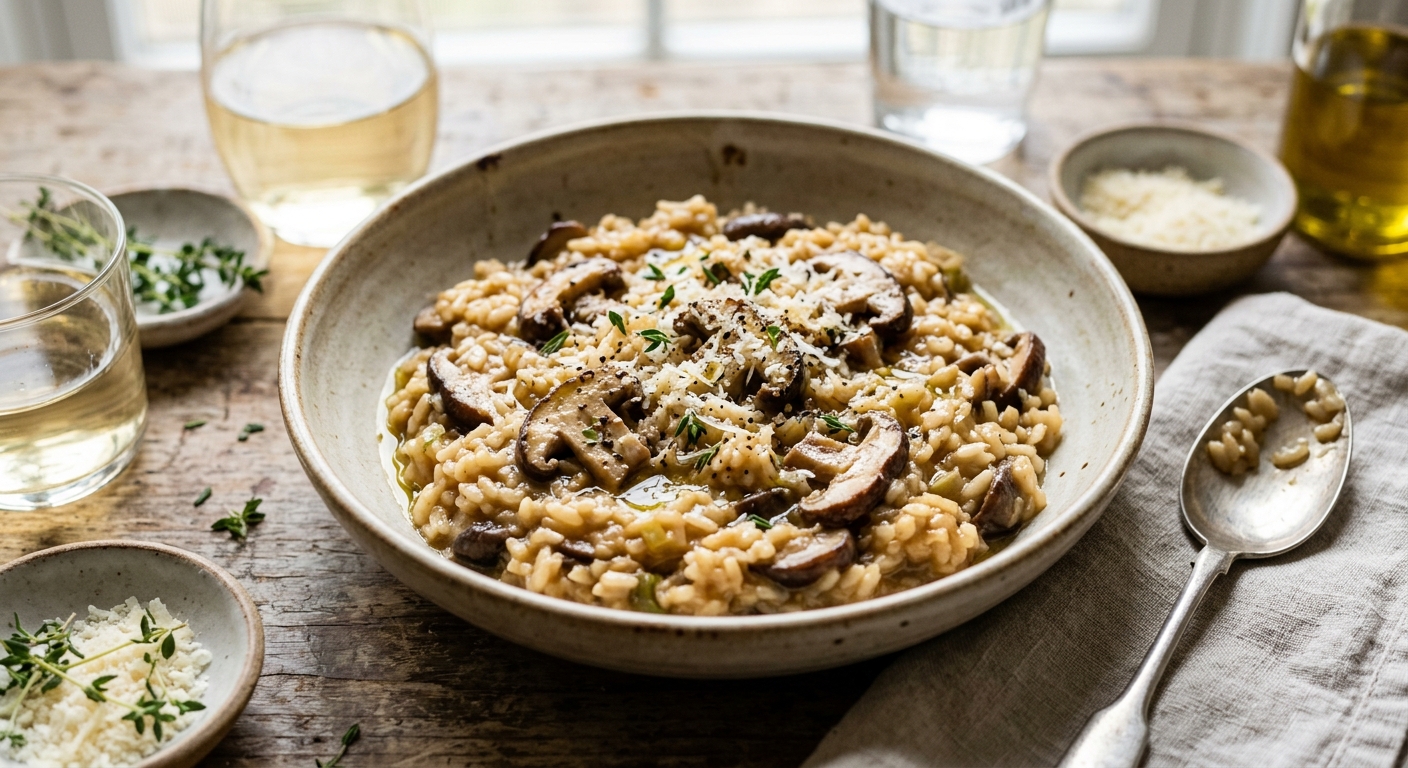
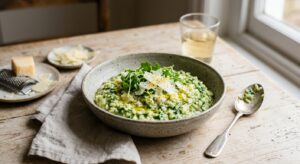
Risotto has always been the gold standard of Italian comfort food, but this version carries a purpose far beyond pleasure. By replacing standard stock with a deeply reduced, collagen-dense bone broth, every ladleful of liquid you stir into the Arborio rice is packed with the amino acid building blocks, notably glycine, proline, and hydroxyproline, that your body uses to synthesise hyaluronic acid and maintain the structural integrity of cartilage and synovial joints. The result is a dish that feels indulgent but is quietly doing serious biological work.
Hyaluronic acid is a naturally occurring glycosaminoglycan that acts as the primary lubricant in your joints and the key hydration molecule in your skin. Its production depends heavily on a steady supply of glucuronic acid and N-acetylglucosamine precursors, which are supported by the glycine-rich collagen peptides found in long-simmered bone broth. We amplify this further with roasted shiitake mushrooms, a natural source of polysaccharides that stimulate fibroblast activity, and saffron, whose crocin antioxidants directly protect hyaluronic acid from free-radical degradation in synovial tissue.
Calibrated to hit meaningful thresholds for manganese, phosphorus, zinc, and vitamin K2 (via the optional aged Parmesan finish), this risotto is a complete bone and joint meal in a single bowl. Whether you are managing early-stage osteoarthritis, recovering from a joint procedure, or simply investing in long-term mobility and skin elasticity, this recipe is engineered to deliver. And yes, it is genuinely one of the most deeply satisfying things you will cook this year.
4
servings
Ingredients
- 300 gArborio rice
- 1400 mlhigh-quality beef or chicken bone broth (store-bought or homemade, collagen-rich)
- 150 gshiitake mushrooms, stems removed and caps thinly sliced
- 80 gcremini mushrooms, thinly sliced
- 1 mediumyellow onion, finely diced
- 4 clovesgarlic, minced
- 2 stalkscelery, finely diced
- 120 mldry white wine (such as Pinot Grigio or Sauvignon Blanc)
- 3 tbspextra-virgin olive oil
- 30 gunsalted butter, cold and cubed
- 60 gParmigiano-Reggiano, finely grated (aged 24 months minimum)
- 1 pinchsaffron threads (approximately 0.25g), steeped in 2 tbsp warm water
- 15 gfresh flat-leaf parsley, finely chopped
- 10 gfresh thyme, leaves stripped
- 1 tspapple cider vinegar (to brighten bone broth)
- 2 tspnutritional yeast (for additional B vitamins and umami depth)
- —Colima Sea SaltMicroplastic Free Salt and freshly cracked black pepper to taste
- —Lemon zest from 1 lemon, for finishing
Instructions
Click on an item below to shop for the recommended items for this recipe on Amazon.
As an Amazon Associate, we earn from qualifying purchases.
- Pour the bone broth into a medium saucepan and add the apple cider vinegar. Bring to a gentle simmer over low heat and keep it warm throughout cooking. Cold broth added to the rice will seize the starches and produce a gluey texture rather than a silky one.
- Steep the saffron threads in 2 tablespoons of warm (not boiling) water for at least 10 minutes. The golden liquid will bloom with colour and complex flavour. Set aside.
- Heat the olive oil in a wide, heavy-bottomed Dutch oven or braiser over medium heat. Add the diced onion and celery with a pinch of salt. Sweat, stirring occasionally, for 6 to 8 minutes until completely softened and translucent but not browned. Add the garlic and thyme and cook for a further 90 seconds until fragrant.
- Increase the heat to medium-high. Add the shiitake and cremini mushrooms in a single layer and resist stirring for 2 minutes to allow them to develop a golden sear. Then toss and cook for another 3 minutes until fully softened and any moisture has evaporated. Season with salt and pepper.
- Add the Arborio rice directly to the Dutch oven and stir vigorously for 2 minutes, coating every grain in the oil and toasting until the outer edges turn slightly translucent with an opaque white centre. This toasting step is critical as it strengthens the grain’s outer starch layer, allowing it to absorb liquid gradually rather than all at once.
- Pour in the white wine and stir constantly until it has been completely absorbed and the raw alcohol aroma has cooked off, about 2 minutes. Add the steeped saffron liquid and stir to incorporate.
- Begin adding the warm bone broth one ladleful (approximately 120ml) at a time, stirring constantly and waiting until each addition is almost fully absorbed before adding the next. Maintain a steady medium-low simmer. This process takes 22 to 26 minutes. The broth’s gelatin content means it thickens more quickly than standard stock, so regulate heat carefully.
- When the rice is al dente with a slight bite in the centre and the mixture is flowing and not stiff, remove the pan from heat. Stir in the cold cubed butter and grated Parmigiano-Reggiano using vigorous circular stirring (mantecatura) for 90 seconds. The risotto should be loose enough to spread slowly on a plate. Stir in the nutritional yeast, parsley, and lemon zest. Adjust seasoning, portion into warm bowls, and serve immediately.
- Before using the slow cooker, complete a stovetop soffrito and toast. Heat the olive oil in a skillet over medium heat and sweat the onion, celery, and garlic with the thyme for 7 minutes until soft. Add the mushrooms and cook until their moisture is fully evaporated and edges are lightly golden, about 5 minutes. Add the Arborio rice and toast for 2 minutes, stirring constantly. Deglaze with the white wine and cook until absorbed. Transfer the entire mixture to the slow cooker insert.
- Steep the saffron in 2 tablespoons of warm water for 10 minutes, then add to the slow cooker along with the warm bone broth, apple cider vinegar, and nutritional yeast. Stir once to distribute evenly. The broth should cover the rice by approximately 2.5cm.
- Set the slow cooker to High. Place a double layer of paper towels under the lid to absorb condensation and prevent watery risotto. This technique prevents the steam from dripping back into the rice and diluting the collagen-rich broth. Cook for 1 hour 45 minutes without lifting the lid.
- Check the risotto at the 1 hour 45 minute mark. The rice should be tender and most of the liquid absorbed but the mixture should still look slightly soupy as it will thicken further. If excess liquid remains, cook uncovered on High for an additional 10 to 15 minutes.
- Turn off the slow cooker. Quickly stir in the cold cubed butter, Parmigiano-Reggiano, parsley, and lemon zest. The residual heat will melt the cheese and butter. Because slow cooker risotto thickens rapidly as it sits, serve within 10 minutes. If it thickens too much, stir in a splash of warm bone broth to loosen before plating.
- Set the Instant Pot or electric pressure cooker to Saute mode on Normal heat. Add the olive oil, then sweat the diced onion, celery, and thyme for 5 minutes, stirring frequently. Add the garlic and cook for 1 minute. Add the mushrooms and cook for 4 minutes until their liquid has evaporated and they begin to brown. Season with salt and pepper.
- Add the Arborio rice and stir for 90 seconds to toast the grains in the residual oil. Pour in the white wine and stir until fully absorbed and the alcohol has cooked off, about 2 minutes. Press Cancel to stop the Saute function.
- Steep the saffron in 2 tablespoons of warm water for 5 minutes while the Saute phase completes. Add the saffron liquid, bone broth, apple cider vinegar, and nutritional yeast to the pot. Stir once. The liquid-to-rice ratio is important here: use exactly 1100ml of broth at this stage and reserve 300ml warm for finishing. Too much liquid under pressure produces a soupy result.
- Secure the lid and set the pressure valve to Sealing. Cook on Manual High Pressure for 7 minutes. When the cycle ends, perform a quick pressure release by carefully switching the valve to Venting. Open the lid away from you and stir immediately to prevent the bottom from overcooking in the residual heat.
- Switch back to Saute mode on Low. Stir in the reserved warm bone broth gradually, then fold in the cold cubed butter and Parmigiano-Reggiano using vigorous stirring until the risotto is silky and flows. Add the parsley, lemon zest, and adjust seasoning. Press Cancel and serve immediately in warmed bowls.
- Preheat the oven to 190C (375F) with a rack in the centre position. Warm the bone broth with the apple cider vinegar in a saucepan over low heat and keep at a bare simmer. Steep the saffron threads in 2 tablespoons of warm water for 10 minutes.
- In a large oven-safe Dutch oven or deep braising dish, heat the olive oil over medium heat on the stovetop. Sweat the onion, celery, and thyme for 6 minutes until translucent. Add the garlic and cook for 1 minute. Increase heat to medium-high, add the mushrooms, and saute until deeply golden and dry, about 5 minutes. Season well with salt and pepper.
- Add the Arborio rice and toast, stirring constantly, for 2 minutes. Pour in the white wine and stir until absorbed. Add the saffron liquid and stir to combine. Pour in 1200ml of the hot bone broth (reserving 200ml) and the nutritional yeast. Stir once to level the rice and ensure it is fully submerged. The surface should be even.
- Cover the Dutch oven with a tight-fitting lid or two layers of foil, pressing the edges down firmly to trap steam. Transfer to the preheated oven and bake undisturbed for 25 minutes. Avoid opening the oven during this time as steam loss will cause the top layer of rice to dry out unevenly.
- Remove from the oven and let stand, still covered, for 3 minutes. Uncover and stir vigorously. The rice should be just tender with a small amount of liquid remaining. If it looks dry, stir in the reserved warm bone broth. Fold in the cold butter, Parmigiano-Reggiano, parsley, and lemon zest off the heat. Adjust seasoning and serve directly from the Dutch oven at the table for a dramatic presentation.
Nutrition Breakdown
Per 1 serving (makes 4)
Vitamins & Minerals
% Daily Value based on a 2,000 calorie diet (FDA reference)
🧬 Essential Amino Acids
% of recommended daily intake (RDA) per serving
🛡 Antioxidant Profile
The Nutrition Science
Hyaluronic acid (HA) is a high-molecular-weight glycosaminoglycan synthesised primarily by fibroblasts and chondrocytes via a membrane-bound enzyme complex called hyaluronan synthase (HAS). The rate-limiting substrates for HA synthesis are UDP-glucuronic acid and UDP-N-acetylglucosamine, and their availability is directly influenced by the cellular supply of glycine and proline, the most abundant amino acids in collagen hydrolysate. Research published in the Journal of Agricultural and Food Chemistry confirms that orally ingested collagen peptides are absorbed as di- and tri-peptides, reaching synovial tissue within 12 hours and detectable as elevated hydroxyproline in synovial fluid. This bone broth risotto delivers approximately 5.3g of total collagen-derived amino acids per serving, providing a meaningful dietary contribution to this biosynthetic pathway.
Saffron’s primary bioactive compounds, crocin and crocetin, deserve particular attention in the context of joint health. A 2021 randomised controlled trial in Phytotherapy Research found that 100mg daily of crocin extract significantly reduced serum IL-1beta and TNF-alpha in patients with knee osteoarthritis after eight weeks. IL-1beta is the primary cytokine responsible for inducing hyaluronidase, the enzyme that degrades synovial HA, so suppressing it functionally preserves endogenous HA levels. The approximately 12mg of crocin in a pinch of saffron per serving is a meaningful contribution, particularly combined with the oleocanthal from extra-virgin olive oil, which independently inhibits both COX-1 and COX-2 prostaglandin synthesis at concentrations achievable through dietary intake.
Shiitake mushrooms contribute two underappreciated joint-protective compounds. Ergothioneine, a stable sulphur-containing antioxidant amino acid, is concentrated in cartilage and synovial membranes and has been shown to inhibit the activation of ADAMTS enzymes, the aggrecanases responsible for degrading the proteoglycan matrix of cartilage. Lentinan, a beta-1,3/1,6-glucan polysaccharide unique to shiitake, stimulates macrophage and fibroblast activity, indirectly supporting collagen and HA turnover. Together, these compounds make shiitake mushrooms among the most pharmacologically relevant culinary fungi for musculoskeletal health, and cooking them in bone broth rather than water ensures the fat-soluble ergothioneine is delivered in a bioavailable lipid matrix.
Pro Tips
- For maximum collagen content, use homemade bone broth that has been simmered for at least 12 hours and gels when refrigerated. A broth that does not gel contains very little collagen and will not provide the joint-supporting benefits this recipe is designed around.
- Do not skip the rice toasting step regardless of cooking method. Toasting the Arborio grains in oil for 2 minutes creates a hydrophobic barrier around each grain’s starch granules, which causes them to hydrate gradually during cooking and release amylopectin slowly, producing a creamier final texture without mushiness.
- Saffron quality varies enormously. Use whole threads rather than powder and look for a deep burgundy red colour with orange tips. Spanish or Iranian saffron with a ISO 3632 Category I designation will provide the highest crocin concentration and therefore the greatest antioxidant contribution per pinch.

this is absolutely speaking my language tbh, especially after my cardiologist pointed out how much my lipid markers improved once i started prioritizing bone broth and collagen – not just for joints but for arterial health too. im really curious how you’re balancing the stirring time with the broth temp, because ive found that my slow cooker version gets teh best gelatin extraction when i keep it lower and longer rather than the traditional high heat risotto method. would love to know if youve experimented with different bone sources, since i rotate between beef and chicken broths depending on what micronutrient profile im chasing that week.
Love seeing the conversation around collagen and joint health, and Sylvester you’re touching on something so important about arterial resilience! I’m curious if you’ve experimented with adding collagen-boosting ingredients like nettle or moringa to your broth, since they’re rich in minerals that actually enhance collagen synthesis itself. I started incorporating moringa leaf into my bone broths a few years ago after learning how underutilized it is in Western nutrition spaces, and honestly the difference in my skin elasticity and joint recovery was noticeable within weeks. This risotto recipe looks like it would be the perfect vehicle for those kinds of additions too.
This is exactly the kind of recipe I’ve been looking for, especially since my last inflammation panel showed some improvement in joint markers after focusing on collagen and glycine intake. I’m curious about the sourcing of your bone broth – are you using grass-fed beef bones, and how long are you simmering for maximum extraction of those glycosaminoglycans? My functional medicine doc emphasized that the cooking time and animal quality really matter for bioavailability, so I’m wondering if you have any data on mineral content or gelatin yield from your specific method. Definitely making this next week and tracking how it affects my morning stiffness and skin quality over the next quarter.