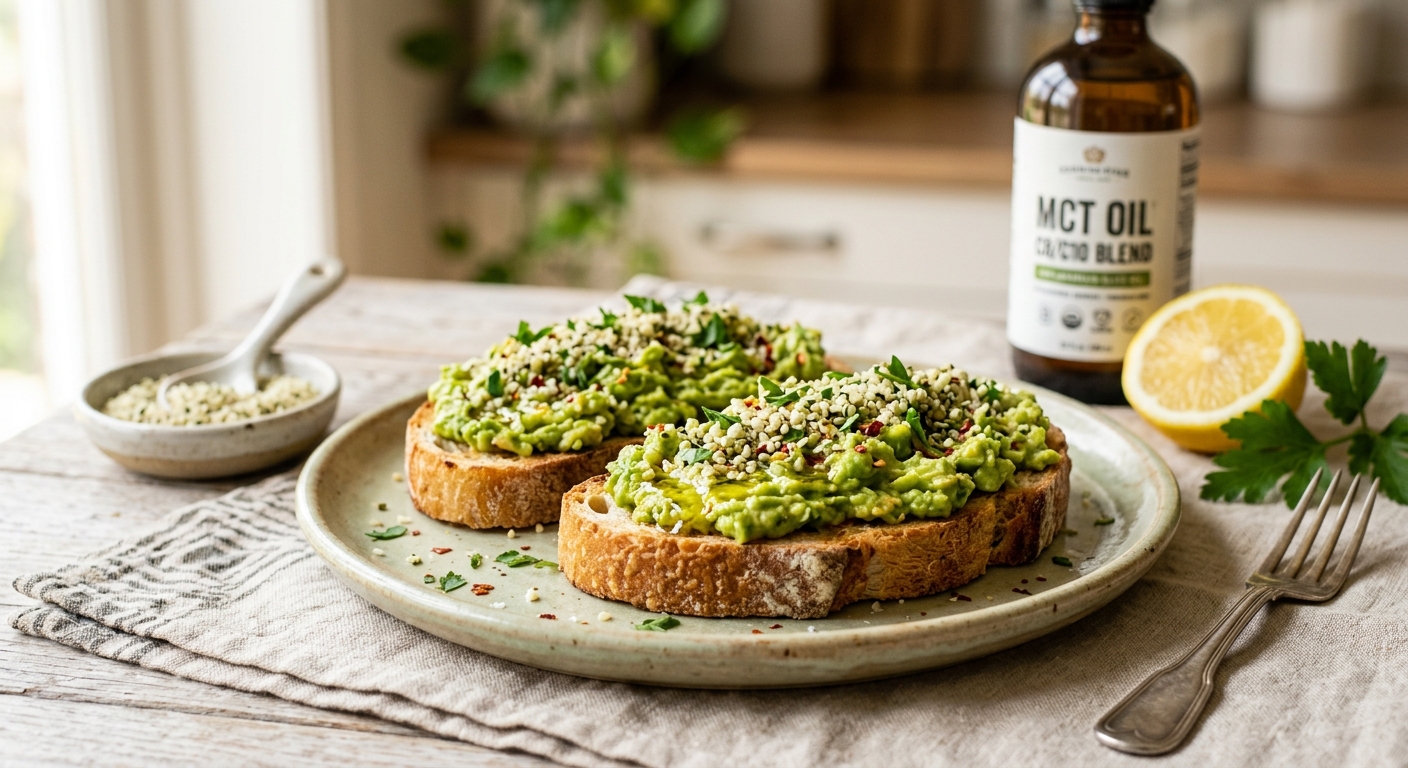
There is a reason avocado toast has dominated breakfast culture for over a decade, but this version goes far beyond the brunch-menu staple. By introducing MCT (medium-chain triglyceride) oil and hemp seeds into the equation, we have transformed a beloved classic into a genuinely calibrated metabolic tool. The MCT oil contributes caprylic and capric acids that are absorbed directly into the portal vein and converted to ketones with remarkable speed, providing clean, sustained energy without the blood sugar spike that accompanies carbohydrate-heavy breakfasts.
Hemp seeds are the unsung hero of this recipe. Three tablespoons deliver an exceptional 10 grams of complete protein, containing all nine essential amino acids in ratios that rival many animal proteins. They also contribute a near-ideal 3:1 omega-6 to omega-3 ratio, specifically gamma-linolenic acid (GLA) and alpha-linolenic acid (ALA), which work synergistically with the monounsaturated oleic acid from the avocado to create a fat profile that actively supports cardiovascular health, reduces systemic inflammation, and keeps you satiated for hours.
At Calibrated Cuisine, we are committed to recipes that deliver on both flavour and function. The sourdough base here is intentional: the long fermentation process reduces the bread’s glycemic impact compared to standard wheat bread, while also pre-digesting some of the gluten and increasing mineral bioavailability. Layered with bright lemon zest, flaky sea salt, and optional chilli flakes, this is a dish that satisfies every sense while quietly doing the metabolic work your morning demands.
4
servings
Ingredients
- 4 slicessourdough bread (each slice approx. 80g), ideally 24-hour fermented
- 3 wholelarge ripe Hass avocados (approx. 450g total flesh)
- 4 tbsphulled hemp seeds (hemp hearts), plus extra for garnish
- 4 tspMCT oil (C8/C10 blend, unflavoured)
- 2 tbspfresh lemon juice
- 1 tsplemon zest, finely grated
- 2 clovesgarlic, halved (for rubbing)
- 1 tbspextra-virgin olive oil
- 0.5 tspground cumin
- 0.5 tspsmoked paprika
- 0.25 tspchilli flakes (optional, adjust to taste)
- 4 wholelarge eggs (optional, for poached or fried topping)
- 1 tbspwhite wine vinegar (only if poaching eggs)
- —Colima Sea SaltMicroplastic Free Salt and freshly cracked black pepper to taste
- —Microgreens or fresh cress for garnish (optional)
Instructions
Click on an item below to shop for the recommended items for this recipe on Amazon.
As an Amazon Associate, we earn from qualifying purchases.
- Halve and pit the avocados. Scoop the flesh into a medium bowl. Add the lemon juice, lemon zest, ground cumin, smoked paprika, extra-virgin olive oil, a generous pinch of flaky sea salt, and several cracks of black pepper. Using a fork, smash to your preferred texture: some people like it chunky with visible avocado pieces; others prefer it nearly smooth. Taste and adjust seasoning. Cover the surface directly with cling film to prevent browning and set aside.
- Heat a cast iron skillet or heavy non-stick pan over medium-high heat for 2 minutes until very hot. Place the sourdough slices directly into the dry pan without any oil. Press each slice lightly with a spatula to ensure full surface contact. Toast for 2 to 3 minutes per side until deep golden-brown with charred edges. The dry pan method creates a better crust than a toaster. Remove and immediately rub each hot slice on one side with the cut face of a halved garlic clove, pressing firmly so the garlic oils penetrate the surface.
- If adding poached eggs, fill a wide, shallow saucepan with at least 7cm of water. Add the white wine vinegar and bring to a gentle simmer over medium heat, targeting a temperature of 82 to 88 degrees C (just below a full rolling boil). Crack each egg into a small ramekin. Stir the water gently to create a slow vortex, then slide one egg at a time into the centre of the vortex. Cook for 3 minutes for a runny yolk or 4 minutes for a set yolk. Remove with a slotted spoon and drain on a clean kitchen towel.
- Working quickly so the toast stays hot and crisp, spread a generous heap of the smashed avocado onto each garlic-rubbed toast, pressing it slightly to adhere. Scatter 1 tablespoon of hemp seeds over each slice, pressing them gently into the avocado so they do not fall off when lifted.
- Drizzle exactly 1 teaspoon of MCT oil over each completed toast in a slow, deliberate spiral from edge to centre. The MCT oil should pool slightly in the avocado crevices. Top with a poached egg if using, then finish with chilli flakes, a pinch of flaky sea salt, a few extra hemp seeds, and microgreens. Serve immediately on warmed plates.
- For the slow cooker avocado confit spread, halve and pit the avocados and cut the flesh into rough 2cm cubes directly into the slow cooker insert. Add the lemon juice, lemon zest, extra-virgin olive oil, ground cumin, smoked paprika, chilli flakes, garlic cloves (whole, not halved), a generous pinch of flaky sea salt, and black pepper. Do not smash the avocado yet; leaving it in chunks prevents it from turning grey during the cooking process.
- Set the slow cooker to Low. Place a folded kitchen towel under the lid to absorb condensation and prevent waterlogging the spread. This is a critical step: moisture collecting on the lid and dripping back in will make the spread watery. Cook on Low for 1 hour 30 minutes. The gentle heat will warm the avocado through, soften the garlic completely, and allow the spices to bloom and deeply infuse the fat without the avocado breaking down entirely.
- Remove the lid and discard the garlic cloves (they will have softened to a paste; you can optionally squeeze the soft garlic back into the spread for a roasted garlic flavour). Using a fork or potato masher, smash the avocado to your preferred texture directly in the insert. The slow-cooked avocado will have a richer, more buttery flavour than raw smashed avocado. Fold in 3 tablespoons of the hemp seeds now, reserving 1 tablespoon per serving for garnish. Taste and adjust lemon, salt, and pepper.
- Toast the sourdough slices in a toaster, under a grill, or in a dry cast iron pan over medium-high heat for 2 to 3 minutes per side until golden and crisp. Rub each hot slice immediately with the cut side of a halved garlic clove.
- Spoon the warm confit spread generously over each toast, ensuring an even layer that reaches the edges. Drizzle 1 teaspoon of MCT oil per slice in a slow spiral. Add the reserved hemp seeds, chilli flakes, a pinch of flaky sea salt, and microgreens. If serving with eggs, fry them in a non-stick pan in a small amount of olive oil over medium-low heat for 3 to 4 minutes for a crispy-edged, runny-yolk result, then place on top. Serve immediately.
- Pour 240ml (1 cup) of water into the pressure cooker or Instant Pot insert. Place the steam rack or trivet inside. Spray 4 small ramekins (approx. 120ml capacity) lightly with olive oil or wipe with a paper towel dipped in olive oil. Crack one egg into each ramekin. Set the ramekins on the trivet, stacking in a second layer if necessary.
- Secure the lid and set the pressure valve to Sealing. Select Manual or Pressure Cook at High Pressure and set the timer for 2 minutes for a soft, runny yolk or 3 minutes for a more set yolk. While the pressure cooker comes to pressure (approximately 5 to 6 minutes), begin preparing the avocado smash and toast simultaneously.
- While the cooker pressurises, halve and pit the avocados and scoop the flesh into a bowl. Add the lemon juice, lemon zest, extra-virgin olive oil, ground cumin, smoked paprika, salt, and pepper. Smash with a fork to your preferred texture. Fold in 3 tablespoons of hemp seeds. Toast the sourdough in a dry skillet, cast iron pan, or toaster until deeply golden. Rub immediately with the cut garlic cloves.
- When the cook cycle ends, perform a Quick Release by carefully turning the pressure valve to Venting. Wait for the pin to drop fully before opening the lid. The eggs should be fully white on the surface with a soft, jiggly centre. Use a spoon to gently loosen the eggs from the ramekins if they have not released on their own.
- Spread the avocado smash thickly over each garlic-rubbed toast. Drizzle 1 teaspoon of MCT oil per slice over the avocado. Scatter the reserved 1 tablespoon of hemp seeds across the four toasts for garnish. Slide one steam-poached egg onto each toast. Finish with chilli flakes, flaky sea salt, freshly cracked black pepper, and microgreens. Serve immediately while the eggs are still hot.
- Preheat the oven to 220 degrees C (425 degrees F), fan / convection setting if available. Line a large baking sheet with parchment paper. Arrange the sourdough slices in a single layer on the baking sheet. Brush both sides of each slice lightly with extra-virgin olive oil using a pastry brush. This ensures an even, deep golden crust that a dry-pan method cannot fully replicate at this scale.
- Place 4 small oven-safe ramekins on a separate smaller baking tray. Grease each ramekin lightly with olive oil and crack one egg into each. Season with a pinch of flaky sea salt and black pepper. Optionally add a small pinch of smoked paprika on top of each egg for colour and flavour.
- Place the baking sheet with the sourdough on the upper-middle rack and the tray of egg ramekins on the lower-middle rack simultaneously. Bake for 8 minutes, then check the bread: it should be golden on top. Remove the bread, flip each slice, and return to the oven for a further 3 to 4 minutes until both sides are evenly golden and crisp. The eggs should be ready at the 10 to 12 minute mark with set whites and still-runny yolks. Pull them at your preferred doneness.
- While the bread and eggs are in the oven, prepare the avocado smash. Halve, pit, and scoop the avocado flesh into a bowl. Add lemon juice, lemon zest, ground cumin, smoked paprika, salt, and black pepper. Smash with a fork, then fold in 3 tablespoons of hemp seeds. Keep covered with cling film pressed directly onto the surface to prevent browning.
- Remove the bread from the oven and immediately rub each hot slice on one side with the cut face of a halved garlic clove. Working swiftly, spread a generous, even layer of the avocado smash across the garlic-rubbed side of each toast all the way to the edges. Drizzle 1 teaspoon of MCT oil over each toast. Scatter the remaining hemp seeds and chilli flakes over all four toasts, then carefully tip the baked egg from each ramekin onto its respective toast. Finish with flaky sea salt, cracked black pepper, and microgreens. Serve directly on the baking parchment for a rustic presentation, or plate individually.
Nutrition Breakdown
Per 1 serving (makes 4)
Vitamins & Minerals
% Daily Value based on a 2,000 calorie diet (FDA reference)
🧬 Essential Amino Acids
% of recommended daily intake (RDA) per serving
🛡 Antioxidant Profile
The Nutrition Science
The headline ingredient in this recipe is MCT oil, and its metabolic effects are well-documented in peer-reviewed literature. Unlike long-chain fatty acids from most dietary fats, medium-chain triglycerides (particularly C8 caprylic acid and C10 capric acid) bypass normal fat digestion. They are absorbed directly through the intestinal wall into the portal vein and transported straight to the liver, where they are rapidly converted to ketone bodies. A 2019 meta-analysis published in the Journal of the Academy of Nutrition and Dietetics found that MCT supplementation significantly increased energy expenditure (thermogenesis) compared to long-chain triglycerides, amounting to an additional 40 to 120 calories burned per day in controlled conditions. Starting your morning with 4 teaspoons of MCT oil therefore provides both immediate ketone-based brain fuel and a measurable thermogenic lift.
Hemp seeds (Cannabis sativa L.) provide one of the most nutritionally complete plant proteins available. Their protein fraction, approximately 65% edestin and 35% albumin, is highly digestible (protein digestibility-corrected amino acid score of approximately 0.63 to 0.66) and contains all nine essential amino acids. The fat profile is equally compelling: the omega-6 to omega-3 ratio of approximately 3:1 closely mirrors the ratio associated with optimal inflammatory balance in human cell studies. Hemp seeds also contribute significant gamma-linolenic acid (GLA), an omega-6 that is unusual in its anti-inflammatory behaviour, as it competes with arachidonic acid for the same enzymatic pathways, effectively reducing pro-inflammatory eicosanoid production.
Avocados contribute a lipid matrix that actively enhances the absorption of fat-soluble micronutrients from the whole meal. A landmark 2005 study by Unlu et al. in the Journal of Nutrition demonstrated that adding avocado to a salad increased carotenoid absorption from the accompanying vegetables by up to 15-fold. In this recipe, the avocado fat enhances uptake of the lutein and zeaxanthin present in both the avocado itself and the egg yolk, as well as the fat-soluble vitamins E and K. The glutathione content of avocado further supports the liver’s phase II detoxification enzymes, making this a meal that contributes to systemic antioxidant capacity well beyond the immediate nutrient numbers suggest.
Pro Tips
- MCT oil has a low smoke point (around 160 degrees C) and should never be used for high-heat cooking. Always add it as a finishing drizzle after the toast is plated, never in the pan. Store it away from direct sunlight to prevent oxidation of the caprylic acid chains.
- To prevent avocado browning if prepping ahead, press cling film directly onto the surface of the smash to eliminate air contact. The lemon juice in this recipe also helps, but physical barrier protection is more reliable than acidity alone for extended storage of more than 30 minutes.
- Choose avocados that yield to gentle thumb pressure but are not mushy. If your avocados are underripe, place them in a paper bag with a ripe banana overnight at room temperature: the ethylene gas the banana emits will accelerate ripening significantly, typically within 12 to 24 hours.



Really like the focus on hemp seeds here, since they’re one of the few plant sources with a genuinely favorable omega-3 to omega-6 ratio (around 1:3). The MCT addition is solid too, though I’d gently push back on “metabolic edge” being dramatic for most people, the literature on that is more modest than marketing suggests. That said, I’ve seen avocado plus quality plant protein genuinely stabilize my patients’ morning glucose and satiety compared to refined carb breakfasts. How are you sourcing the hemp seeds, and have you considered swapping half the sourdough for some wild salmon on occasion to dial in that omega profile even tighter?
Oliver makes a solid point on the omega-3/omega-6 ratio, though I’d be curious if you tracked the actual glycemic response on your CGM since sourdough fermentation does reduce the glycemic load compared to standard bread, but it’s still roughly 40-50g carbs per slice depending on thickness. I’ve been testing MCT oil additions to my breakfast and seeing a measurable difference in my glucose stability when paired with adequate protein and fat, which this recipe nails with the hemp seeds providing around 10g of protein per 3 tablespoon serving. Do you have any data on the specific macro breakdown per serving, or have you noticed a particular glycemic impact from this combination in
ooh yes the sourdough fermentation point!! i actually use a sourdough starter i’ve been maintaining for like 3 years and the difference it makes with gut health is wild, plus you’re totally right that the fermentation breaks down those phytates and makes everything more bioavailable. i’ve noticed my cgm readings are so much more stable with properly fermented bread vs regular stuff. and hemp seeds are amazing, i love adding them to my kefir bowls too for that omega profile. been thinking about doing a post on pairing fermented foods with healthy fat sources since they really do work synergistically for absorption