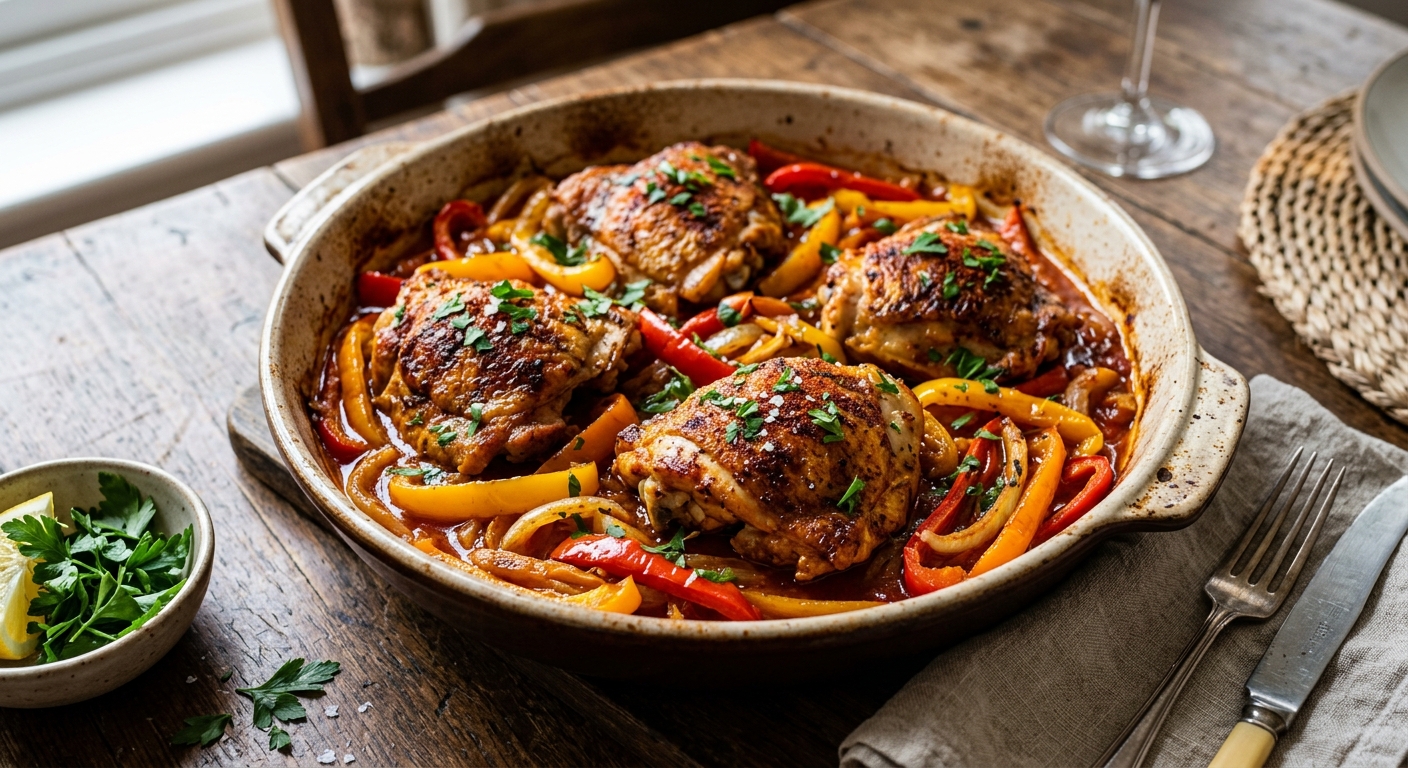
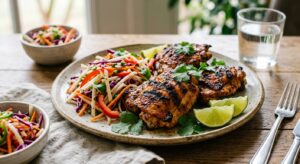
There is a reason paprika and peppers have anchored the cuisines of Hungary, Spain, and the Balkans for centuries: this combination is not just delicious, it is genuinely nourishing. When sweet and smoked paprika coat bone-in chicken thighs and roast or braise alongside a trio of colorful bell peppers, the result is a dish where every component pulls double duty, building flavor while delivering a concentrated payload of vitamins your body actually needs. The deep brick-red sauce that forms during cooking is loaded with carotenoids, capsanthin, and water-soluble vitamin C that migrates from the peppers into the braising liquid, meaning every spoonful of sauce counts.
Vitamin B6 is one of the most underappreciated nutrients in the modern diet, yet it is essential for over 100 enzymatic reactions, including the metabolism of protein, the synthesis of neurotransmitters like serotonin and dopamine, and the regulation of homocysteine levels linked to cardiovascular health. Chicken thighs are among the richest whole-food sources of B6 available, and pairing them with bell peppers, which are simultaneously one of the most concentrated sources of vitamin C on earth, gram for gram outperforming oranges, creates a meal that addresses two of the most commonly under-consumed vitamins in one bowl. Red, yellow, and orange bell peppers are used here deliberately: each ripeness stage offers a slightly different carotenoid profile, and together they contribute lycopene, beta-carotene, and capsanthin alongside their extraordinary vitamin C content.
This recipe has been developed across four cooking methods so you can fit it into any schedule without compromising the nutritional outcome. Whether you sear and braise on the stovetop for maximum fond development, slow cook all day for fall-off-the-bone tenderness, pressure cook for a weeknight-fast version, or roast in the oven for caramelized edges and concentrated flavor, the core nutritional profile remains consistent. The fat from the chicken skin aids the absorption of the fat-soluble carotenoids in the peppers and paprika, so this is genuinely one dish where leaving the skin on serves both your palate and your nutrient uptake.
4
servings
Ingredients
- 1200 gbone-in, skin-on chicken thighs (4 large thighs, approximately 300g each)
- 2 largered bell peppers, seeded and sliced into 1cm strips
- 1 largeyellow bell pepper, seeded and sliced into 1cm strips
- 1 largeorange bell pepper, seeded and sliced into 1cm strips
- 1 mediumyellow onion, thinly sliced
- 5 clovesgarlic, minced
- 400 gcanned crushed tomatoes
- 3 tbspsweet Hungarian paprika
- 1.5 tspsmoked paprika
- 0.5 tsphot paprika or cayenne pepper
- 2 tbspextra-virgin olive oil
- 120 mllow-sodium chicken stock
- 1 tbsptomato paste
- 1 tspapple cider vinegar
- 2 tspfresh thyme leaves (or 0.75 tsp dried)
- 1 tspcaraway seeds, lightly crushed
- 15 gfresh flat-leaf parsley, roughly chopped, for serving
- —Colima Sea SaltMicroplastic Free Salt and freshly ground black pepper to taste
Instructions
Click on an item below to shop for the recommended items for this recipe on Amazon.
As an Amazon Associate, we earn from qualifying purchases.
- Pat the chicken thighs completely dry with paper towels and season generously on both sides with fine sea salt and black pepper. Dry skin is essential for proper browning and for rendering the fat cleanly.
- Heat the olive oil in a large Dutch oven or heavy braising pan over medium-high heat until shimmering. Place the chicken thighs skin-side down in a single layer without crowding. Sear undisturbed for 7 to 8 minutes until the skin is deeply golden and releases easily from the pan. Flip and sear the flesh side for 3 minutes. Transfer to a plate and set aside. Pour off all but approximately 2 tablespoons of the rendered fat, keeping it in the pan.
- Reduce the heat to medium. Add the sliced onion to the fat in the pan and cook, stirring occasionally and scraping up any browned bits from the bottom, for 5 to 6 minutes until softened and translucent. Add the garlic, caraway seeds, and all three paprikas (sweet, smoked, and hot). Stir constantly for 90 seconds, toasting the spices in the fat without burning them. The mixture will become very fragrant and the fat will turn vivid red.
- Add the tomato paste and stir it into the onion mixture for 1 minute to caramelize slightly. Pour in the chicken stock and use a wooden spoon to deglaze the pan, scraping up every bit of fond. Add the crushed tomatoes, apple cider vinegar, thyme, and all the sliced bell peppers. Stir to combine and bring to a gentle simmer.
- Nestle the seared chicken thighs skin-side up into the pepper and tomato mixture, making sure the liquid comes about halfway up the sides of the thighs but does not submerge the skin. Partially cover with a lid, leaving a 2cm gap for steam to escape. Braise over low to medium-low heat for 28 to 32 minutes, until the chicken registers 80 to 82 degrees Celsius (175 to 180 F) internally and the peppers are completely tender.
- Remove the lid for the final 5 minutes to allow the sauce to reduce and concentrate slightly and the skin to re-crisp. Taste the sauce and adjust seasoning with salt, pepper, and a small pinch of additional smoked paprika if desired. Scatter chopped parsley over the top and serve directly from the pan with crusty bread, egg noodles, or cauliflower rice.
- Pat the chicken thighs dry and season well on both sides with salt and pepper. Heat the olive oil in a skillet over medium-high heat and sear the thighs skin-side down for 6 to 7 minutes until deeply golden. Flip for 2 minutes on the flesh side. Transfer to the slow cooker insert, skin-side up, in a single layer if possible. Do not discard the rendered fat in the skillet.
- In the same skillet over medium heat, add the sliced onion and cook for 4 minutes until softened. Add the garlic, caraway seeds, all three paprikas, and tomato paste. Stir for 60 seconds until deeply fragrant and the fat runs bright red. Pour in the chicken stock to deglaze and scrape up all the browned bits. Transfer this entire mixture into the slow cooker.
- Add the crushed tomatoes, apple cider vinegar, thyme, and all the sliced bell peppers directly into the slow cooker around and under the chicken thighs. The chicken skin should remain above the liquid level. Stir the vegetables and sauce gently without disturbing the chicken, then place the lid securely on the slow cooker.
- Cook on Low for 6 to 7 hours or on High for 3 to 3.5 hours. The chicken is ready when it is completely tender and registers at least 80 degrees Celsius (175 F) internally. Because slow cooker lids trap steam, the sauce will be slightly thinner than the stovetop version.
- Once cooking is complete, carefully transfer the chicken thighs to a foil-lined baking sheet, skin-side up, and place under a broiler for 4 to 5 minutes to re-crisp the skin while you finish the sauce. Meanwhile, if the sauce seems too thin, use a ladle to transfer it to a small saucepan and simmer over medium-high heat for 5 to 8 minutes to reduce. Stir the apple cider vinegar into the sauce at this stage for brightness. Return the chicken to the slow cooker insert or a serving dish, spoon the sauce and peppers over the top, and finish with fresh parsley.
- Set the Instant Pot or electric pressure cooker to Saute mode on High. Add the olive oil and heat until shimmering. Pat the chicken thighs dry, season with salt and pepper, and sear skin-side down in batches if necessary for 5 to 6 minutes until golden. Flip for 2 minutes. Press Cancel and transfer the chicken to a plate. The inner pot will have significant browning on the bottom, which is essential flavor.
- Without removing the pot, add the sliced onion to the residual fat and stir for 3 minutes on the residual heat or return to Saute on Normal. Add the garlic, caraway seeds, all three paprikas, and tomato paste, stirring for 60 seconds. Pour in the chicken stock and use a wooden spoon or silicone spatula to deglaze the bottom of the pot thoroughly, scraping up every caramelized bit. This step is critical in a pressure cooker because any stuck fond can trigger a burn warning.
- Add the crushed tomatoes, apple cider vinegar, thyme, and all the sliced bell peppers. Stir to combine. Nestle the seared chicken thighs skin-side up into the pot, pressing them in gently. The liquid will not fully cover the chicken, which is correct. Secure the lid and set the pressure release valve to Sealing.
- Select High Pressure (Manual) and set the timer for 15 minutes. Once the cook time is complete, allow a natural pressure release for 10 minutes, then carefully switch the valve to Venting to release any remaining pressure. Open the lid away from you.
- Transfer the chicken thighs to a foil-lined baking sheet skin-side up. Set the Instant Pot to Saute on High and simmer the sauce, uncovered, for 5 to 7 minutes, stirring occasionally, until it reduces to a thick, glossy consistency. Meanwhile, broil the chicken thighs for 4 to 5 minutes until the skin is crisp and lightly charred at the edges. Return the chicken to the pot or a serving platter, spoon the reduced pepper sauce generously over each piece, and garnish with fresh parsley.
- Preheat your oven to 200 degrees Celsius (400 F), with the rack positioned in the center. Pat the chicken thighs completely dry and season generously with salt and pepper on all sides including under the skin where possible, which maximizes seasoning and helps render the fat.
- Heat the olive oil in a large oven-safe skillet or cast iron pan over medium-high heat on the stovetop. Sear the chicken thighs skin-side down for 7 to 8 minutes without moving them, until the skin is a deep mahogany and the fat has rendered visibly into the pan. Flip for 2 minutes on the flesh side, then transfer to a plate. Do not drain the fat.
- Reduce the stovetop heat to medium. Add the onion to the rendered fat and cook for 4 to 5 minutes until softened. Add the garlic, caraway seeds, all three paprikas, and tomato paste, stirring constantly for 90 seconds. Deglaze with the chicken stock, scraping up all the fond. Stir in the crushed tomatoes, apple cider vinegar, and thyme. Bring to a gentle simmer and cook for 2 minutes.
- Scatter all the sliced bell peppers into the pan in an even layer and stir them into the sauce. The pan will be very full at this stage. Nestle the seared chicken thighs skin-side up on top of the peppers, making sure the skin sits above the sauce level. The raised, exposed skin is what will caramelize in the oven.
- Transfer the pan to the preheated oven, uncovered. Roast for 45 to 50 minutes, until the chicken skin is deeply golden and crisp, the peppers are completely tender and beginning to caramelize at the edges, and the internal temperature of the thickest thigh reads 80 to 82 degrees Celsius (175 to 180 F). If the sauce is bubbling aggressively and reducing too fast after 30 minutes, tent the pan loosely with foil for the remaining time.
- Remove from the oven and let the chicken rest in the pan for 5 minutes before serving. The sauce will have reduced and concentrated significantly, coating the peppers in a glossy, intensely flavored glaze. Taste and adjust seasoning, then scatter fresh parsley over the top and serve directly from the pan.
Nutrition Breakdown
Per 1 serving (makes 4)
Vitamins & Minerals
% Daily Value based on a 2,000 calorie diet (FDA reference)
🧬 Essential Amino Acids
% of recommended daily intake (RDA) per serving
🛡 Antioxidant Profile
The Nutrition Science
Vitamin B6, in its active coenzyme form pyridoxal-5-phosphate (PLP), is required for the transamination reactions that allow your body to synthesize non-essential amino acids from dietary protein, which is precisely why pairing a high-B6 food like chicken thigh with the complete protein it provides is so metabolically efficient. Beyond protein metabolism, PLP is the rate-limiting cofactor in serotonin and dopamine synthesis from tryptophan and tyrosine respectively, and in the conversion of stored glycogen to glucose during exercise. Adults require 1.3 to 1.7 mg per day depending on age and sex, and a single serving of this dish delivers approximately 1.4 mg, making it one of the most practical ways to meet this target from whole food rather than supplementation.
The vitamin C content of this dish, over 185 mg per serving, is particularly noteworthy because it comes almost entirely from the bell peppers, which retain a surprisingly high proportion of their ascorbic acid even through moderate heat exposure. Studies have shown that stir-frying and brief braising reduce vitamin C in peppers by roughly 25 to 35 percent compared to raw, meaning the original raw content of the three large peppers used here (close to 280 mg combined) still yields well over the RDI after cooking. Beyond its role as a direct antioxidant, the vitamin C in this dish serves a critical nutritional function: it enhances the absorption of non-heme iron from the tomatoes and paprika by reducing ferric iron (Fe3+) to the more absorbable ferrous form (Fe2+) in the gut, meaningfully improving the bioavailability of plant-sourced iron even though this is a meat-containing dish.
Paprika itself is not merely a flavoring agent. High-quality sweet Hungarian paprika contains concentrated levels of capsanthin, capsorubin, and beta-carotene, and three tablespoons of paprika in this recipe contribute measurably to your total carotenoid intake for the day. Carotenoids are fat-soluble, and the chicken thigh fat and olive oil in this recipe provide the lipid matrix necessary for their absorption in the small intestine. Research has consistently shown that carotenoid absorption from vegetable sources increases by 3 to 8 fold when consumed with a source of dietary fat compared to fat-free meals, making the classic combination of peppers braised with meat in olive oil not just culturally time-tested but biochemically sound.
Pro Tips
- Do not substitute chicken breast: thighs contain approximately 40 percent more vitamin B6 per 100g than breast meat, and the higher fat content is essential for carotenoid absorption from the peppers and paprika.
- Use the best-quality sweet Hungarian paprika you can find and store it in a cool, dark place or the freezer once opened. Paprika loses its carotenoid content rapidly when exposed to light and heat, and stale paprika is both nutritionally inferior and far less flavorful.
- The apple cider vinegar added near the end of cooking is not just for brightness: the mild acidity helps preserve the remaining vitamin C in the finished dish, which would otherwise continue to degrade from residual heat after cooking.
Oh this is RIGHT up my alley! The B6 is honestly such a game changer for us with PCOS since it helps with hormone metabolism and mood, and I love that you’re highlighting the whole food sources instead of just relying on supplements. The paprika and roasted peppers together hit different for blood sugar stability too, which means less insulin spiking after the meal. I’m totally making this this week and probably adding some spearmint tea on the side because why not stack all the hormone-supporting benefits, you know?
Love this take, especially calling out the whole food sources over supplementing. I’m curious though, what’s the glycemic load looking like on this one? Chicken thighs are obviously a win, but I’m always thinking about how the sweet paprika and roasted peppers are going to hit my blood sugar, and the ratio matters for me as T1D. Do you have glucose response data from testing this, or tips for pairing it with something to flatten any potential spike? The micronutrient density is chef’s kiss, but I want to make sure it’s actually working for my body, you know?
This is exactly the kind of nutrient-dense whole food approach I’ve been advocating for years. The B6 from the thighs matters too, especially for homocysteine metabolism, and that paprika-pepper combination is doing serious anti-inflammatory work with the carotenoids. One thing worth noting: chicken thighs give you that favorable omega-3 to omega-6 ratio compared to breast meat, particularly if the birds had pasture access. I’d be curious if you tested this with bone-in, skin-on thighs versus boneless, since the nutrient concentration shifts slightly. Either way, this is the kind of one-pan meal I actually recommend to my patients instead of