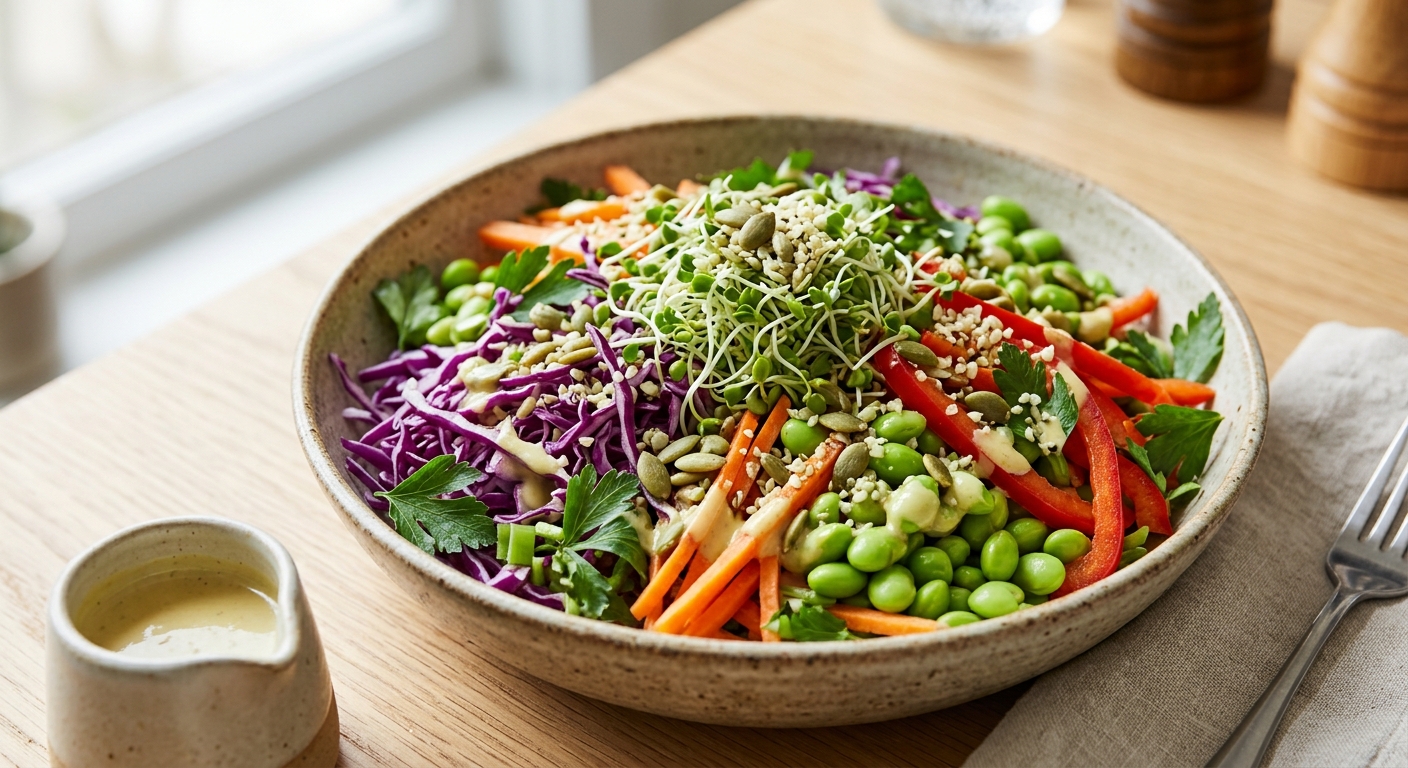
Broccoli sprouts are one of the most rigorously studied functional foods in nutrition science, and for good reason. A single 100g serving delivers glucoraphanin concentrations that dwarf those of mature broccoli, and when those sprouts are chewed or blended, the enzyme myrosinase converts glucoraphanin into sulforaphane, a potent isothiocyanate that activates the Nrf2 pathway, the body’s master antioxidant switch. Pairing them with a bright, sesame-forward lemon tahini dressing does more than add flavor: the healthy fats in tahini significantly improve absorption of fat-soluble carotenoids from the other vegetables in this salad.
This is not a dish that sacrifices pleasure for nutrition. Crisp, peppery sprouts contrast beautifully with the creamy, nutty tahini dressing, while shredded purple cabbage adds a satisfying crunch and a hefty dose of anthocyanins. Toasted pumpkin seeds and hemp hearts contribute complete protein and zinc, and a shower of fresh flat-leaf parsley layers in additional folate and vitamin K. Every component earns its place both nutritionally and texturally, making this salad feel indulgent while functioning more like a targeted supplement protocol than a side dish.
Because the active compounds in broccoli sprouts are heat-sensitive, the preparation methods here diverge from the usual salad playbook. The stovetop method focuses on a quick warm lemon tahini drizzle that gently wilts the cabbage without destroying the sprouts. The slow cooker and pressure cooker methods shift the emphasis to a warm roasted-vegetable base, with sprouts added cold at the very end to preserve sulforaphane activity. The oven method creates a gorgeous caramelized vegetable tray that the fresh sprouts and dressing crown at serving. Choose your method based on your schedule and texture preference, knowing the nutritional payoff is calibrated to stay exceptional no matter which path you take.
4
servings
Ingredients
- 200 gfresh broccoli sprouts, rinsed and spun dry
- 300 gpurple cabbage, very finely shredded
- 200 gfrozen shelled edamame, thawed
- 2 mediumcarrots, peeled and julienned or coarsely grated
- 1 mediumred bell pepper, thinly sliced
- 30 graw pumpkin seeds (pepitas)
- 30 ghulled hemp hearts
- 20 gflat-leaf parsley, leaves and tender stems, roughly chopped
- 3 tbspwell-stirred tahini (sesame paste)
- 3 tbspfresh lemon juice (about 1.5 lemons)
- 1 tbspextra-virgin olive oil
- 1 tbspraw apple cider vinegar
- 1 tspraw honey or pure maple syrup
- 1 small clovegarlic, finely microplaned or minced to a paste
- 2 tbspwarm water, plus more to thin
- 0.5 tspground turmeric
- 0.25 tspground black pepper (enhances curcumin absorption)
- —Colima Sea SaltMicroplastic Free Salt to taste
- —1 teaspoon toasted sesame seeds, to finish
Instructions
Click on an item below to shop for the recommended items for this recipe on Amazon.
As an Amazon Associate, we earn from qualifying purchases.
- Toast the pumpkin seeds: Place a dry medium skillet over medium heat. Add the pumpkin seeds and toast, shaking the pan frequently, for 3 to 4 minutes until they begin to pop and turn golden in spots. Transfer immediately to a small plate and season with a pinch of fine sea salt. Set aside to cool.
- Make the warm lemon tahini dressing: In a small saucepan, combine the tahini, lemon juice, apple cider vinegar, olive oil, honey or maple syrup, microplaned garlic, ground turmeric, and black pepper. Whisk over the lowest possible heat for 60 to 90 seconds, just until the mixture is smooth, fragrant, and warmed through (aim for 50 to 55C / 120 to 130F on an instant-read thermometer). Remove from heat and thin with warm water, one tablespoon at a time, until the dressing pours in a slow ribbon. Taste and season with fine sea salt.
- Assemble the salad base: In a large wide mixing bowl, combine the shredded purple cabbage, julienned carrots, and sliced red bell pepper. Pour roughly two-thirds of the warm dressing over the vegetables and toss vigorously for 90 seconds. The residual warmth of the dressing will begin to soften and lightly pickle the cabbage without cooking it.
- Fold in the remaining components: Add the thawed edamame and chopped parsley to the bowl and toss gently to distribute. Now add the broccoli sprouts and fold them in with your hands or tongs using a light lifting motion, not aggressive stirring, to avoid bruising the delicate sprouts.
- Plate and finish: Divide the salad among four plates or wide shallow bowls. Drizzle the remaining dressing over each portion. Scatter the toasted pumpkin seeds, hemp hearts, and toasted sesame seeds over the top. Serve immediately while the base vegetables are still slightly warm and the sprouts remain crisp and cool.
- Prepare the braised vegetable base: Place the shredded purple cabbage, julienned carrots, and sliced red bell pepper in the insert of a 4-quart or larger slow cooker. Add 3 tablespoons of water, the olive oil, a generous pinch of fine sea salt, and the ground black pepper. Stir briefly to coat. Do not add the edamame, sprouts, parsley, seeds, or dressing at this stage.
- Toast the pumpkin seeds while the cooker works: About 15 minutes before the slow cooker finishes, place a dry skillet over medium heat and toast the pumpkin seeds for 3 to 4 minutes, shaking frequently, until golden and popping. Transfer to a plate, season with salt, and cool completely.
- Slow cook the vegetable base: Set the slow cooker to Low and cook for 3 hours, lifting the lid once at the 90-minute mark to stir and check that the vegetables are not catching. The cabbage should be silky and deeply colored, the carrots fork-tender, and any liquid mostly evaporated. If liquid remains after 3 hours, remove the lid and cook on High for an additional 15 minutes to drive it off.
- Make the cold lemon tahini dressing: While the vegetables finish cooking, whisk together the tahini, lemon juice, apple cider vinegar, honey or maple syrup, microplaned garlic, ground turmeric, and black pepper in a medium bowl until smooth. Thin with warm water, one tablespoon at a time, to a pourable ribbon consistency. Taste and adjust salt. Refrigerate the dressing until you are ready to plate, so it stays cool when it hits the sprouts.
- Assemble with the cold components: Transfer the warm braised vegetable base to a large serving bowl or platter and stir in the thawed edamame. Allow the base to cool for 3 to 4 minutes (it should be warm, not steaming hot) before adding the broccoli sprouts and chopped parsley. Fold gently with tongs. Drizzle the cold lemon tahini dressing over everything, then scatter the toasted pumpkin seeds, hemp hearts, and sesame seeds on top. Serve immediately.
- Prepare the dressing first: In a medium bowl, whisk together the tahini, lemon juice, apple cider vinegar, olive oil, honey or maple syrup, microplaned garlic, ground turmeric, and black pepper until completely smooth. Thin with warm water to a slow-ribbon consistency. Taste and season with fine sea salt. Set aside at room temperature.
- Toast the pumpkin seeds: Using the saute function on your pressure cooker or Instant Pot (or a separate skillet), toast the pumpkin seeds over medium heat for 2 to 3 minutes until golden and popping. Remove and set aside on a plate with a pinch of salt.
- Load and pressure cook the vegetables: Add the julienned carrots, sliced red bell pepper, and thawed edamame to the pressure cooker insert. Pour in 60ml (quarter cup) of water and add the olive oil and a pinch of fine sea salt. Secure the lid and set the valve to Sealing. Cook on Manual High Pressure for 2 minutes. The vegetables will cook through and retain a slight bite, unlike the fully softened texture achieved by the slow cooker method.
- Quick-release and cool slightly: As soon as the 2-minute cook time ends, perform an immediate quick pressure release by carefully moving the valve to Venting. Remove the lid away from you. Use a slotted spoon to transfer the cooked vegetables to a large wide salad bowl, leaving any cooking liquid behind. Let the vegetables rest for 3 to 4 minutes so they are warm but not scalding.
- Build the salad and serve: Add the raw shredded purple cabbage to the bowl with the warm vegetables (the residual heat will take the raw edge off the cabbage without cooking it). Add the broccoli sprouts and chopped parsley and fold everything together gently with tongs. Drizzle generously with the prepared lemon tahini dressing and toss once more. Top with toasted pumpkin seeds, hemp hearts, and sesame seeds. Serve right away while the temperature contrast between the warm vegetables and cool sprouts is at its most vivid.
- Preheat and prepare: Position a rack in the upper third of the oven and preheat to 210C (410F) convection or 220C (425F) conventional. Line a large rimmed baking sheet with parchment paper. In a large bowl, toss the shredded purple cabbage, julienned carrots, sliced red bell pepper, and thawed edamame with the olive oil, ground turmeric, black pepper, and a generous pinch of fine sea salt. Spread in a single, mostly even layer on the prepared baking sheet. Overcrowding causes steaming rather than roasting, so use two baking sheets if necessary.
- Roast until caramelized: Slide the baking sheet into the preheated oven and roast for 20 to 25 minutes, flipping the vegetables once at the 12-minute mark with a wide spatula. The cabbage edges should be deeply charred and frilly, the carrots golden on the cut surfaces, and the bell pepper blistered and sweet. The edamame will develop a lightly toasty skin. Remove from the oven.
- Toast the pumpkin seeds on the same tray: In the final 4 minutes of roasting, scatter the raw pumpkin seeds in a clear corner of the baking sheet and return it to the oven. Watch closely. They are done when they puff and turn golden, about 3 to 4 minutes. Remove the entire tray and let everything rest for 5 full minutes. This rest is not optional: adding sprouts to a scorching-hot tray will destroy the myrosinase enzyme responsible for sulforaphane production.
- Make the lemon tahini dressing: While the tray rests, whisk together the tahini, lemon juice, apple cider vinegar, honey or maple syrup, microplaned garlic, and black pepper in a small bowl. Thin with warm water to a drizzleable consistency. Taste and adjust salt. The dressing should be bright, creamy, and assertively lemony to balance the richness of the roasted vegetables.
- Assemble the finished salad: Transfer the roasted vegetables and toasted pumpkin seeds to a large serving platter or individual wide bowls. Pile the raw broccoli sprouts and chopped parsley on top, do not toss them in yet. Drizzle the lemon tahini dressing over the entire surface. Scatter the hemp hearts and toasted sesame seeds over everything, then use tongs to gently fold just two or three times, leaving the sprouts largely visible on top. Serve immediately while the base is warm and the sprouts are vibrant and crisp.
Nutrition Breakdown
Per 1 serving (makes 4)
Vitamins & Minerals
% Daily Value based on a 2,000 calorie diet (FDA reference)
🧬 Essential Amino Acids
% of recommended daily intake (RDA) per serving
🛡 Antioxidant Profile
The Nutrition Science
The nutritional centerpiece of this recipe is sulforaphane, an isothiocyanate produced when the glucosinolate glucoraphanin in broccoli sprouts comes into contact with the enzyme myrosinase, triggered by chewing or mechanical damage. Broccoli sprouts grown for 3 days contain glucoraphanin concentrations of 1,153 micromoles per 100g, compared to roughly 10 to 14 micromoles per 100g in mature broccoli florets, making them gram-for-gram one of the most concentrated dietary sources of this compound. Once formed, sulforaphane crosses cell membranes freely and alkylates Keap1, releasing the transcription factor Nrf2 to migrate to the nucleus and switch on over 200 cytoprotective genes encoding antioxidant proteins, phase II detoxification enzymes, and anti-inflammatory mediators.
The combination of purple cabbage anthocyanins and sulforaphane is not accidental. Research published in the Journal of Nutritional Biochemistry demonstrates that anthocyanins independently inhibit NF-kB, the primary pro-inflammatory transcription factor, via a complementary but distinct mechanism to Nrf2 activation. Eating both compounds together creates a two-front approach to reducing chronic low-grade inflammation, targeting both the oxidative stress pathway and the cytokine signaling pathway simultaneously. The black pepper in the dressing contains piperine, which inhibits glucuronidation and extends the serum half-life of curcumin from the turmeric by up to 2000% in human pharmacokinetic studies, ensuring the small amount of curcumin present remains biologically active long enough to exert its own COX-2 inhibitory effects.
Fat-soluble carotenoids, including the 5.8mg of beta-carotene from the carrots and parsley and the 2.4mg of lutein and zeaxanthin from the parsley and edamame, require co-ingestion with dietary fat for optimal micellar incorporation and absorption in the small intestine. The tahini and olive oil in the dressing supply approximately 18g of fat per serving, far exceeding the threshold of 3 to 5g identified in absorption studies as sufficient to maximise carotenoid bioavailability. This means that the dressing is not just a flavor vehicle: it is a calibrated fat delivery system that determines whether the carotenoids in your salad become bioavailable nutrients or pass through unabsorbed.
Pro Tips
- Buy or grow broccoli sprouts that are exactly 3 to 5 days old for peak glucoraphanin content. Older sprouts begin to convert glucoraphanin into other glucosinolates as the plant matures, reducing sulforaphane yield.
- Do not rinse the sprouts with warm or hot water. Use cold water and a salad spinner, and add them to the dish last and off the heat. Temperatures above 60C (140F) denature myrosinase and block sulforaphane formation.
- If your tahini is very thick or bitter, look for a stone-ground variety made from hulled Ethiopian or Turkish sesame. Thin it with cold water rather than warm before measuring to keep the dressing texture consistent across batches.

This is such a great question, Remy! The sulforaphane actually stays pretty stable in raw preparations like this salad, especially since you’re eating it fresh. The real tip is making sure to chew thoroughly or lightly damage the sprouts (like with the shredding happening in this recipe) to activate the myrosinase enzyme that converts the glucoraphanin precursor into sulforaphane in the first place. Also love that you’re growing your own, the fresher the better for nutrient density! I’m definitely saving this recipe to share with clients who want that anti-inflammatory boost without any cooking methods that might reduce the good stuff.
This is exactly the kind of post I needed to see right now, thank you. I’ve been cycling through different raw cruciferous preparations trying to optimize sulforaphane intake without triggering my digestive issues, and the lemon tahini pairing is brilliant because the fat helps with myelin-supportive nutrient absorption. Remy’s question about stability is crucial too – I’ve noticed the anti-inflammatory benefits are much more pronounced when I eat this raw and fresh, so I’m glad that’s backed up here.
omg broccoli sprouts are seriously game-changing, ive been growing my own for like 6 months now and the difference in how i feel is wild. quick question tho – do you know if the sulforaphane stays stable when you dress it with that tahini or does the fat help preserve it? ive read that myrosinase enzyme needs to be active to convert the glucoraphanin, and im curious if you’re recommending any prep steps like chewing really well or letting it sit after chopping to maximize activation before you’re adding teh dressing lol