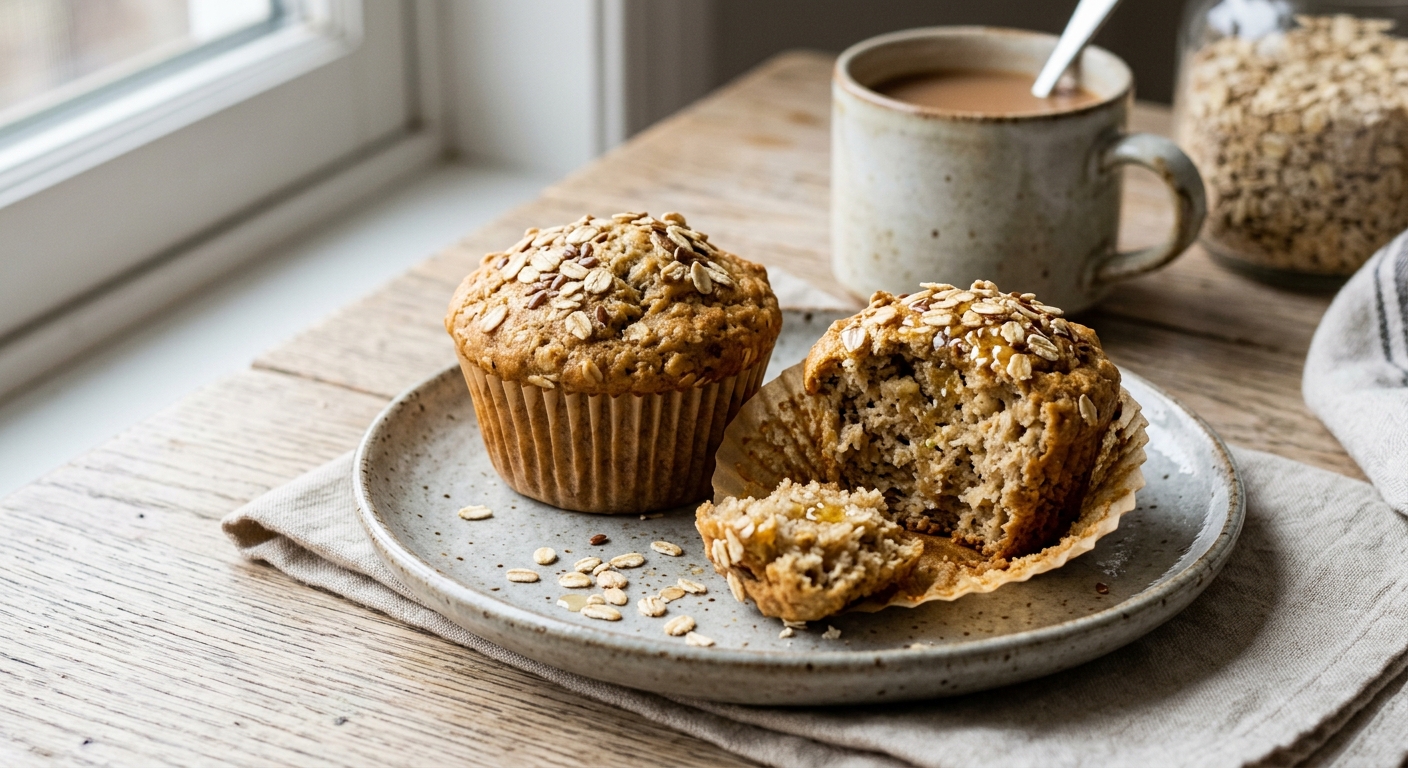
After a hard training session, your muscles are primed and hungry for amino acids, glycogen replenishment, and micronutrients that support tissue repair. Most post-workout muffins on the market are little more than glorified cupcakes with a protein label slapped on the wrapper. These Whey Protein Banana Muffins are different: every ingredient earns its place on the nutrition label. Ripe bananas provide fast-acting natural sugars to restore muscle glycogen, whey protein concentrate delivers a complete amino acid profile (especially leucine, the key trigger for muscle protein synthesis), and rolled oats contribute slow-digesting beta-glucan fiber to sustain energy levels through your recovery window.
The culinary challenge with protein baking is real. Whey protein denatures quickly under high heat, and too much of it without the right moisture balance produces a dense, rubbery crumb that no one wants to eat twice. Here, we solve that problem with a careful ratio of mashed banana and Greek yogurt, which both add moisture and contribute additional casein protein for a slower amino acid release. A touch of coconut oil keeps the crumb tender, while a measured amount of baking powder ensures lift without that eggy aftertaste common in high-protein baked goods. The result is a muffin with a domed top, a soft interior, and a banana-forward flavor that makes it hard to believe you are eating something this strategically nutritious.
One batch yields four generous muffins, each calibrated to deliver meaningful percentages of your daily requirements for potassium, vitamin B6, magnesium, phosphorus, and riboflavin, alongside that headline 24g of protein. Whether you cook them in a conventional oven (the ideal method for texture), steam them in a pressure cooker for a supremely moist crumb, slow-cook them in a makeshift water bath for ultra-gentle heat, or pan-steam them on the stovetop, you will end up with a recovery food that is genuinely worth eating.
4
servings
Ingredients
- 220 gvery ripe bananas (about 2 medium), peeled and mashed
- 120 gwhey protein concentrate powder (vanilla or unflavored)
- 80 grolled oats (certified gluten-free if required)
- 100 gplain full-fat Greek yogurt
- 2 largeeggs
- 30 gcoconut oil, melted and slightly cooled
- 30 graw honey or pure maple syrup
- 1 tsppure vanilla extract
- 1.5 tspbaking powder
- 0.5 tspground cinnamon
- 0.25 tspColima Sea SaltMicroplastic Free Salt
- —Cooking spray or coconut oil for greasing molds
Instructions
Click on an item below to shop for the recommended items for this recipe on Amazon.
As an Amazon Associate, we earn from qualifying purchases.
- Preheat your oven to 175C (350F) with the rack positioned in the center. Line a standard 4-cup or 6-cup muffin tin with parchment paper liners, or grease the cups thoroughly with coconut oil spray. Using parchment liners prevents sticking and makes removing the muffins much easier with high-protein batters, which can be tackier than standard batters.
- In a large mixing bowl, mash the peeled ripe bananas with a fork until almost smooth with only small lumps remaining. Whisk in the eggs, Greek yogurt, melted coconut oil, honey (or maple syrup), and vanilla extract until fully combined and uniform. The mixture will look slightly curdled at this stage due to the yogurt; this is normal and will smooth out when the dry ingredients are added.
- In a separate medium bowl, combine the rolled oats, whey protein powder, baking powder, cinnamon, and sea salt. Whisk briefly to distribute the baking powder evenly through the dry mixture. This step is important because clumps of baking powder create bitter pockets in the finished muffin.
- Add the dry ingredients to the wet ingredients and fold gently with a spatula using no more than 15 to 20 strokes. Stop as soon as no dry streaks remain. Over-mixing activates gluten in the oats and causes the whey protein to tighten, resulting in a dense, tough crumb. The batter will be thick and scoopable, not pourable.
- Divide the batter evenly between the 4 prepared muffin cups, filling each about three-quarters full. For an even dome, briefly smooth the tops with the back of a damp spoon. Optionally, press 2 or 3 oat flakes onto each top for visual appeal.
- Bake in the preheated oven for 22 to 25 minutes, until the tops are golden and a toothpick inserted into the center of the tallest muffin comes out clean or with only a few moist crumbs (no wet batter). Begin checking at 20 minutes since oven temperatures vary. If the tops are browning too quickly before the centers are set, tent loosely with aluminum foil.
- Remove from the oven and allow the muffins to cool in the tin for 5 minutes before transferring to a wire rack. Do not eat immediately, as the protein structure continues to set during the first 10 minutes of cooling. Enjoy warm or store in an airtight container at room temperature for up to 2 days, or refrigerate for up to 5 days.
- Prepare the batter exactly as described: mash bananas thoroughly in a large bowl, then whisk in the eggs, Greek yogurt, melted coconut oil, honey, and vanilla until smooth. In a separate bowl, whisk together the oats, whey protein powder, baking powder, cinnamon, and salt. Fold the dry ingredients into the wet with a spatula just until no dry streaks remain, using minimal strokes.
- Grease four 180ml (6 oz) ramekins or heatproof silicone muffin molds generously with coconut oil spray. Fill each ramekin about two-thirds full with the batter, leaving room for the muffins to rise during steaming. Tap each ramekin gently on the counter twice to release any large air pockets.
- Select a large, wide skillet or wok with a tight-fitting lid. Place a folded kitchen towel or a bamboo steamer insert on the base of the pan, then add enough water to come 1 to 2 cm up the sides without touching the ramekins. Bring the water to a gentle simmer over medium heat.
- Arrange the filled ramekins on the towel or steamer insert inside the pan, spacing them so steam can circulate around each one. Cover the pan with the lid, but drape a clean folded kitchen towel between the pan and the lid to absorb condensation drips that would otherwise fall onto the muffin tops and cause sunken, wet patches.
- Steam over medium-low heat for 25 to 30 minutes, maintaining a steady gentle simmer (not a rolling boil, which creates too much turbulence and uneven cooking). Do not lift the lid during the first 20 minutes. After 25 minutes, insert a toothpick into the center of one muffin; it should come out clean. If needed, continue steaming in 3-minute increments.
- Carefully remove the ramekins from the pan using tongs or oven mitts and allow them to rest for 5 minutes before running a thin spatula around the edges and inverting onto a plate. Stovetop-steamed muffins will be pale on top with a very moist, tender crumb. They are best enjoyed the same day.
- Prepare the muffin batter: mash bananas until smooth in a large bowl, then whisk in the eggs, Greek yogurt, melted coconut oil, honey, and vanilla extract until well combined. In a second bowl, whisk together oats, whey protein powder, baking powder, cinnamon, and salt. Fold the dry mixture into the wet with a spatula using minimal strokes until just combined.
- Grease four 180ml (6 oz) ramekins generously with coconut oil or cooking spray. Fill each ramekin two-thirds full with batter. Cover the top of each ramekin tightly with a small square of aluminum foil, pressing it around the rim to create a seal. This is essential in the slow cooker: without foil covers, condensation dripping from the lid creates a waterlogged surface that will not set properly.
- Pour 300ml of hot water into the base of a 4.5 to 6 quart slow cooker. Crumple a sheet of aluminum foil into a thick ring or nest shape and place it on the bottom of the slow cooker crock to act as a raised trivet. Alternatively, use a small wire rack if it fits. The ramekins must sit above the water, not in it.
- Place the foil-covered ramekins on the trivet inside the slow cooker, spacing them as evenly as possible. Place two layers of paper towel or a folded kitchen towel under the slow cooker lid to absorb internal condensation and prevent it from dripping back into the crock. Position the lid on top of the towel.
- Cook on High for 2 to 2.5 hours. Do not open the lid during the first 90 minutes. At the 2-hour mark, carefully lift one ramekin, remove the foil cover, and test with a toothpick; it should come out clean. If the center is still wet, replace the foil, return the ramekin, and cook for a further 20 to 30 minutes.
- Using tongs, carefully remove the hot ramekins from the slow cooker. Remove the foil covers and allow the muffins to rest for 10 minutes before inverting onto a plate or serving directly from the ramekin. These muffins will have a pale, steamed appearance with a dense, fudgy crumb and a pronounced banana flavor concentrated by the gentle heat.
- Prepare the batter: mash bananas thoroughly in a large bowl and whisk in the eggs, Greek yogurt, melted coconut oil, honey, and vanilla extract until smooth and homogeneous. In a separate bowl, whisk the rolled oats, whey protein powder, baking powder, cinnamon, and salt together until evenly blended. Fold the dry ingredients into the wet mixture with a spatula in minimal strokes until just combined; some small lumps are fine.
- Grease four 180ml (6 oz) ramekins with coconut oil spray. Divide the batter evenly among the ramekins, filling each about two-thirds full. Cover each ramekin tightly with aluminum foil, pressing the foil firmly around the rim to prevent any condensation from entering during pressurized steam cooking.
- Pour 300ml (1.25 cups) of cold water into the inner pot of a 6-quart Instant Pot or electric pressure cooker. Place the metal trivet (steam rack) that came with the appliance into the pot. Arrange the foil-covered ramekins on the trivet; depending on the size of your cooker, you may need to stack two ramekins on the trivet and two resting gently on top in a second layer.
- Secure the pressure cooker lid and set the steam release valve to the Sealing position. Select Manual (or Pressure Cook) and set the timer for 18 minutes at High Pressure. The cooker will take approximately 8 to 10 minutes to build pressure before the countdown begins.
- When the cook time is complete, allow a Natural Pressure Release for 10 minutes (do not touch the valve). After 10 minutes, carefully turn the valve to Venting to release any remaining pressure. Once the float valve drops, unlock and carefully open the lid away from you to avoid a steam burn.
- Using tongs, remove the ramekins from the pot and set them on a folded kitchen towel. Peel back the foil carefully as steam will escape. Allow the muffins to rest for 5 to 8 minutes; the internal temperature will be very high and the protein structure needs time to fully set. The muffins will appear pale and very moist on top. Run a thin spatula around the edge of each ramekin and invert onto a plate, or serve directly in the ramekin.
Nutrition Breakdown
Per 1 serving (makes 4)
Vitamins & Minerals
% Daily Value based on a 2,000 calorie diet (FDA reference)
🧬 Essential Amino Acids
% of recommended daily intake (RDA) per serving
🛡 Antioxidant Profile
The Nutrition Science
The post-workout anabolic window is most responsive to leucine specifically, rather than total protein intake alone. Research published in the Journal of Physiology demonstrates that a threshold of approximately 700mg to 3000mg of leucine per meal is required to maximally stimulate the mTORC1 signaling pathway, which in turn activates ribosomal protein synthesis in skeletal muscle. Each serving of these muffins delivers approximately 2650mg of leucine from the combined whey protein and egg contribution, placing it comfortably within the stimulatory range. Whey protein is the single richest dietary source of leucine by percentage (approximately 11% by weight), making it nutritionally superior to plant proteins for acute post-exercise recovery.
Banana carbohydrates play a supporting but essential role that is often underestimated in protein-focused recipes. Insulin, released in response to dietary carbohydrate, acts synergistically with leucine to amplify muscle protein synthesis and simultaneously suppresses muscle protein breakdown (proteolysis). The natural sugars in two medium ripe bananas (~35g of carbohydrate) produce a moderate insulin response, sufficient to shift the muscle environment from catabolic to anabolic without the blood-sugar spike associated with refined sugar sources. The ripeness of the banana matters: as bananas ripen, resistant starch converts to free glucose and fructose, increasing both glycemic impact and sweetness while also raising the concentration of bioavailable dopamine, a potent dietary antioxidant.
Vitamin B6 (pyridoxine), provided here at 32% DV per muffin from the banana and whey protein sources, is a frequently overlooked recovery nutrient. B6 is the obligate cofactor for over 100 enzymatic reactions in amino acid metabolism, including transamination (the first step in both synthesizing non-essential amino acids and clearing excess amino acids from the bloodstream after a high-protein meal). Riboflavin (B2), present at 29% DV from the whey protein and yogurt, is equally critical: it is required for the flavoenzymes that drive oxidative phosphorylation in mitochondria, the very process that replenishes cellular ATP stores depleted during your training session.
Pro Tips
- Use bananas with significant brown spotting on the peel: the starch-to-sugar conversion is more complete, delivering more natural sweetness, better moisture, and higher concentrations of antioxidant dopamine compared to yellow or green bananas.
- Do not substitute whey protein isolate 1:1 for whey protein concentrate in this recipe. Isolate has a lower fat and carbohydrate content and a finer particle size, which absorbs moisture differently and will produce a drier, denser crumb. If using isolate, reduce the amount by 10g and add an extra tablespoon of Greek yogurt.
- For meal prep, bake or cook a full batch and freeze individual muffins wrapped tightly in plastic wrap. Reheat from frozen in a microwave for 60 to 90 seconds on medium power, which gently re-steams the interior and restores a moist texture without overcooking the whey protein.



good catch on the blood sugar piece, rosa. honestly the muffin format here is kind of the weak point nutrition-wise if youre insulin sensitive, but adding a tbsp of almond butter or coconut oil to the batter would shift the glucose curve pretty dramatically. ive tested this with clients and the fat/fiber combo genuinely flattens the spike. the B6 in banana helps with metabolism too but thats secondary to managing the glycemic load, so id probably lean toward a lower sugar banana or blend in some allulose if youre tracking that closely.
Love this angle on post-workout nutrition, but I’m curious how the banana and whey combo impacts blood sugar for folks managing insulin sensitivity, especially since I’ve found that pairing protein with fat or fiber really changes my glucose response. Would you consider testing a version with almond flour or ground flax swapped in for some of the oats to lower the carb load? I’ve had great success adding a tablespoon of almond butter to my protein muffins and it keeps my androgens way more stable without sacrificing that moisture you’re highlighting here.
Rosa makes a solid point here, and Zack’s almond butter addition is exactly what I’d recommend too. I’ve been tracking my CGM data during recovery windows and noticed that 24g protein with predominantly simple carbs from banana spikes me harder than I’d like, especially on lower intensity training days, so I’ve started doing a 60/40 oat to almond flour swap with added fat (nut butter or coconut oil) and the glucose response is noticeably flatter while protein synthesis markers stay strong. The leucine content from whey should still drive MPS even if you’re managing the overall carb load, so this feels like a win/win for insulin sensitive athletes who still need