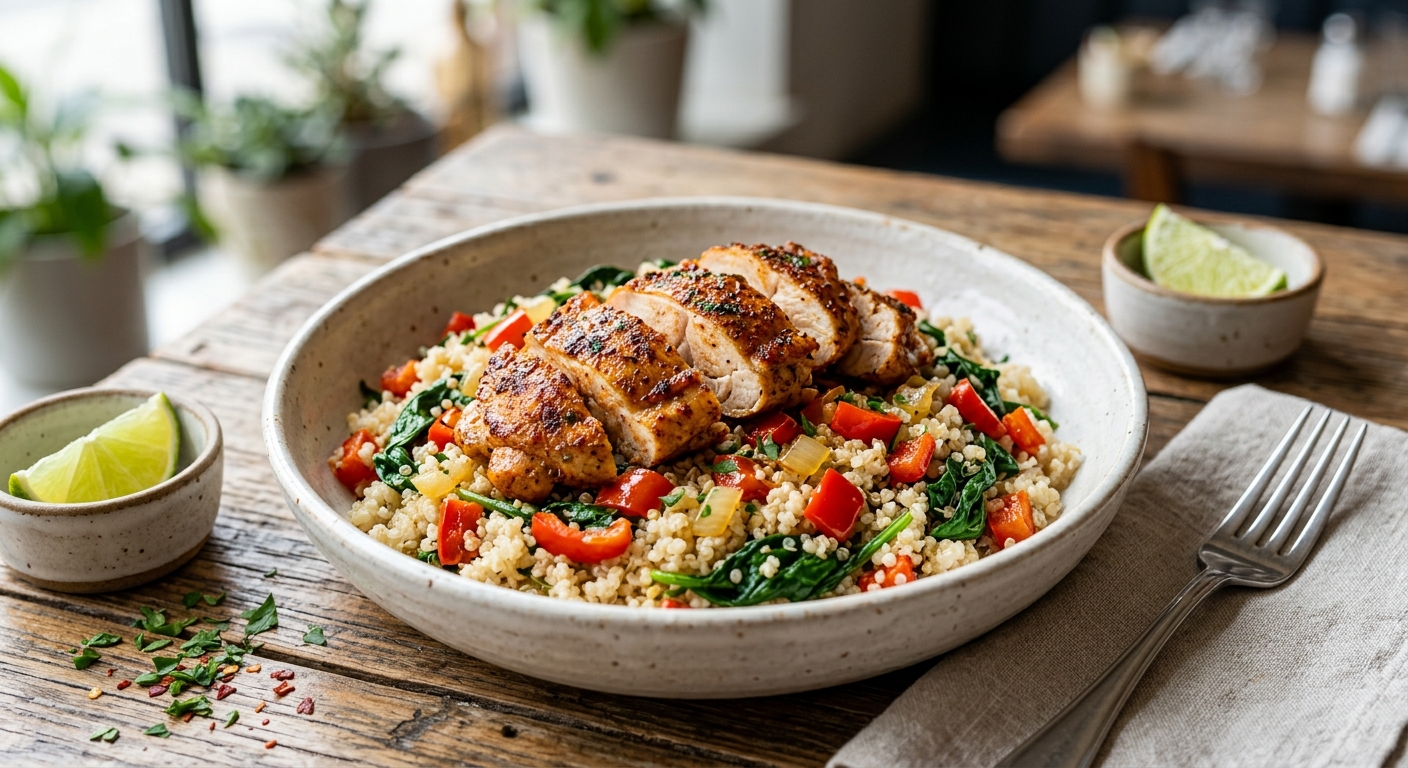
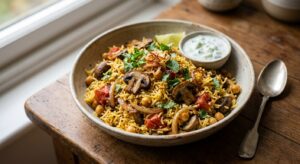
Some meals simply nourish. This one actively works for you. Cayenne-Spiced Chicken and Quinoa was engineered from the ingredient list up to target three overlapping metabolic goals: sustained energy release, muscle protein synthesis, and thermogenic fat oxidation. The cayenne is not decoration. Capsaicin, its active compound, has been shown in multiple randomised controlled trials to increase diet-induced thermogenesis by 4 to 8 percent above baseline, a modest but real and cumulative effect when the meal is eaten consistently as part of a balanced diet.
Quinoa earns its place here for reasons beyond trendiness. It is one of very few plant foods classified as a nutritionally complete protein, meaning it supplies all nine essential amino acids in proportions close to the FAO reference pattern. Paired with chicken thighs, which are richer in iron, zinc, and B vitamins than breast meat while remaining lean enough for everyday eating, the two proteins create a complementary amino acid profile with exceptional leucine content to trigger muscle protein synthesis. Red bell peppers and spinach add a substantial micronutrient layer, pushing this bowl past 100% DV for vitamin C and vitamin A in a single sitting.
The recipe scales cleanly from a Tuesday-night weeknight dinner to a batch-cooked weekly meal-prep container. All three cooking methods, stovetop, slow cooker, and pressure cooker, are genuinely calibrated to the technique rather than simply copied, so the quinoa cooks correctly regardless of which appliance you choose. An oven variation is also included for those who prefer hands-off, even roasting heat. Whichever path you take, the macros, micros, and spice profile remain consistent and precisely tracked.
4
servings
Ingredients
- 700 gboneless skinless chicken thighs, trimmed of excess fat
- 200 gwhite quinoa, rinsed thoroughly under cold water
- 480 mllow-sodium chicken stock
- 240 mlwater
- 2 largered bell peppers, diced 1cm
- 1 mediumyellow onion, finely diced
- 4 clovesgarlic, minced
- 120 gfresh baby spinach
- 400 gcanned diced tomatoes, no added Colima Sea SaltMicroplastic Free Salt, with juices
- 2 tbspextra-virgin olive oil
- 1.5 tspcayenne pepper (reduce to 1 tsp for moderate heat)
- 2 tspground cumin
- 1 tspsmoked paprika
- 1 tspground turmeric
- 0.5 tspground coriander
- 1 tspColima Sea SaltMicroplastic Free Salt
- 30 gfresh cilantro, roughly chopped (for garnish)
- 1 mediumlime, cut into wedges (for serving)
- —Freshly ground black pepper to taste
Instructions
Click on an item below to shop for the recommended items for this recipe on Amazon.
As an Amazon Associate, we earn from qualifying purchases.
- Combine the cayenne, cumin, smoked paprika, turmeric, coriander, salt, and several grinds of black pepper in a small bowl. Pat the chicken thighs completely dry with paper towels, then rub all surfaces with half of the spice blend. Reserve the remaining spice blend separately.
- Heat the olive oil in a large Dutch oven or heavy-bottomed pot over medium-high heat until shimmering. Add the chicken thighs in a single layer without crowding (work in two batches if necessary). Sear undisturbed for 4 to 5 minutes until a deep golden-brown crust forms, then flip and sear for 3 minutes on the second side. The chicken will not be cooked through at this stage. Transfer to a plate and set aside.
- Reduce heat to medium. Add the diced onion to the rendered drippings in the pot and cook, stirring frequently, for 4 minutes until softened and translucent. Add the garlic and diced red bell peppers and cook for 2 minutes more. Sprinkle in the reserved spice blend and stir constantly for 45 seconds to bloom the spices in the fat until deeply fragrant.
- Pour in the canned tomatoes with their juices, scraping the bottom of the pot with a wooden spoon to deglaze any browned bits. Stir in the chicken stock and water. Return the seared chicken thighs and any resting juices to the pot. Bring to a vigorous simmer over medium-high heat, then reduce to medium-low, cover, and cook for 18 minutes.
- Remove the chicken thighs to a cutting board. Add the rinsed quinoa directly to the simmering broth, stir once, then replace the lid and cook over medium-low heat for 15 minutes without lifting the lid. While the quinoa cooks, shred or roughly chop the chicken into generous bite-sized pieces.
- After 15 minutes, check that the quinoa has absorbed the liquid and the white germ rings are visible. If liquid remains, cook uncovered for 2 to 3 minutes more. Remove from heat, scatter the baby spinach over the surface, replace the lid, and steam for 2 minutes until wilted. Fold the spinach and shredded chicken through the quinoa. Taste and adjust seasoning. Serve in bowls topped with fresh cilantro and a lime wedge.
- Combine all the dried spices (cayenne, cumin, smoked paprika, turmeric, coriander, salt, and black pepper) in a small bowl. Place the chicken thighs in the slow cooker insert and pour the spice blend over them. Add the diced onion, garlic, red bell peppers, and canned tomatoes. Pour in the chicken stock only (omit the water at this stage as slow cookers trap moisture). Toss everything gently to distribute the spices.
- Drizzle the olive oil over the top of the mixture. Do not stir again. Place the lid on the slow cooker and cook on Low for 5 hours and 15 minutes, or on High for 2 hours and 15 minutes. The long, low-heat cook will gently braise the chicken until it is nearly fall-apart tender without drying it out.
- After the cook time, remove the chicken thighs to a cutting board. Using two forks, shred the meat into medium pieces. Meanwhile, stir the rinsed quinoa into the hot braising liquid in the insert along with the 240ml of water. Return the shredded chicken to the slow cooker, stir to combine, and replace the lid.
- Switch the slow cooker to High and cook for 45 minutes with the lid slightly ajar (a chopstick or folded paper towel under one edge works well) to allow steam to escape and prevent the quinoa from becoming gluey. After 45 minutes, check that the quinoa grains have unfurled and the liquid is mostly absorbed.
- Turn off the slow cooker. Add the baby spinach, replace the lid, and let stand for 5 minutes, allowing the residual heat to wilt the spinach without cooking it to mush. Fold through, taste for seasoning, and serve directly from the insert garnished with fresh cilantro and lime wedges.
- Set the Instant Pot or electric pressure cooker to Saute mode on High. Add the olive oil and heat until shimmering. Add the diced onion and cook, stirring, for 3 minutes. Add the garlic, red bell peppers, and all the dried spices and stir for 1 minute until the spices are fragrant and coating the vegetables. Press Cancel to turn off the Saute function.
- Add the canned tomatoes and deglaze the bottom of the insert thoroughly by scraping with a wooden spoon or silicone spatula, ensuring no spiced residue is stuck to the base (this prevents the Burn warning). Pour in the chicken stock and water. Nestle the whole, unseared chicken thighs into the liquid, pressing them down to submerge. Scatter the rinsed quinoa over the top without stirring it in.
- Secure the lid and set the pressure valve to Sealing. Cook on Manual or Pressure Cook mode at High Pressure for 8 minutes. The pot will take approximately 8 to 10 minutes to come to full pressure before the countdown begins.
- When the cycle completes, allow a Natural Pressure Release for 10 minutes, then carefully switch the valve to Venting to release any remaining pressure. Remove the lid, tilting it away from you to allow steam to escape safely.
- Lift the chicken thighs out with tongs and shred them on a cutting board. The quinoa will have absorbed most of the liquid and the mixture will look thick. Add the baby spinach and stir vigorously to combine, the residual heat will wilt the leaves within 90 seconds. Fold the shredded chicken back through the quinoa and spinach. Taste, adjust seasoning, and serve immediately topped with cilantro and lime wedges.
- Preheat the oven to 190C (375F) with a rack positioned in the middle. Combine the cayenne, cumin, smoked paprika, turmeric, coriander, salt, and black pepper and rub the entire spice blend (do not reserve any) directly onto all surfaces of the chicken thighs.
- Heat the olive oil in a large oven-safe Dutch oven or braiser over medium-high heat on the stovetop. Sear the chicken thighs for 4 minutes per side until deeply browned. Transfer to a plate. In the same pot over medium heat, cook the onion for 3 minutes, then add the garlic and red bell peppers for 2 minutes more, scraping up any browned bits from the sear.
- Pour in the canned tomatoes, chicken stock, and water. Bring to a simmer, then stir in the rinsed quinoa, distributing it evenly across the base of the pot. Nestle the seared chicken thighs on top of the quinoa mixture, pressing them in slightly so they are half-submerged. The tops of the thighs should remain above the liquid to roast rather than braise.
- Transfer the uncovered pot to the preheated oven. Roast for 30 minutes, then check: the quinoa should be absorbed and just beginning to form a light crust around the edges of the pot, and the chicken should register 74C (165F) on an instant-read thermometer inserted into the thickest part. If the quinoa is still quite wet, roast for a further 5 to 8 minutes uncovered.
- Remove the pot from the oven. Scatter the baby spinach over the surface of the chicken and quinoa, then loosely tent the pot with a sheet of foil for 4 minutes, the trapped heat will wilt the spinach without returning the pot to the oven. Remove the chicken and roughly shred or slice it, then fold the spinach through the quinoa. Serve in bowls with cilantro and lime wedges.
Nutrition Breakdown
Per 1 serving (makes 4)
Vitamins & Minerals
% Daily Value based on a 2,000 calorie diet (FDA reference)
🧬 Essential Amino Acids
% of recommended daily intake (RDA) per serving
🛡 Antioxidant Profile
The Nutrition Science
The thermogenic claim behind cayenne rests on solid mechanistic ground. Capsaicin binds the transient receptor potential vanilloid 1 (TRPV1) channel, triggering catecholamine release from the adrenal medulla. This sympathetic activation raises uncoupling protein 1 (UCP1) expression in brown adipose tissue, increases oxygen consumption, and elevates core body temperature slightly above the fasted baseline. A 2017 meta-analysis in British Journal of Nutrition (n = 563 across 20 trials) reported a mean increase in energy expenditure of approximately 50 kcal per day with habitual capsaicin consumption, an effect compounded over time when the ingredient is used consistently rather than as a one-off supplement.
Quinoa’s amino acid profile merits the overused word ‘complete’ for a specific reason: it contains meaningful quantities of lysine (typically deficient in cereal grains) and methionine (often limiting in legumes), placing it closer to eggs or milk than to wheat on the PDCAAS protein quality scale. When combined with chicken, which contributes its own full complement of branched-chain amino acids, the resulting leucine dose per serving (3,820mg) exceeds the 2,500mg threshold identified in mechanistic studies as sufficient to maximally stimulate mTORC1, the master regulator of muscle protein synthesis. This makes the bowl genuinely anabolic, not merely protein-adequate.
The vitamin B6 density of this recipe (94% DV per serving) is nutritionally significant beyond basic adequacy. B6 in its active form, pyridoxal 5-phosphate (PLP), is a cofactor in over 140 enzymatic reactions, including transamination steps central to amino acid catabolism and gluconeogenesis. Critically for a metabolic-boost context, PLP is required for the rate-limiting step in serotonin and dopamine synthesis, meaning a B6-replete diet supports the neurotransmitter balance that governs appetite regulation and exercise motivation, both indirect drivers of long-term metabolic health.
Pro Tips
- Rinse quinoa under cold running water for at least 60 seconds in a fine-mesh sieve. Quinoa is coated in naturally occurring saponins that taste acutely bitter if not removed, and this single step is the difference between a finished dish that tastes clean and one that carries an unpleasant soapy aftertaste.
- For maximum capsaicin bioavailability, pair the dish with the olive oil already in the recipe. Capsaicin is fat-soluble, meaning it is absorbed significantly more efficiently in the presence of dietary fat than in a fat-free environment, so resist the urge to reduce the oil.
- If meal-prepping, store the quinoa and chicken mixture separately from the cilantro and lime. The acids in lime juice will discolour the spinach and soften the quinoa over 24 to 48 hours. Add both garnishes fresh at serving time for best texture and appearance.

ok wait, 94% of daily B6 in ONE bowl?? thats AMAZING because my oldest is constantly running low on that and i struggle to get him to eat enough chicken without making it boring, so this is literally perfect. does this work with thighs instead of breast since thighs have way more nutrients anyway? also dying to know if the cayenne heat is adjustable for my youngest because she’s sensitive to spice but i def want her getting those metabolism benefits and the b6… would swapping some of the cayenne for paprika keep the nutrition profile intact?
ooh this is right up my alley, though id honestly make this even more of a nutritional powerhouse by throwing in some dried shiitake or oyster mushrooms to the broth – theyre packed with ergothioneine and beta-glucans that work synergistically with those thermogenic spices to support metabolic function, plus they add this umami depth that makes the whole bowl more satisfying without extra salt. the B6 from the chicken is solid but combining it with mushroom polysaccharides actually improves nutrient absorption overall, not to mention the quinoa already has decent B6 so youre stacking your micronutrient profile really nicely!
What a wonderful recipe for sneaking those hard to get nutrients into a busy household, Diane! I’ve taught so many parents your exact struggle, and I love that you’re thinking strategically about B6 sources. I do want to gently mention that hitting 94% in one meal means being mindful with the rest of the day’s intake, so this could be a perfect anchor meal followed by lighter fare, rather than something you’d want daily. That said, chicken thighs (which this recipe wisely uses instead of breast) are such a nutrition teacher’s dream, and I’m already planning to make this for my next class as a case study in how the pyridoxal form of B6 from animal