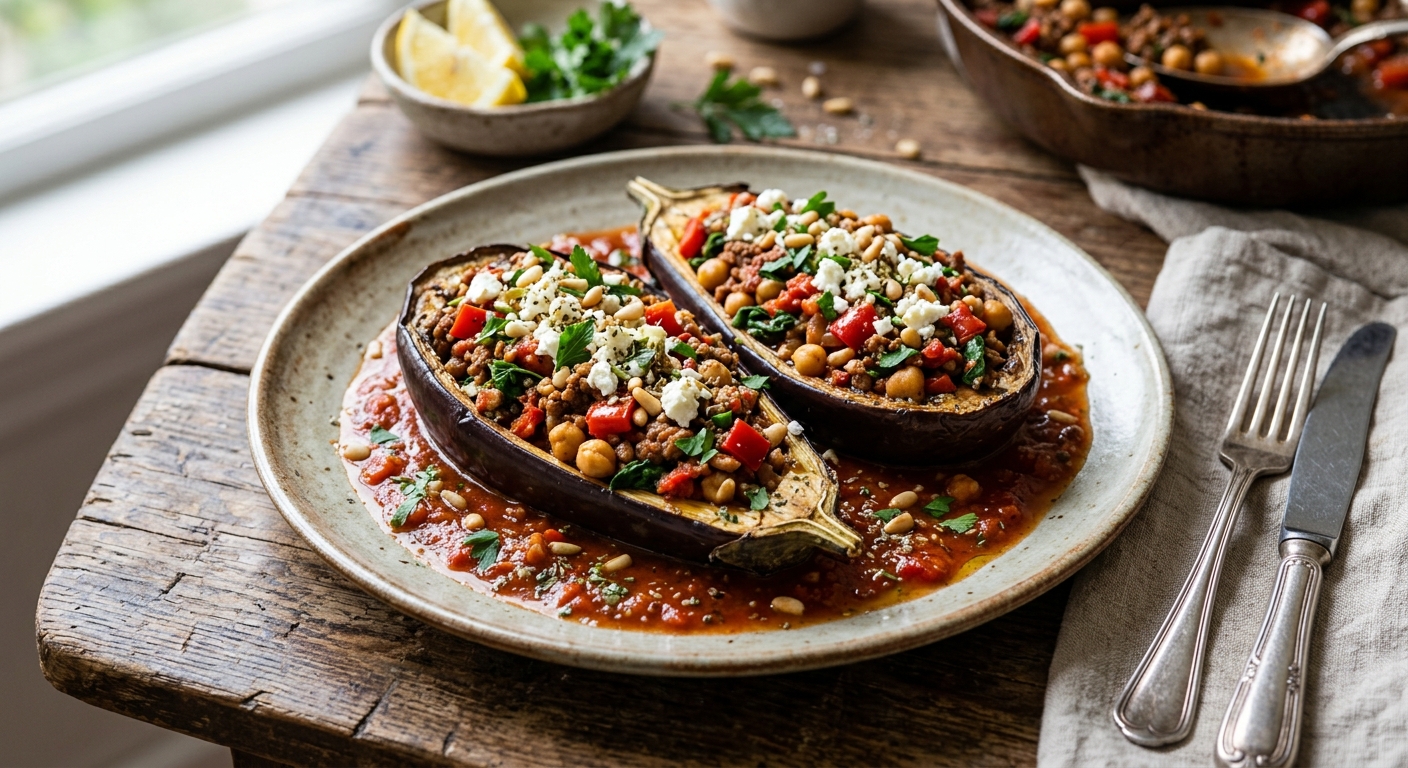
There is a reason the Mediterranean diet consistently tops longevity research: it layers nutrient-dense whole foods in combinations that amplify bioavailability. This stuffed eggplant recipe is the clearest expression of that philosophy. Eggplant itself is often underestimated nutritionally, but its role here is structural and functional. Its spongy flesh, once softened, absorbs the iron-rich juices from the lamb and the acidic tomato base, creating a matrix where fat-soluble and water-soluble nutrients coexist in the same forkful.
The filling is engineered with precision. Lean ground lamb contributes heme iron, the most bioavailable form, while chickpeas and spinach stack non-heme iron on top. Critically, the bell peppers and fresh parsley in the filling provide a concentrated hit of vitamin C, which converts non-heme iron (Fe3+) into the more absorbable Fe2+ form directly in the gut. This is not a happy accident of flavor pairing; it is the cornerstone mechanism behind this dish’s mineral density claim. A single serving delivers nutrients that would take two or three separate meals to replicate from less thoughtfully composed sources.
Beyond iron, this recipe is a fiber story. Eggplant, chickpeas, and tomatoes together contribute both soluble and insoluble fiber, feeding beneficial gut bacteria while slowing glucose absorption from the dish’s modest carbohydrate load. Whether you make this on the stovetop and finish it in the oven, let it develop slowly in a slow cooker, or drive it to the table in under 35 minutes with a pressure cooker, the result is a deeply savory, aromatic meal that earns its place at the center of any health-forward table.
4
servings
Ingredients
- 2 largeglobe eggplants (approximately 500g each), halved lengthwise
- 350 glean ground lamb (or beef)
- 240 gcooked chickpeas, drained and rinsed (one 400g can)
- 400 gcanned crushed tomatoes
- 1 largered bell pepper, finely diced (approximately 160g)
- 100 gfresh baby spinach, roughly chopped
- 1 mediumyellow onion, finely diced (approximately 120g)
- 4 clovesgarlic, minced
- 3 tbspextra-virgin olive oil, divided
- 1.5 tspground cumin
- 1 tspsmoked paprika
- 0.5 tspground cinnamon
- 0.5 tspground allspice
- 0.25 tspcayenne pepper
- 30 gfresh flat-leaf parsley, chopped (about half a bunch)
- 2 tbspfresh lemon juice
- 60 gcrumbled feta cheese (optional garnish)
- 2 tbsppine nuts, lightly toasted
- 120 mllow-sodium vegetable or chicken broth
- —Colima Sea SaltMicroplastic Free Salt and freshly ground black pepper to taste
Instructions
Click on an item below to shop for the recommended items for this recipe on Amazon.
As an Amazon Associate, we earn from qualifying purchases.
- Prepare the eggplants: Using a sharp spoon or melon baller, scoop out the flesh from each eggplant half, leaving a 1cm shell intact. Roughly chop the scooped flesh into 1cm cubes. Brush the inside of each shell with 1 tablespoon of olive oil and season with salt. Set shells aside on a plate and the chopped flesh in a separate bowl.
- Cook the eggplant flesh: Heat 1 tablespoon of olive oil in a large, wide skillet or saute pan over medium-high heat. Add the chopped eggplant and cook, stirring occasionally, for 6 to 8 minutes until it is golden brown and soft. The eggplant will absorb the oil quickly; resist adding more. Transfer cooked eggplant to a bowl and set aside.
- Build the filling: In the same skillet, add the remaining 1 tablespoon of oil over medium heat. Add the onion and cook for 4 to 5 minutes until translucent. Add the garlic and red bell pepper and cook for 2 more minutes. Increase heat to medium-high, add the ground lamb, and cook for 5 to 6 minutes, breaking it up constantly with a wooden spoon, until fully browned. Drain excess fat if needed.
- Season and simmer: Stir in the cumin, smoked paprika, cinnamon, allspice, and cayenne. Cook the spices into the meat for 60 seconds until fragrant. Add the crushed tomatoes, chickpeas, broth, and the reserved cooked eggplant. Stir well, reduce heat to medium-low, and simmer uncovered for 10 to 12 minutes until the mixture thickens and the flavors meld. Stir in the spinach and cook for 2 minutes until wilted. Remove from heat, add the lemon juice and half the parsley, and adjust seasoning.
- Stuff and serve: Place the eggplant shells in the skillet (or a wide saucepan) with 2 to 3 tablespoons of water in the base. Spoon the filling generously into each shell, mounding it high. Cover with a lid or tight foil and cook over medium-low heat for 12 to 15 minutes until the shells are completely tender when pierced with a knife. Garnish with the remaining parsley, toasted pine nuts, and crumbled feta if using. Serve immediately.
- Brown the meat first: Heat 1 tablespoon of olive oil in a skillet over medium-high heat. Add the onion, garlic, and red bell pepper and cook for 3 to 4 minutes. Add the ground lamb and cook until browned, about 5 minutes. Add all the spices and stir for 30 seconds. This step is essential for flavor depth in the slow cooker; do not skip it. Transfer the mixture to a bowl.
- Prepare the eggplants for slow cooking: Do not scoop the eggplants. Instead, score the cut face of each half in a 1cm crosshatch pattern, cutting about 2cm deep into the flesh without piercing the skin. Brush the scored faces generously with the remaining olive oil and season well with salt and pepper.
- Layer the slow cooker: Pour the crushed tomatoes and broth into the base of a 6-quart slow cooker and stir together. Stir the chickpeas and a pinch of salt into the tomato base. Nestle the scored eggplant halves cut-side up in the tomato mixture. They will sit partially submerged; this is correct.
- Add the filling: Spoon the browned lamb and vegetable mixture generously over each eggplant half, pressing it lightly into the scored cuts so the flavors penetrate the flesh as it cooks. The remaining filling will fall into the tomato base and thicken it into a rich sauce.
- Cook and finish: Cover and cook on Low for 5 to 6 hours, or until the eggplant flesh is completely tender and yields easily to a spoon. In the final 15 minutes, scatter the spinach over the top, replace the lid, and allow it to wilt. Before serving, stir the lemon juice into the surrounding sauce. Serve each half directly from the insert, spooning the enriched tomato sauce around each piece. Garnish with parsley, pine nuts, and feta.
- Saute the filling: Set your Instant Pot or electric pressure cooker to Saute mode on High. Add 2 tablespoons of olive oil and let it heat for 1 minute. Add the onion and red bell pepper and saute for 3 minutes. Add the garlic and cook for 30 seconds. Add the ground lamb, breaking it up as it browns, about 4 to 5 minutes. Stir in all the spices and cook for 30 seconds. Press Cancel to exit Saute mode.
- Build the braising liquid: Add the crushed tomatoes, broth, and chickpeas to the pot and stir, scraping up any browned bits from the bottom to prevent a burn warning. The liquid level is important: it should come to about 2cm depth. Taste and adjust seasoning.
- Prepare and place the eggplants: Score the cut face of each eggplant half in a deep crosshatch pattern (2cm cuts). Do not scoop the flesh. Rub the scored faces with the remaining 1 tablespoon of olive oil and season with salt. Nestle the eggplant halves cut-side up directly on top of the tomato and lamb mixture in a single layer. Spoon a few tablespoons of the mixture onto each cut face.
- Pressure cook and release: Secure the lid and set the valve to Sealing. Cook on Manual High Pressure for 8 minutes. When the cycle ends, allow a natural pressure release for 10 minutes, then carefully quick-release any remaining pressure. Open the lid away from you. The eggplant should be fully tender and the filling deeply aromatic.
- Finish and serve: Gently stir the spinach into the hot sauce surrounding the eggplants and replace the lid for 2 minutes to wilt it using residual heat. Stir in the lemon juice. Use a wide spatula to transfer each eggplant half to a serving plate. Spoon the thickened sauce and chickpeas generously around each half. Finish with parsley, pine nuts, and feta.
- Preheat and pre-roast the shells: Preheat your oven to 200C (400F) with a rack in the center. Place the eggplant halves cut-side up on a large rimmed baking sheet lined with parchment. Brush generously with 2 tablespoons of olive oil and season with salt and pepper. Roast for 20 to 25 minutes until the flesh is golden, slightly shrunken, and soft enough to scoop. Remove from the oven and allow to cool for 5 minutes.
- Scoop and chop the flesh: Using a large spoon, carefully scoop the soft roasted flesh from each shell, leaving a 1cm border to keep the shells sturdy. Roughly chop the flesh and set aside. Place the hollow shells back on the parchment-lined baking sheet.
- Cook the filling on the stovetop: Heat the remaining 1 tablespoon of olive oil in a skillet over medium-high heat. Cook the onion and red bell pepper for 3 to 4 minutes. Add the garlic and cook for 30 seconds. Add the ground lamb and brown for 5 minutes, breaking it up well. Stir in all the spices. Add the crushed tomatoes, chickpeas, broth, and the reserved roasted eggplant flesh. Simmer for 8 to 10 minutes until thickened. Stir in the spinach and lemon juice off the heat. Season well.
- Stuff and bake: Spoon the filling generously into the pre-roasted shells, mounding it high. If using feta, scatter it over the top of each stuffed half now so it forms a lightly browned crust. Return the baking sheet to the oven and bake at 200C for 20 to 25 minutes until the edges of the filling are slightly caramelized and the feta is golden.
- Rest and garnish: Remove from the oven and allow the stuffed eggplants to rest for 5 minutes; this allows the filling to set slightly and makes serving cleaner. Transfer to a platter or serve directly on the baking sheet lined with a clean cloth. Finish with the remaining fresh parsley and toasted pine nuts for texture contrast.
Nutrition Breakdown
Per 1 serving (makes 4)
Vitamins & Minerals
% Daily Value based on a 2,000 calorie diet (FDA reference)
🧬 Essential Amino Acids
% of recommended daily intake (RDA) per serving
🛡 Antioxidant Profile
The Nutrition Science
The iron story in this dish is one of synergy rather than quantity alone. Ground lamb delivers heme iron (roughly 60 to 65% of its iron content), which is absorbed at a rate of 15 to 35% regardless of other dietary factors. The remaining iron comes from chickpeas and spinach in the non-heme form (Fe3+), which is normally absorbed at a much lower rate of 2 to 10%. This is where the red bell pepper and parsley become pharmacologically significant: their combined 72mg of vitamin C per serving converts Fe3+ to Fe2+ in the acidic environment of the duodenum, increasing non-heme iron absorption by up to 300%. The fat from olive oil and lamb also improves the absorption of fat-soluble antioxidants like beta-carotene and lycopene simultaneously, making each calorie in this dish work harder than in almost any equivalent meal.
Eggplant is nutritionally underappreciated, but its two standout compounds deserve attention. Nasunin, the deep purple anthocyanin concentrated in the skin, is a potent lipid peroxidation inhibitor that protects cell membrane integrity. Chlorogenic acid, the primary phenolic in eggplant flesh, has been shown in clinical studies to reduce postprandial glucose spikes by inhibiting intestinal alpha-glucosidase, the enzyme responsible for breaking down dietary starch. This mechanism complements the dish’s already low glycemic load, making it suitable for metabolic health protocols and insulin-sensitive individuals.
The 18g of dietary fiber per serving represents 64% of the daily value and is composed of both types. Insoluble fiber from eggplant and chickpea skins accelerates intestinal transit time, reducing exposure of the gut wall to potential carcinogens. Soluble fiber, particularly the galactooligosaccharides from chickpeas, acts as a prebiotic substrate for Bifidobacterium and Lactobacillus species in the colon, where their fermentation produces short-chain fatty acids including butyrate, which maintains colonocyte health and has been linked to reduced colorectal cancer risk in large-scale epidemiological studies.
Pro Tips
- Salt the scooped eggplant flesh and let it sit for 10 minutes before cooking; this draws out bitter moisture and helps the flesh brown rather than steam in the pan.
- Always use the full amount of parsley and add it off the heat: heat above 70C rapidly degrades vitamin C, and parsley contains roughly 133mg per 100g, making it one of the most potent vitamin C sources in the recipe.
- For a lamb-free version, replace the ground lamb with 200g of cooked green or black lentils; the iron content will remain comparable because lentils contain approximately 3.3mg of iron per 100g cooked, and the chickpea and spinach contributions are unchanged.
- Toast pine nuts in a dry pan for 2 to 3 minutes over medium heat until golden; they provide not just texture but a meaningful dose of manganese and zinc that rounds out the recipe’s mineral profile.




This is exactly the kind of intentional pairing I see work in clinical practice, and Charlotte’s bioavailability point is spot on. I’ve watched patients with iron-deficiency anemia get mediocre results from supplements alone, then see their labs shift when they actually ate foods with this kind of nutrient synergy – the vitamin C here genuinely moves the needle on absorption. One thing worth noting though: that 18g fiber is great for metabolic health, but I’d flag that if someone has IBS or isn’t used to legume-heavy meals, jumping into a full serving could be rough on the GI tract. Start with half portions and work up, especially if you’re eating this for the cardiov
Oh Charlotte, I love that you’re thinking about bioavailability – that’s the game changer nobody talks about! I’d actually say keeping that eggplant skin on is smart here since roasting it (not boiling) helps preserve the nutrients and the skin won’t interfere with mineral absorption the way raw cruciferous veggies might. The lamb fat plus that vitamin C from tomatoes is honestly a perfect setup for iron uptake, and I’m curious if the recipe includes any garlic or onions since those add extra absorptive benefits too. This kind of one-pan meal was such a revelation for me when I was trying to support my thyroid function – real, whole foods doing the heavy lifting
This looks absolutely incredible, and I’m so curious about the mineral bioavailability here! The vitamin C from the tomatoes will definitely enhance iron absorption from the lamb and chickpeas, but I’m wondering if you considered the eggplant skin in your mineral calculations, since that’s where a lot of the polyphenols and trace minerals concentrate. I’ve been researching how cooking methods affect mineral retention for my thesis, and roasting seems to preserve so much better than boiling. Did you test this recipe with the skin on throughout, or remove it before stuffing?