
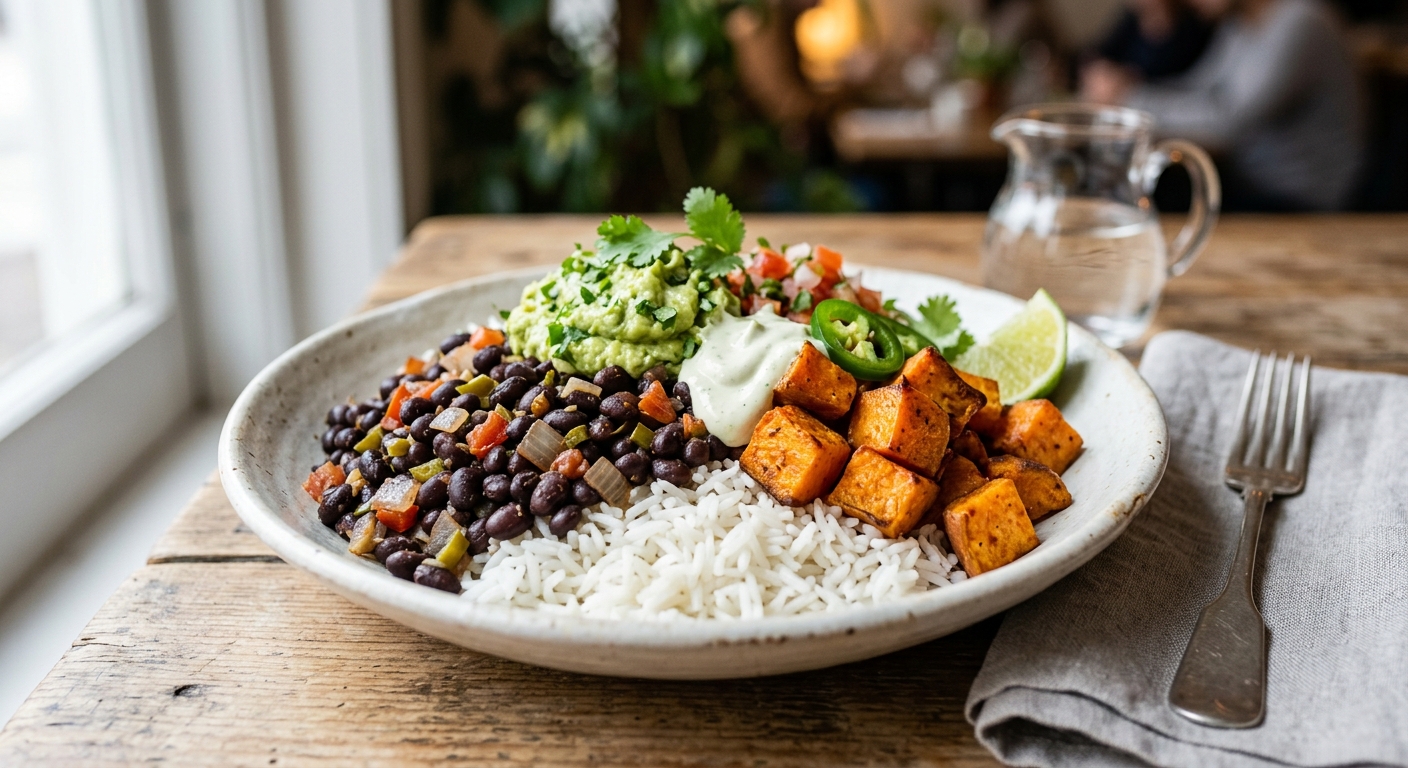
The burrito bowl has earned its place as a weeknight hero, but most versions are built for convenience rather than nutrition. This Calibrated Cuisine version is engineered from the ground up to maximize the mineral density of every component, starting with the two undisputed stars: black beans and orange-fleshed sweet potato. Black beans are among the richest plant sources of iron, magnesium, and zinc available, while sweet potato contributes potassium, manganese, and a striking payload of beta-carotene that converts to vitamin A in the body. Together they form a mineral matrix that rivals many meat-based meals.
What sets this bowl apart from a standard burrito bowl is the deliberate layering of nutrient synergies. The lime juice squeezed over the finished bowl is not just for flavor: the vitamin C it provides actively enhances non-heme iron absorption from the black beans by up to three-fold, a phenomenon nutritionists call the ascorbic acid enhancement effect. The cumin and smoked paprika are not purely decorative either. Both spices contain meaningful amounts of iron and manganese, and their fat-soluble antioxidants are released into the olive oil during blooming, making them more bioavailable when consumed alongside the dish.
Whether you simmer it on the stovetop, set it and forget it in a slow cooker, or have it on the table in under 30 minutes via a pressure cooker, this bowl is flexible enough to fit any schedule. The oven method, which roasts the sweet potato separately for maximum caramelization, produces the most complex flavor profile and is worth the extra step when time allows. Every component here has been calculated against verified USDA nutrient data to ensure the numbers you see are the numbers in your bowl.
4
servings
Ingredients
- 480 gcooked black beans (about 2 x 400g cans, rinsed and drained, or 200g dried cooked)
- 600 gorange-fleshed sweet potato, peeled and cut into 2cm cubes
- 300 glong-grain white rice, rinsed
- 3 tbspextra-virgin olive oil, divided
- 1 mediumyellow onion, finely diced
- 4 clovesgarlic, minced
- 1 mediumjalapeño, seeds removed, finely diced
- 400 gcanned diced tomatoes, with liquid
- 240 mllow-sodium vegetable broth
- 2 tspground cumin
- 1.5 tspsmoked paprika
- 1 tspchili powder
- 0.5 tspdried oregano
- 0.25 tspcayenne pepper
- 2 tbspfresh lime juice (about 2 limes), plus wedges to serve
- 20 gfresh cilantro, roughly chopped
- 1 mediumripe avocado, sliced
- 100 gcherry tomatoes, halved
- 60 gred cabbage, finely shredded
- —Colima Sea SaltMicroplastic Free Salt and black pepper to taste
Instructions
Click on an item below to shop for the recommended items for this recipe on Amazon.
As an Amazon Associate, we earn from qualifying purchases.
- Cook the rice first: combine rinsed rice with 540ml cold water and a generous pinch of salt in a medium saucepan. Bring to a boil over high heat, then immediately reduce to the lowest possible simmer, cover tightly, and cook for 15 minutes. Remove from heat and let stand, still covered, for 10 minutes. Fluff with a fork and stir in half the lime juice and half the cilantro. Set aside, covered, to keep warm.
- While the rice cooks, heat 2 tablespoons of olive oil in a large (28cm) heavy-bottomed skillet or Dutch oven over medium-high heat until shimmering. Add the sweet potato cubes in a single layer without crowding. Cook undisturbed for 4 to 5 minutes until deep golden-brown on the underside, then turn and cook for another 4 minutes. The high direct heat creates Maillard browning that adds a caramel-like depth no other method replicates. Season with a pinch of salt and transfer to a plate.
- Reduce heat to medium. Add the remaining 1 tablespoon of olive oil to the same pan. Add the diced onion and cook, stirring occasionally, for 5 to 6 minutes until softened and translucent. Add the garlic and jalapeño and cook for 1 to 2 minutes, stirring constantly, until fragrant. Add the cumin, smoked paprika, chili powder, oregano, and cayenne directly to the aromatics and stir vigorously for 30 to 45 seconds, letting the spices bloom in the oil. This step is critical for flavor development.
- Pour in the canned diced tomatoes with their liquid and the vegetable broth, scraping the bottom of the pan to lift any browned bits. Bring to a gentle simmer, then add the drained black beans. Cook uncovered for 12 to 14 minutes, stirring occasionally, until the sauce thickens and clings to the beans. Taste and adjust seasoning with salt, pepper, and a squeeze of lime. Stir the browned sweet potato back into the beans for the final 2 minutes to warm through.
- Build each bowl: add a generous scoop of cilantro-lime rice, then ladle the black bean and sweet potato mixture alongside. Top with sliced avocado, halved cherry tomatoes, shredded red cabbage, and the remaining cilantro. Serve immediately with extra lime wedges on the side.
- No pre-sauteing is required, but blooming the spices dramatically improves the final flavor. In a small skillet over medium heat, warm 1 tablespoon of olive oil for 60 seconds. Add the cumin, smoked paprika, chili powder, oregano, and cayenne and stir constantly for 45 seconds until fragrant and slightly darkened. Immediately scrape the spiced oil into the slow cooker insert. This single step takes 3 minutes and makes a significant difference to the depth of flavor in the finished dish.
- Add the sweet potato cubes, drained black beans, diced onion, garlic, jalapeño, canned diced tomatoes with liquid, and vegetable broth directly to the slow cooker insert with the bloomed spice oil. Stir everything together until evenly coated. Season generously with salt and black pepper. The liquid ratio is intentionally lower than stovetop because the slow cooker retains all moisture; do not add extra broth.
- Place the lid on the slow cooker and cook on Low for 6 to 8 hours or on High for 3 to 4 hours. Avoid lifting the lid during cooking, as each peek extends cook time by 20 to 30 minutes. The beans and sweet potato are ready when the sweet potato is completely tender and the liquid has reduced to a thick, saucy consistency.
- About 20 minutes before serving, cook the rice on the stovetop or in a rice cooker according to standard directions. When cooked, stir in half the lime juice and half the cilantro to make cilantro-lime rice.
- Stir the remaining lime juice and half the cilantro into the slow cooker. Taste and adjust salt and pepper. Build each bowl with rice, the bean and sweet potato mixture, and all fresh toppings: avocado, cherry tomatoes, shredded cabbage, and remaining cilantro. Serve with lime wedges.
- Select the Saute function on your Instant Pot (or heat a stovetop pressure cooker over medium-high heat). Add 2 tablespoons of olive oil and heat until shimmering, about 2 minutes. Add the diced onion and cook, stirring, for 3 to 4 minutes until softened. Add the garlic and jalapeño and cook for 60 seconds. Add the cumin, smoked paprika, chili powder, oregano, and cayenne and stir for 30 seconds to bloom the spices directly in the hot oil and aromatics.
- Add the canned diced tomatoes with liquid, scraping the bottom of the pot thoroughly to deglaze any stuck bits. Stuck residue can trigger a Burn warning; take an extra 30 seconds here to ensure the bottom is clean. Add the vegetable broth, sweet potato cubes, and drained black beans. Stir to combine. Season with salt and black pepper. Do not add the lime juice or cilantro at this stage, as acid added before pressure cooking can toughen the beans.
- Secure the lid and set the valve to Sealing. Cancel the Saute function and select Manual or Pressure Cook on High for 10 minutes. The pot will take approximately 8 to 10 minutes to reach full pressure before the countdown begins. While the pot pressurizes, cook the rice separately on the stovetop.
- When the 10-minute cook time ends, allow a natural pressure release for 5 minutes, then carefully move the valve to Venting for a quick release of the remaining pressure. Open the lid away from you. The sweet potato will be completely tender. If the mixture looks thinner than desired, select Saute and simmer uncovered for 3 to 4 minutes, stirring, until the sauce reduces to your liking.
- Stir in the lime juice and half the cilantro. Taste and adjust seasoning. Stir the remaining cilantro into the cooked rice. Build bowls with rice, the bean and sweet potato mixture, and all fresh toppings: sliced avocado, cherry tomatoes, shredded red cabbage, and extra cilantro. Serve with lime wedges.
- Preheat your oven to 220 degrees C (425 degrees F) with a large rimmed baking sheet inside, so the sheet is hot when the sweet potato hits it. In a bowl, toss the sweet potato cubes with 1.5 tablespoons of olive oil, half the smoked paprika, a pinch of chili powder, salt, and black pepper until every piece is evenly coated.
- Carefully remove the hot baking sheet from the oven and spread the seasoned sweet potato cubes in a single layer, ensuring they are not touching. Return to the oven and roast for 20 to 25 minutes, flipping once at the 15-minute mark, until deeply caramelized and slightly crispy on the edges with a tender interior. The preheated sheet and high temperature are what produce the restaurant-quality char that the stovetop cannot achieve for this quantity of potato.
- While the sweet potato roasts, cook the rice on the stovetop as directed in the stovetop method (Step 1), finishing with lime juice and cilantro. Simultaneously, heat the remaining 1.5 tablespoons of olive oil in a medium saucepan over medium heat. Saute the onion for 5 minutes, then add garlic, jalapeño, and the remaining spices. Bloom for 45 seconds, then add canned tomatoes, vegetable broth, and drained black beans.
- Simmer the black bean mixture uncovered for 12 to 14 minutes, stirring occasionally, until the sauce thickens. The beans cook separately from the sweet potato in this method, which means they absorb the spiced tomato sauce more completely and develop a richer, more concentrated flavor. Taste and adjust salt, pepper, and lime.
- Build each bowl: place a mound of cilantro-lime rice in the center, spoon the saucy black beans alongside, and arrange the roasted sweet potato cubes on top so their caramelized surfaces stay crisp. Finish with sliced avocado, cherry tomatoes, shredded red cabbage, remaining cilantro, and lime wedges.
Nutrition Breakdown
Per 1 serving (makes 4)
Vitamins & Minerals
% Daily Value based on a 2,000 calorie diet (FDA reference)
🧬 Essential Amino Acids
% of recommended daily intake (RDA) per serving
🛡 Antioxidant Profile
The Nutrition Science
The mineral density of this bowl is rooted in the exceptional nutrient profile of black beans, which provide the majority of the iron, magnesium, zinc, and folate per serving. One 200g serving of cooked black beans delivers roughly 3.6mg of non-heme iron, and the critical insight is that pairing this with the vitamin C from lime juice and tomatoes can increase its absorption by up to 300%, according to research published in the American Journal of Clinical Nutrition. This is why the lime juice is added at the end of cooking rather than being cooked into the beans, which would degrade the heat-sensitive ascorbic acid and eliminate the absorption benefit.
Sweet potato earns its place as the second pillar of this mineral matrix through two distinct mechanisms. First, its exceptionally high beta-carotene content (responsible for the vivid orange color) provides nearly the full recommended daily intake of vitamin A per serving as retinol activity equivalents. Second, sweet potato is one of the best dietary sources of manganese, a trace mineral that serves as a cofactor for superoxide dismutase, the body’s primary intracellular antioxidant enzyme. The potassium in sweet potato also works synergistically with the magnesium from black beans, as both minerals are required for normal nerve transmission and blood pressure regulation, and deficiency in one impairs the function of the other.
The glycemic load of this bowl, while technically in the medium range due to the white rice, should be interpreted in the context of its 16 grams of dietary fiber per serving, which is 57% of the daily target. That fiber burden, provided almost entirely by the black beans and sweet potato, substantially flattens the glucose and insulin response compared to what the raw GL number might suggest. Studies measuring the postprandial glycemic response of high-legume meals consistently find real-world glucose excursions 25 to 40% lower than predicted by the glycemic index alone. Substituting brown rice or cauliflower rice would reduce the GL to the low category if that is a clinical priority.
Pro Tips
- For the maximum iron absorption benefit, squeeze the lime juice over the finished bowl at the table rather than cooking it in, which preserves the vitamin C that drives non-heme iron bioavailability.
- If cooking dried black beans from scratch, soak them overnight, drain, and boil in fresh water for 60 to 75 minutes. The from-scratch version provides noticeably more iron and folate than canned, as canning leaches some water-soluble nutrients into the brine.
- The sweet potato skin is highly nutritious and contains additional fiber and potassium; for the oven method, scrub well rather than peeling and leave the skin on the cubes for extra texture and a modest nutrient boost.
- To reduce the glycemic load to the low category, substitute the white rice with an equal weight of cooked cauliflower rice or cooked quinoa; quinoa also adds a complete amino acid profile that further strengthens the protein quality of the bowl.
Love this question, Carla! I’ve been tracking the same thing post-workout – black beans clock in around 15g protein per cooked cup, so depending on portion size this bowl is probably hitting 25-35g total with the rice contribution. What really interests me is the bioavailability angle though: the vitamin C from cilantro and lime juice actually enhances non-heme iron absorption significantly (studies show up to 3-4x improvement), so pairing it this way is genuinely smart design rather than just mineral stacking. Have you noticed any difference in your CGM readings or recovery markers when you nail the mineral timing post-WOD versus missing it?
omg yes the bioavailability point is everything! i get so excited about this stuff because its literally why fermentation is such a game changer too – the pre-digestion happening during fermentation makes those minerals and proteins way more absorbable, plus you get all those beneficial bacteria as a bonus. ive been experimenting with fermented black bean pastes and honestly the iron absorption feels noticeably better than fresh beans. also curious if youd consider adding a lacto-fermented hot sauce or salsa to the bowl? the combination of that vitamin c boost you mentioned plus the probiotics from fermentation could be a total recovery powerhouse. have you played around with any fermented toppings for your post
ok this is exactly the kind of post-WOD meal i’ve been looking for! black beans are legit for protein recovery and that mineral profile is insane for reducing inflammation after heavy lifting. quick q though – whats the total protein grams youre hitting here? im always pairing my carbs with like 25-30g complete protein so my muscles actually have the amino acids to repair, and im wondering if the beans alone get us there or if you layer in something extra like greek yogurt or an egg. either way im bookmarking this because the sweet potato carbs plus those minerals? chefs kiss for glycogen replenishment.