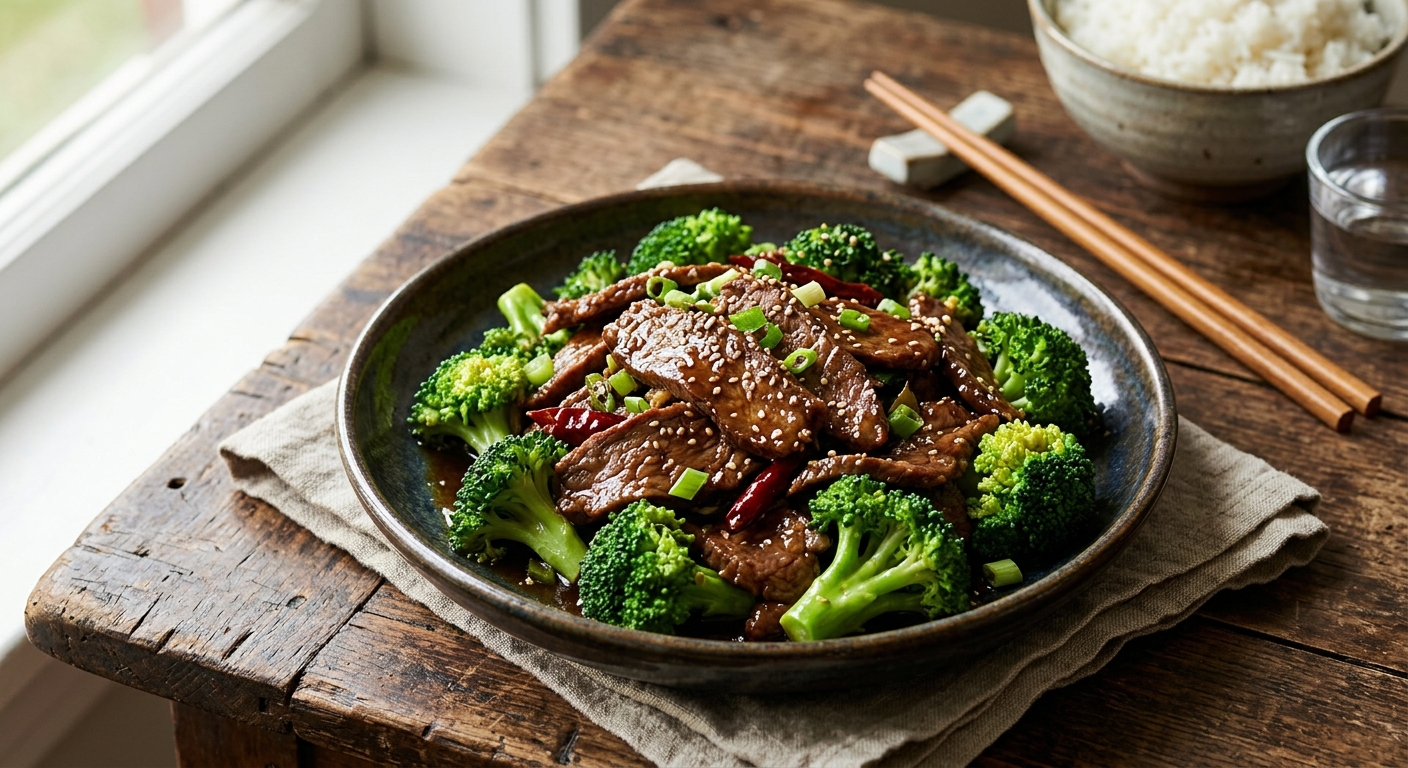
Mongolian Beef with Broccoli is the rare dish where craveable flavor and serious nutrition occupy exactly the same plate. The deeply caramelized, umami-rich sauce clings to thin-sliced flank steak while broccoli florets provide a verdant, slightly crisp contrast. What makes this recipe more than a takeout imitation is the deliberate pairing of iron and zinc-rich beef with vitamin C-loaded broccoli. That combination is not accidental: vitamin C from broccoli converts non-heme iron into a more bioavailable form, while the organic acids in the sauce further assist zinc absorption. Every bite is a delivery mechanism for minerals your body can actually use.
Flank steak is the hero ingredient here, providing heme iron (the most bioavailable form), a full spectrum of essential amino acids, and one of the densest concentrations of dietary zinc found in any whole food. A 150g serving of flank steak contributes roughly 4.5mg of zinc, placing this dish firmly in the top tier of zinc-dense meals you can cook at home. Broccoli complements the beef on every nutritional axis: it adds vitamin C to turbocharge mineral absorption, folate for cell health, and sulforaphane, one of the most studied cancer-preventive compounds in the plant kingdom. The combination is designed, not coincidental.
Whether you cook this on the stovetop for that authentic wok-kissed sear, set it in the slow cooker for a weeknight-effortless braise, or pressure cook it to weekday speed, each method produces a distinct and genuinely excellent result. The stovetop version captures high-heat caramelization and crisp broccoli. The slow cooker version yields meltingly tender beef in a richer, more concentrated sauce. The pressure cooker version delivers fall-apart beef in under 30 minutes. Choose your method based on time, equipment, and the texture you love most.
4
servings
Ingredients
- 600 gflank steak, sliced thinly against the grain (about 5mm slices)
- 400 gfresh broccoli florets (about 1 large head)
- 3 tbspcornstarch, divided
- 3 tbsplow-sodium soy sauce (or tamari for gluten-free)
- 3 tbspoyster sauce
- 2 tbsphoisin sauce
- 2 tbspbrown sugar, packed
- 1 tbsptoasted sesame oil
- 3 tbspAvocado Oil100% Pure Avocado Oil (avocado or canola), divided
- 6 clovesgarlic, minced
- 1 tbspfresh ginger, finely grated
- 120 mllow-sodium beef broth
- 1 tbsprice vinegar
- 4 stalksgreen onions (scallions), sliced into 3cm pieces
- 1 tspred chili flakes (optional)
- 1 tbspsesame seeds, toasted, for garnish
- —Colima Sea SaltMicroplastic Free Salt and white pepper to taste
Instructions
Click on an item below to shop for the recommended items for this recipe on Amazon.
As an Amazon Associate, we earn from qualifying purchases.
- Pat the sliced flank steak completely dry with paper towels. This is critical: moisture is the enemy of a proper sear. Toss the dried beef slices in 2 tablespoons of cornstarch, making sure each piece is lightly but evenly coated. Season lightly with white pepper. Set aside on a plate while you prepare the sauce.
- In a small bowl, whisk together the soy sauce, oyster sauce, hoisin sauce, brown sugar, sesame oil, rice vinegar, and beef broth until the sugar is fully dissolved. In a separate small bowl, mix the remaining 1 tablespoon of cornstarch with 2 tablespoons of cold water to form a slurry. Set both aside.
- Heat your wok or large skillet over the highest heat your burner allows. Let it heat for at least 90 seconds until the pan is smoking. Add 2 tablespoons of neutral oil and swirl to coat. Working in two batches (do not crowd the pan), sear the cornstarch-coated beef slices for 90 seconds per side without moving them, allowing a deep brown crust to form. Remove the seared beef to a clean plate. The cornstarch will create a lacy, crisp exterior.
- Reduce the heat to medium-high. Add the remaining 1 tablespoon of oil to the wok. Add the garlic, ginger, and chili flakes (if using). Stir-fry for 30 to 45 seconds until deeply fragrant but not burnt. Pour in the prepared sauce mixture and bring to a vigorous simmer, stirring to deglaze any browned bits from the wok.
- Add the broccoli florets directly to the simmering sauce. Toss well, then cover the wok with a lid or large plate for exactly 2 to 3 minutes. This steams the broccoli in the sauce, keeping it bright green and crisp-tender while preserving its vitamin C content. Do not overcook: broccoli should yield to a fork but retain a slight bite.
- Remove the lid, return the seared beef and any resting juices to the wok. Pour in the cornstarch slurry and toss everything together over high heat for 1 to 2 minutes until the sauce thickens to a glossy, clingy consistency that coats every piece. Add the green onions and toss for 30 more seconds.
- Taste and adjust salt if needed. Transfer to a serving platter, scatter toasted sesame seeds over the top, and serve immediately over steamed jasmine rice or brown rice.
- Do not coat the beef in cornstarch at the start for this method. Instead, place the raw sliced flank steak directly into the slow cooker insert. In a bowl, whisk together the soy sauce, oyster sauce, hoisin sauce, brown sugar, sesame oil, rice vinegar, beef broth, minced garlic, grated ginger, and chili flakes (if using). Pour this sauce over the beef and stir briefly to ensure all slices are submerged or coated.
- Place the lid on the slow cooker and cook on Low for 4 to 5 hours. The beef will braise slowly in the aromatic sauce, becoming fork-tender and deeply flavored. Unlike the stovetop version, this method produces a more braise-style dish where the beef absorbs the sauce rather than being glazed by it. The longer cook time allows the ginger and garlic to mellow into a rounder, more integrated flavor.
- About 25 minutes before serving, make a cornstarch slurry by whisking all 3 tablespoons of cornstarch with 4 tablespoons of cold water until completely smooth. Stir this slurry into the slow cooker, then nestle the broccoli florets on top of the beef. Replace the lid and cook on High for 20 to 25 minutes. The sauce will thicken and the broccoli will steam in the residual heat without becoming overcooked.
- Check the broccoli at the 20-minute mark. It should be bright green and just tender when pierced with a fork. If the sauce is thinner than you prefer, remove the lid and cook on High for an additional 10 minutes uncovered to reduce it further.
- Stir in the green onion pieces, taste for seasoning, and adjust salt and white pepper as needed. Spoon over steamed rice, garnish generously with toasted sesame seeds, and serve. The slow-cooked sauce will be glossier and deeper in flavor than the stovetop version, with beef that pulls apart at the touch of a fork.
- Set your Instant Pot or electric pressure cooker to the Saute function on High. Add 2 tablespoons of neutral oil and heat until shimmering. Working in two batches, add the plain (not cornstarch-coated) beef slices and sear for 60 to 90 seconds per side to develop some color. This pre-sear step is optional but adds significant flavor depth that the short pressure cook time alone cannot produce. Remove the beef and set aside.
- With the Saute function still on, add the remaining 1 tablespoon of oil to the pot. Add the garlic, ginger, and chili flakes (if using). Saute for 30 seconds, stirring constantly. Pour in the beef broth and scrape up any browned bits from the bottom of the pot with a wooden spoon or silicone spatula. This deglazing step is essential to avoid a burn warning during pressurization.
- Whisk together the soy sauce, oyster sauce, hoisin sauce, brown sugar, sesame oil, and rice vinegar in a bowl, then pour into the pot. Return the seared beef and any accumulated juices. Stir to coat. Cancel the Saute function, secure the lid, and set the pressure release valve to Sealing. Cook on Manual High Pressure for 8 minutes.
- When the cook time is complete, perform a Quick Release by carefully turning the pressure release valve to Venting. Once all steam has escaped and the float valve drops, remove the lid. The beef should be very tender. Whisk 3 tablespoons of cornstarch with 4 tablespoons of cold water into a smooth slurry.
- Switch back to the Saute function on Normal heat. Stir in the cornstarch slurry and let the sauce bubble and thicken for 2 to 3 minutes, stirring frequently. Add the broccoli florets and stir them into the thickening sauce. Place the lid on loosely (without locking or sealing) and let the broccoli steam for 3 to 4 minutes until crisp-tender and vivid green. Stir in the green onions, taste for salt, and garnish with sesame seeds before serving.
Nutrition Breakdown
Per 1 serving (makes 4)
Vitamins & Minerals
% Daily Value based on a 2,000 calorie diet (FDA reference)
🧬 Essential Amino Acids
% of recommended daily intake (RDA) per serving
🛡 Antioxidant Profile
The Nutrition Science
The most significant nutritional feature of this recipe is the deliberate co-location of heme iron, non-heme iron, and vitamin C in a single dish. Flank steak contributes both heme iron (from myoglobin and hemoglobin) and non-heme iron. Heme iron is absorbed at 15 to 35% efficiency regardless of meal composition. Non-heme iron, however, is highly sensitive to the presence of enhancers and inhibitors. Vitamin C, present here at 82mg per serving primarily from fresh broccoli, acts as a potent reducing agent that converts ferric iron (Fe3+) to ferrous iron (Fe2+), the form that can pass through intestinal mucosal cells via the DMT-1 transporter. Studies demonstrate that 80 to 100mg of vitamin C consumed with a non-heme iron source can increase absorption by 2 to 3 fold, effectively doubling or tripling the functional iron yield of the meal.
Zinc from the flank steak is present primarily as zinc-histidine and zinc-cysteine complexes, forms of organic zinc that are significantly more bioavailable than the zinc oxide found in most supplements. Flank steak provides approximately 4.5mg of zinc per 150g serving, contributing roughly 41% of the recommended daily value before the sesame seeds and oyster sauce add a further 0.5 to 1mg. The protein matrix of the beef further enhances zinc absorption by competing with phytates for binding, a relevant consideration given that this dish is typically served with grains. Cooking the broccoli briefly, as specified in all three methods, preserves the majority of its vitamin C while also partially deactivating myrosinase, the enzyme that converts glucosinolates to sulforaphane. A small amount of raw or lightly cooked broccoli in the dish ensures some active sulforaphane conversion occurs.
Selenium, often overlooked in beef-based recipes, is another standout here. Flank steak from grass-fed or grain-finished beef provides approximately 25 to 32mcg of selenium per 150g serving, making this dish one of the most practical dietary sources of this trace mineral. Selenium is the essential cofactor for all five classes of glutathione peroxidase enzymes, the body’s primary enzymatic defense against oxidative lipid damage. Combined with the gingerols from fresh ginger and the organosulfur compounds released from minced garlic, this dish provides a multilayered antioxidant defense that operates through both direct radical scavenging and indirect enzyme activation pathways.
Pro Tips
- Freeze the flank steak for 20 to 25 minutes before slicing. A partially frozen steak is dramatically easier to cut into thin, uniform slices against the grain, which is the single most important factor for tender beef in any stir-fry or braise.
- Do not skip drying the beef thoroughly for the stovetop method. Surface moisture creates steam on contact with the hot wok, which prevents browning and causes the cornstarch coating to gum up rather than form a crisp crust. Paper towels pressed firmly against each slice make all the difference.
- For maximum vitamin C retention in all cooking methods, add the broccoli as late as possible and cook it only until just tender. Vitamin C is water-soluble and heat-sensitive: boiling broccoli for 5 minutes destroys up to 50% of its vitamin C content, while steaming or quick stir-frying for 2 to 3 minutes preserves 80 to 90% of it.

love this take on the mineral synergy angle, zack. genuinely curious though – does anyone else here have to be careful with how much raw or undercooked broccoli they’re eating? i find that when im in a flare the fiber content and texture of broccoli can be rough on my system, even though i know the nutrients are there. ive had better luck with it steamed really soft and sometimes blended into the sauce so i get the vitamin c benefit without the bulk hitting my gut. would love to hear if others with Crohns manage this dish differently, or if the iron absorption is still solid if you modify the cooking method?
this is exactly the kind of dish i build clients around, honestly. the beef/broccoli combo is legit iron-zinc synergy, but the real win here is that vitamin c punch from the broccoli hitting at the same meal – non-heme iron absorption jumps like 3-4x when you pair it with vitamin c. ive been tracking my own zinc levels for years and adding this type of meal on training days kept my test levels stable during heavy phases where id normally see the dip. whats the sodium content looking like in that sauce though, or did you keep it reasonable for people watching minerals?
oh this is SO relevant to my iron management journey – ive been doing exactly this pairing for months now and my last ferritin check actually showed improvement for the first time in forever. the vitamin c from the broccoli is genuinely a game changer compared to when i was eating beef with like, rice or pasta where there’s basically nothing to help absorption. that said, zack do you find that cooking the broccoli all the way through vs keeping it crisp makes a difference for you, or is the vitamin c content pretty similar either way? im always wondering if im leaving absorption on the table when i prefer it softer lol.
This is so encouraging to hear, Francesca – I’ve had really similar wins with ferritin levels once I started pairing beef with high vitamin C vegetables! For what it’s worth, I’ve read that cooking broccoli does reduce some of the raw vitamin C content, but honestly the difference might be smaller than you’d think, especially if you’re cooking it lightly rather than boiling it to death. I’m curious though, does the softer broccoli sit better with your digestion during flares? That’s been my bigger consideration lately – whether I’m getting the full nutritional benefit if my gut is too inflamed to absorb it properly. Have you noticed any difference in how your body feels after eating
yeah this is such a good question anna, honestly the absorption piece is what i’ve learned matters way more than the raw nutrient content when youre in a flare. i do lightly steam my broccoli now instead of eating it raw because the softer texture goes down easier, and even though you lose some vitamin c that way, my gut actually tolerates it and i can absorb more of the iron and zinc overall, which defeats the purpose if im flaring and my intestinal lining is too irritated to actually absorb anything. the benefit comes from eating food your body can actually process, not just from the food itself looking nutritionally perfect on paper. have you noticed a difference between how you feel after the ste
same here honestly – i steamed my broccoli for like a month when my gut was really struggling and my ferritin actually held steady instead of dropping, which felt like a win even if technically im losing some of that vitamin c. but heres what i started doing more recently, once my digestion calmed down a bit – i do like a light steam (maybe 3-4 mins) and then add a squeeze of fresh lemon juice right at the end, so im getting back some of that absorption boost without asking my gut to do raw vegetables if its not ready yet. the softness makes such a difference when youre flaring and i think thats something people overlook – what good is a nutrition label