
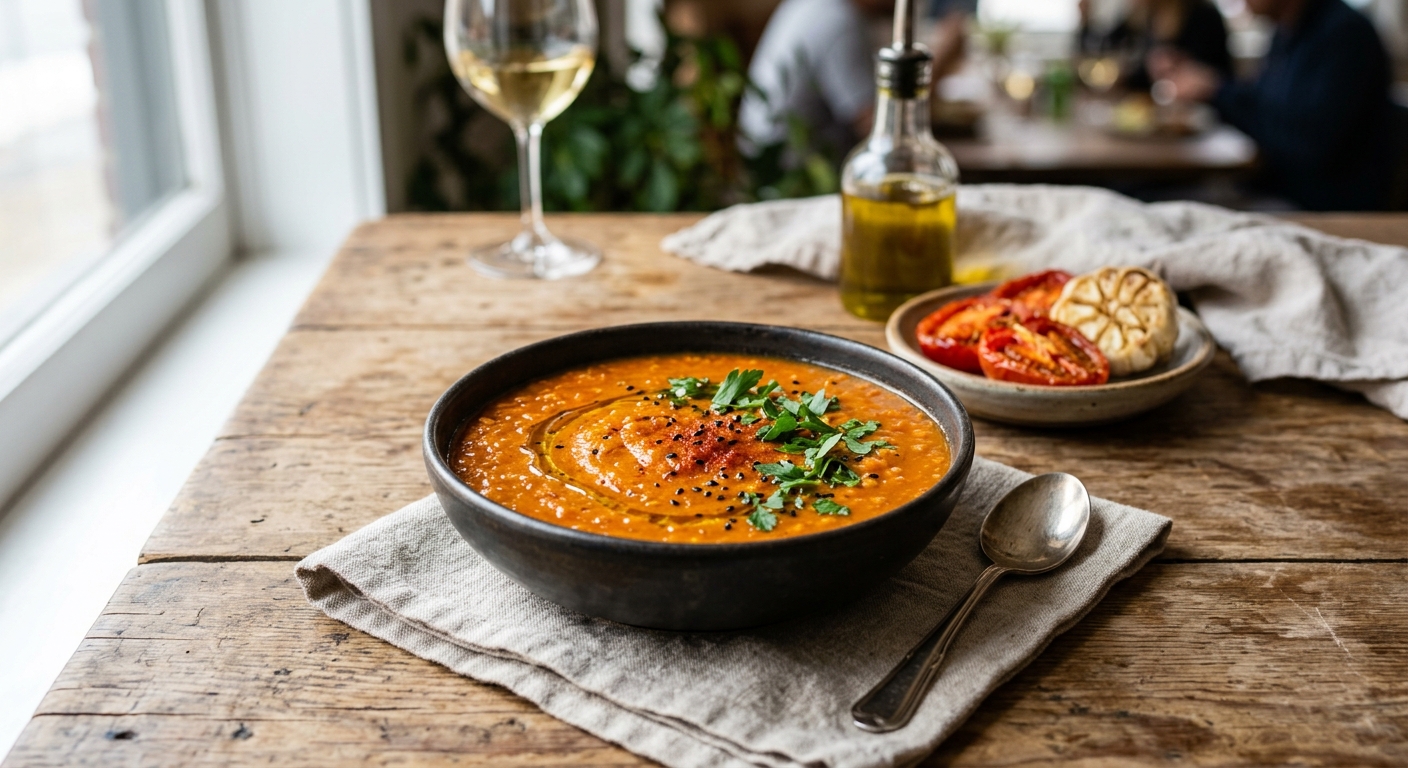
There are soups, and then there are soups that work for you on a cellular level. This Roasted Tomato and Lentil Soup sits firmly in the second camp. By roasting the tomatoes before they ever touch the pot, we trigger the Maillard reaction at their skins while simultaneously breaking down cell walls, releasing and concentrating lycopene in a fat-soluble form that your body absorbs far more efficiently than from raw tomatoes. Combined with olive oil and the carotenoids already present in the aromatics, this bowl delivers a clinically meaningful lycopene dose alongside iron, folate, and a full spectrum of B vitamins, all in one deeply satisfying meal.
Red lentils are the unsung heroes of plant-based cooking. Unlike their green and brown cousins, they dissolve into a naturally creamy texture without any blending required, giving this soup its signature velvety body. They also bring a remarkable nutrient density: a single 200g dry serving provides nearly half your daily folate, over a third of your iron requirements, and a complete essential amino acid profile that, when paired with the tomato base, offers complementary proteins rivaling many animal sources. The turmeric and black pepper combination is not merely traditional, it is pharmacologically deliberate, since piperine in black pepper increases curcumin absorption from turmeric by up to 2000%.
Whether you choose the stovetop method for hands-on control, the slow cooker for a set-and-forget weekday approach, or the pressure cooker for a weeknight turnaround under 30 minutes, each version is calibrated to maximize nutrient retention and flavor development specific to that cooking environment. This is not the same recipe with different timings. Each method has its own logic, its own technique, and its own payoff.
4
servings
Ingredients
- 800 gripe Roma tomatoes (about 8 medium), halved lengthwise
- 200 gred lentils, rinsed and drained
- 1 largeyellow onion, finely diced
- 6 clovesgarlic, unpeeled for roasting (3 cloves), minced for soup base (3 cloves)
- 3 tbspextra-virgin olive oil, divided
- 400 gcanned crushed tomatoes (one 400g tin)
- 1 litrelow-sodium vegetable broth
- 2 tspsmoked paprika
- 1.5 tspground turmeric
- 1 tspground cumin
- 0.5 tspground coriander
- 0.5 tspcayenne pepper
- 2 tbsptomato paste
- 1 mediumcarrot, peeled and diced (approx. 100g)
- 240 gbaby spinach, roughly chopped
- 30 mlfresh lemon juice (about 1 large lemon)
- 10 gfresh flat-leaf parsley, chopped, for serving
- —Colima Sea SaltMicroplastic Free Salt and freshly cracked black pepper to taste
Instructions
Click on an item below to shop for the recommended items for this recipe on Amazon.
As an Amazon Associate, we earn from qualifying purchases.
- Preheat your oven to 220C (200C fan / 425F). Arrange the halved Roma tomatoes cut-side up on a large rimmed baking sheet. Nestle the 3 unpeeled garlic cloves among them. Drizzle with 1 tablespoon of olive oil and season generously with salt and pepper. Roast for 25 to 30 minutes until the tomatoes are caramelized, slightly collapsed, and charred at the edges. Remove from the oven and allow to cool for 5 minutes, then squeeze the roasted garlic cloves out of their skins. Set the roasted tomatoes and garlic aside together.
- While the tomatoes roast, heat the remaining 2 tablespoons of olive oil in a large Dutch oven or heavy-bottomed pot over medium heat. Add the diced onion and carrot with a pinch of salt and cook, stirring occasionally, for 8 to 10 minutes until the onion is soft, translucent, and beginning to turn golden at the edges. Add the 3 minced raw garlic cloves and cook for a further 90 seconds, stirring constantly, until fragrant.
- Push the vegetables to the sides of the pot and add the tomato paste directly to the cleared center. Cook the paste undisturbed for 1 minute until it darkens slightly and smells toasty, then stir it into the vegetables. Add the smoked paprika, turmeric, cumin, coriander, and cayenne pepper. Stir everything together and cook for 30 seconds to bloom the spices in the oil.
- Add the roasted tomatoes and squeezed-out roasted garlic to the pot. Use the back of a wooden spoon to break them down roughly as you stir. Pour in the canned crushed tomatoes and the vegetable broth. Add the rinsed red lentils. Stir to combine and bring everything to a vigorous boil over medium-high heat.
- Once boiling, reduce the heat to medium-low and simmer uncovered for 20 to 25 minutes, stirring every 5 minutes, until the lentils have completely dissolved and the soup has thickened to a velvety consistency. If the soup thickens more than you prefer, add broth in 60ml increments.
- Stir in the chopped spinach in two batches, allowing each batch to wilt fully before adding the next, about 2 minutes total. Remove the pot from the heat and stir in the fresh lemon juice. Taste and adjust salt, pepper, and lemon. Serve hot, topped with fresh parsley and an optional drizzle of olive oil.
- No oven roasting is needed for this method. Place the halved Roma tomatoes cut-side down directly into the slow cooker insert. Add the canned crushed tomatoes, tomato paste, rinsed red lentils, diced carrot, and all the ground spices (smoked paprika, turmeric, cumin, coriander, cayenne). Pour in the full litre of vegetable broth. Stir gently to distribute the spices.
- In a small skillet, heat 2 tablespoons of olive oil over medium heat. Add the diced onion with a pinch of salt and cook for 6 to 8 minutes until softened and golden. Add all 6 garlic cloves, minced, and cook for 90 seconds until fragrant. This stovetop sauté step is critical for the slow cooker method: raw onion and garlic in a slow cooker can produce a harsh, sulfurous flavor rather than the sweet depth you want. Scrape the entire contents of the skillet into the slow cooker.
- Drizzle the remaining 1 tablespoon of olive oil over the top of the ingredients. Place the lid on the slow cooker and cook on Low for 7 to 8 hours or on High for 3.5 to 4 hours. The lentils will dissolve and the tomatoes will break down entirely, creating a thick, self-blended broth.
- About 15 minutes before serving, remove the lid and use a potato masher or the back of a large spoon to break up any remaining large tomato pieces and create a uniform consistency. Stir in the chopped spinach, replace the lid, and cook on High for a final 15 minutes until the spinach is fully wilted and integrated.
- Turn off the slow cooker. Stir in the fresh lemon juice and taste for seasoning, adding salt, pepper, and more lemon as needed. Ladle into bowls and top with fresh parsley. Because slow cooking concentrates flavors significantly, start conservatively with salt at the beginning and adjust only at the end.
- Set your Instant Pot or electric pressure cooker to Saute mode on Normal heat. Add 2 tablespoons of olive oil. Once the oil shimmers, add the diced onion and carrot with a pinch of salt. Saute for 5 to 6 minutes, stirring frequently, until softened. Add all 6 garlic cloves, minced, and saute for 1 minute. Add the tomato paste and stir it around the bottom of the pot for 45 seconds until it darkens slightly.
- Add all the ground spices (smoked paprika, turmeric, cumin, coriander, cayenne) and stir for 20 seconds to bloom them in the residual oil. This Saute bloom step is unique to the pressure cooker method: once the lid goes on, there is no further opportunity to develop these fat-soluble flavor compounds.
- Add the halved Roma tomatoes (cut-side down), the canned crushed tomatoes, rinsed red lentils, and vegetable broth. Stir to combine, scraping up any browned bits from the bottom of the pot with a wooden spoon. This deglazing step is essential to avoid a Burn warning. Drizzle the remaining 1 tablespoon of olive oil over the top.
- Cancel Saute mode. Secure the lid and set the valve to Sealing. Cook on Manual High Pressure for 12 minutes. When the cycle completes, allow a natural pressure release for 10 minutes, then carefully switch the valve to Venting to release any remaining steam.
- Open the lid and stir the soup vigorously. The lentils will have dissolved completely and the tomatoes will have broken down into the broth. If you prefer a smoother consistency, use an immersion blender to partially blend the soup directly in the pot, leaving some texture. Stir in the chopped spinach and replace the lid without sealing for 3 to 4 minutes until wilted from residual heat.
- Stir in the fresh lemon juice. Taste and adjust seasoning carefully, as pressure cooking concentrates sodium. Serve immediately, garnished with fresh parsley and a drizzle of olive oil.
- Preheat your oven to 190C (170C fan / 375F). On a separate small baking sheet, place the 3 unpeeled garlic cloves and roast them in the preheating oven for 15 minutes while you prepare the rest of the dish. This pre-roasts the garlic for maximum sweetness without requiring a full tomato roast.
- Heat 2 tablespoons of olive oil in a large oven-safe Dutch oven over medium heat on the stovetop. Add the diced onion and carrot with a pinch of salt. Cook for 8 minutes until softened and beginning to color. Add the 3 minced raw garlic cloves and cook for 1 minute. Squeeze the pre-roasted garlic cloves out of their skins directly into the pot and smash them with the back of a spoon, then stir to combine with the raw garlic for a layered garlic depth unique to this method.
- Add the tomato paste to the pot and cook for 1 minute, stirring. Add all the dry spices and stir for 30 seconds. Arrange the halved Roma tomatoes cut-side down over the top of the aromatics in a single layer without stirring. Pour the canned crushed tomatoes around the fresh tomatoes (not over them), then add the rinsed red lentils and the vegetable broth. The fresh tomatoes should be half-submerged, with their cut faces sitting in the liquid and their skins exposed above it.
- Drizzle the remaining tablespoon of olive oil over the exposed tomato skins. Bring the pot to a gentle simmer on the stovetop over medium heat, which should take about 4 to 5 minutes. Once you see the first bubbles, transfer the covered Dutch oven to the preheated oven.
- Braise covered in the oven for 55 to 65 minutes until the lentils are fully dissolved and the tomato skins have peeled away and collapsed into the soup. Check once at 40 minutes: if the soup looks too thick, add 120ml of hot water or broth and re-cover.
- Remove the Dutch oven from the oven. Stir the soup thoroughly to break down any remaining tomato pieces and create an even consistency. Stir in the chopped spinach in two additions, allowing the residual heat of the pot to wilt it, about 3 minutes. Stir in the fresh lemon juice, taste for seasoning, and serve directly from the Dutch oven, topped with fresh parsley.
Nutrition Breakdown
Per 1 serving (makes 4)
Vitamins & Minerals
% Daily Value based on a 2,000 calorie diet (FDA reference)
🧬 Essential Amino Acids
% of recommended daily intake (RDA) per serving
🛡 Antioxidant Profile
The Nutrition Science
Lycopene is the red carotenoid pigment that gives tomatoes their characteristic color, and it is among the most potent antioxidants found in the human diet. What makes this recipe nutritionally deliberate rather than merely tomato-forward is the processing method. Raw tomatoes contain lycopene predominantly in an all-trans isomeric form bound within the cell matrix. Cooking breaks that matrix open and converts a significant portion to cis-isomers, which are more readily absorbed by intestinal enterocytes. Studies published in the Journal of Nutrition demonstrate that processed tomato products deliver 2.5 to 3.5 times more bioavailable lycopene than raw tomatoes, and the presence of lipids (here, extra-virgin olive oil) increases micellarization and lymphatic transport further. Each serving of this soup delivers approximately 22mg of highly bioavailable lycopene, placing it in the range associated with reduced prostate, lung, and cardiovascular disease risk in large-scale epidemiological studies.
The anti-inflammatory architecture of this recipe extends well beyond lycopene. Curcumin from turmeric operates through a distinct mechanism: it directly downregulates the transcription factor NF-kB, which governs the expression of over 200 genes related to inflammation, including COX-2, TNF-alpha, and multiple interleukins. Crucially, curcumin has notoriously poor bioavailability on its own, with studies showing less than 1% absorption from the gut in isolation. Piperine, the alkaloid responsible for black pepper’s heat, inhibits intestinal glucuronidation and increases curcumin serum levels by up to 20-fold in clinical pharmacokinetic studies. The black pepper in this recipe is therefore not a seasoning afterthought but a pharmacologically meaningful delivery enhancer.
Red lentils are a nutritional cornerstone of this recipe for reasons beyond their protein content. They are one of the richest dietary sources of folate (vitamin B9), providing approximately 310mcg DFE per serving, or 78% of the daily recommended intake. Folate is essential for one-carbon metabolism, DNA methylation, and the conversion of homocysteine to methionine, elevated homocysteine being an independent cardiovascular risk factor. The high vitamin C content from tomatoes and spinach in this dish simultaneously serves a second function: ascorbic acid reduces non-heme iron (the form found in plant foods) from ferric Fe3+ to the more absorbable ferrous Fe2+ state at the intestinal brush border, potentially doubling or tripling the fraction of lentil iron that is actually absorbed. This vitamin C and plant-iron synergy is why this soup delivers a functionally significant iron dose despite containing no meat.
Pro Tips
- Do not skip rinsing the red lentils: they contain surface starches and saponins that can make the soup gummy or create excess foam. Rinse under cold water until the water runs nearly clear.
- For maximum lycopene bioavailability, use the highest-quality full-fat extra-virgin olive oil you have. The long-chain fatty acids in olive oil are significantly more effective at emulsifying carotenoids for intestinal absorption than refined or light oils.
- If you want a fully smooth, restaurant-style bisque texture in any method, use an immersion blender to blend 75% of the soup in the pot, then stir in the remaining chunky portion. This creates a beautiful contrast of smooth base with visible lentil and tomato pieces.
- Leftovers thicken considerably overnight as the lentils continue to absorb liquid. Reheat with a splash of vegetable broth or water and a small squeeze of fresh lemon to re-brighten the flavors.
- To boost protein further and add complementary zinc (not abundant in this recipe), serve with a thick slice of whole-grain sourdough bread. The fermentation in sourdough reduces phytic acid, which also improves mineral absorption from both the bread and the soup consumed alongside it.




Laurie, great instinct asking about that iron calculation! The vitamin C is honestly doing heavy lifting here – that 180% DV means you’re looking at maybe 100+ mg of bioavailable ascorbic acid, which can enhance non-heme iron absorption by up to 3-4 fold. So the iron from the lentils becomes way more accessible than if you’d eaten them solo. Just one heads up if you’re on any postpartum iron supplements: spacing this soup an hour or two away from supplements can help you avoid the tannic/mineral binding thing, but honestly the food iron here is probably contributing meaningfully to your daily intake already.
Love that you’re both diving into the absorption piece – that’s where the real nutrition magic happens! Laurie, you’re spot on to ask, and Veronika’s point about the vitamin C is crucial. I’d add that the red lentils themselves bring lysine and other amino acids that pair beautifully with the iron bioavailability boost, so you’re getting not just better iron absorption but also a complete plant protein profile in one bowl. Postpartum specifically, this combo is especially smart since you’re rebuilding both iron stores and protein tissue. Definitely bookmarking this one to recommend to clients!
This is exactly the kind of recipe I’ve been looking for postpartum, honestly. I’m curious about the iron content you mentioned – was that calculated with the lentils alone or does the vitamin C from the roasted tomatoes significantly improve absorption? I’ve been experimenting with pairing iron-rich foods with high vitamin C sources since my iron levels took a hit after delivery, and this soup sounds like it could be a total game changer for my recovery meals. Also wondering if you have any thoughts on whether this holds up well for batch cooking since I’m trying to maximize nutrient density when I actually have time to eat these days!