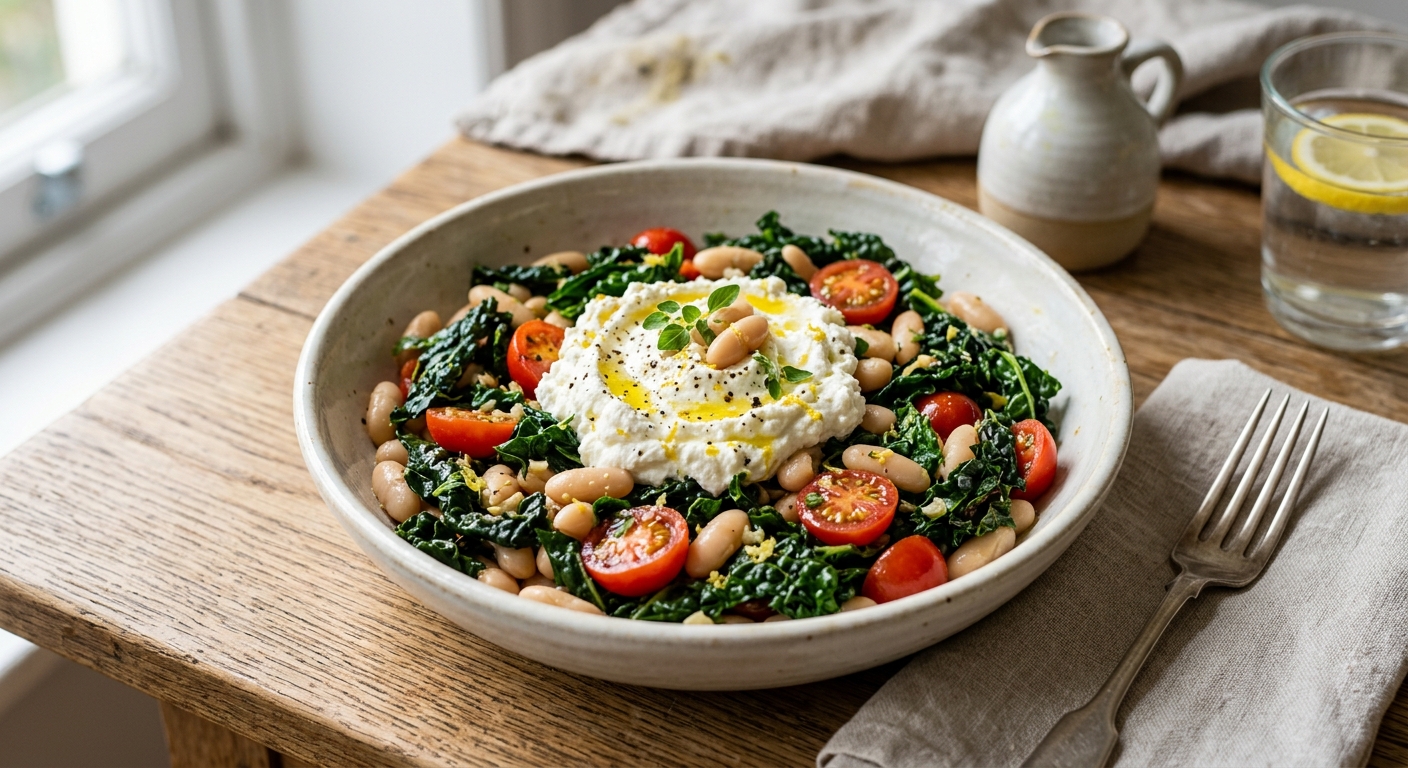
Phosphorus is the unsung hero of skeletal health. While calcium commands most of the attention, approximately 85% of the body’s phosphorus is stored in bones and teeth, where it works in concert with calcium to form hydroxyapatite, the crystalline mineral matrix that gives bone its compressive strength. Yet most nutrition-focused recipes ignore phosphorus entirely, leaving a genuine gap in bone-health meal planning. This plate closes that gap by pairing two of the most phosphorus-dense food categories available: dairy and legumes. Together, a single serving delivers roughly 580 mg of phosphorus, representing 83% of the adult RDI, alongside bone-supportive calcium, magnesium, and zinc.
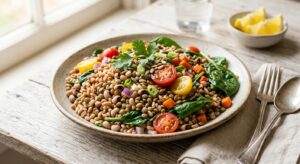
The culinary design here is as considered as the nutritional one. White cannellini beans are blended into a silky, lemony hummus-style spread that forms the base of the plate. Full-fat ricotta, stabilised with a touch of lemon zest and fresh thyme, provides a cloud-like contrast in texture. Blistered cherry tomatoes add lycopene and vitamin C, which enhances non-haem iron absorption from the beans, while a quick sauté of cavolo nero brings in magnesium and vitamin K2 precursors. The result is a plate that looks like something from a sun-drenched Mediterranean trattoria and performs like a bone-health protocol.
Each cooking method genuinely changes the character of the dish. The stovetop approach gives you maximum control and deeply caramelised tomatoes. The slow cooker method transforms dried white beans into impossibly creamy, broth-infused legumes that outperform any canned alternative. The pressure cooker delivers the same slow-cooked depth in under 45 minutes. And the oven method produces a fully baked, gratin-style presentation where ricotta sets into golden-edged pillows over the beans. Choose your method based on your schedule, not compromise.
4
servings
Ingredients
- 480 gcooked cannellini beans (or 200g dried, see method notes)
- 250 gfull-fat ricotta cheese
- 300 gcherry tomatoes, halved
- 200 gcavolo nero (Tuscan kale), stems removed and leaves roughly torn
- 60 mlextra-virgin olive oil, divided
- 3 tbspfresh lemon juice, divided
- 1 tspfinely grated lemon zest
- 3 clovesgarlic, minced, divided
- 2 tbsptahini
- 1 tspfresh thyme leaves (or 0.5 tsp dried)
- 1 tspsmoked paprika
- 0.5 tspground cumin
- 30 gParmesan, finely grated
- 2 tbsptoasted pumpkin seeds (pepitas)
- 120 mlvegetable stock or water
- —Colima Sea SaltMicroplastic Free Salt and freshly cracked black pepper to taste
- —Warm flatbread or sourdough slices, to serve (optional)
Instructions
Click on an item below to shop for the recommended items for this recipe on Amazon.
As an Amazon Associate, we earn from qualifying purchases.
- Make the white bean hummus base: In a food processor, combine the drained cannellini beans, tahini, 2 tablespoons of lemon juice, half the minced garlic (about 1.5 cloves), 2 tablespoons of olive oil, cumin, and a generous pinch of salt. Process for 2 to 3 minutes, scraping down the sides twice, until completely smooth and creamy. Add 2 to 3 tablespoons of cold water if needed to reach a thick but spreadable consistency. Taste and adjust seasoning. Transfer to a bowl and set aside.
- Prepare the herbed ricotta: In a small bowl, stir together the ricotta, lemon zest, remaining 1 tablespoon of lemon juice, thyme leaves, and a pinch of salt and pepper until combined. Do not overmix. The texture should remain slightly lumpy and cloud-like. Set aside at room temperature.
- Blister the cherry tomatoes: Heat 1 tablespoon of olive oil in a large heavy-based skillet (preferably cast iron) over high heat until just smoking. Add the cherry tomatoes cut-side down in a single layer. Do not stir for the first 2 to 3 minutes, allowing a deep char to develop. Season with salt, smoked paprika, and a pinch of sugar if desired. Toss once and cook for a further 1 to 2 minutes until softened and jammy. Remove from the pan and set aside.
- Sauté the cavolo nero: In the same pan, reduce heat to medium-high. Add 1 tablespoon of olive oil and the remaining garlic. Cook for 30 seconds until fragrant, then add the torn cavolo nero leaves. Pour in the vegetable stock and toss vigorously with tongs to wilt the leaves evenly. Cook for 3 to 4 minutes until the leaves are tender but still vivid green and the stock has mostly evaporated. Season with salt and pepper.
- Assemble the plate: Spread a generous swoosh of white bean hummus across the base of each serving plate or a large shared platter. Spoon dollops of herbed ricotta over the hummus. Scatter the blistered tomatoes and wilted cavolo nero across the top. Sprinkle with grated Parmesan, toasted pumpkin seeds, a drizzle of the remaining olive oil, and a final crack of black pepper. Serve immediately with warm flatbread if desired.
- Soak and prepare dried beans: Place 200g of dried cannellini beans in a large bowl and cover with cold water by at least 5 cm. Soak overnight (8 to 12 hours) or use the quick-soak method: cover with boiling water and soak for 1 hour. Drain and rinse thoroughly. Soaking is important for even cooking and for reducing oligosaccharides that can cause digestive discomfort.
- Load the slow cooker: Add the soaked, drained beans to the slow cooker insert. Nestle the halved cherry tomatoes cut-side up over the beans. Add 2 of the 3 garlic cloves (whole, peeled), the smoked paprika, cumin, 1 tablespoon of olive oil, and a generous pinch of salt. Pour in enough cold water or vegetable stock to cover the beans by approximately 3 cm (roughly 700 to 800 ml). Do NOT add the lemon juice at this stage, as acid prevents beans from softening properly.
- Slow cook: Place the lid on the slow cooker and cook on Low for 7 to 8 hours, or on High for 4 to 5 hours, until the beans are completely tender and creamy throughout with no chalky centre. The tomatoes should have collapsed and become deeply jammy, their juices staining the cooking liquid a rich amber-red. If using High heat, check at 4 hours.
- Blend the bean base and finish seasoning: Using a slotted spoon, transfer about two-thirds of the beans and all of the cooked tomatoes to a food processor. Reserve the remaining whole beans and a ladleful of the fragrant cooking liquid. Add the tahini, 2 tablespoons of lemon juice, and 2 tablespoons of olive oil to the food processor. Process until very smooth, adding a few tablespoons of reserved cooking liquid to adjust consistency. Taste and season generously with salt and the remaining lemon juice. Return the reserved whole beans to the processor and pulse just twice to create a textured, chunky-smooth hybrid spread.
- Prepare the herbed ricotta and sauté the cavolo nero on the stovetop: While the beans are finishing, stir together the ricotta with lemon zest, thyme, remaining lemon juice, and seasoning as described in the stovetop method. In a skillet over medium-high heat, sauté the remaining garlic in 1 tablespoon of olive oil for 30 seconds, add cavolo nero with a splash of stock, and wilt for 3 to 4 minutes until tender.
- Assemble: Spread the warm, chunky bean spread across serving plates or a platter. Add spoonfuls of herbed ricotta, scatter the wilted cavolo nero, and top with grated Parmesan, toasted pumpkin seeds, and a drizzle of olive oil. The slow cooker method produces a noticeably richer, more complex bean base than canned beans, with the tomato cooking liquid adding a subtle, almost wine-like depth.
- Add beans and aromatics to the pot: Place the 200g of dried, unsoaked cannellini beans directly into the pressure cooker or Instant Pot insert. Add 2 whole peeled garlic cloves, the smoked paprika, cumin, 1 tablespoon of olive oil, and 1 teaspoon of salt. Pour in 900 ml of cold water or vegetable stock. Do not add lemon juice, tahini, or tomatoes at this stage. Stir briefly to combine. Lock the lid in place and set the steam valve to Sealing.
- Pressure cook the beans: Select Manual or Pressure Cook, set to High Pressure, and cook for 35 minutes. Once cooking is complete, allow a Natural Pressure Release for 15 minutes (do not touch the valve). After 15 minutes, carefully turn the valve to Venting to release any remaining pressure. Open the lid away from your face. The beans should be completely tender and the cooking liquid slightly thickened and starchy.
- Blister the tomatoes in the pot using the Sauté function: Transfer the cooked beans and most of their liquid to a bowl and set aside. Switch the Instant Pot to Sauté mode on High. Add 1 tablespoon of olive oil and let it heat for 1 minute until shimmering. Add the cherry tomatoes cut-side down along with the remaining minced garlic. Cook without stirring for 3 to 4 minutes to develop char on the tomatoes. Season with a pinch of salt and smoked paprika. Stir once and cook for a further minute until jammy. Remove tomatoes and set aside.
- Wilt the cavolo nero in the same pot: Without cleaning the pot, add another splash of oil and the torn cavolo nero leaves along with 60 ml of the reserved bean cooking liquid. Sauté on High for 3 to 4 minutes, tossing frequently, until the leaves are wilted, tender, and have absorbed the starchy, flavourful cooking liquid. Season with salt and pepper and remove from the pot.
- Blend the bean base: Transfer two-thirds of the cooked beans to the food processor along with tahini, 2 tablespoons of lemon juice, 2 tablespoons of olive oil, and 3 to 4 tablespoons of the reserved bean cooking liquid. Process for 2 to 3 minutes until silky smooth. Pulse in the remaining whole beans twice for texture contrast. Prepare the herbed ricotta by combining ricotta with lemon zest, thyme, the remaining lemon juice, salt, and pepper in a small bowl.
- Assemble and serve: Spread the warm bean hummus across plates. Add herbed ricotta dollops, the blistered tomatoes, and wilted cavolo nero. Finish with grated Parmesan, toasted pumpkin seeds, olive oil, and cracked black pepper. The pressure cooker method produces the fastest result from dried beans and yields a particularly starchy, gelatinous cooking liquid that enriches both the greens and the bean base.
- Preheat and prepare: Preheat your oven to 200°C (390°F) fan-forced, or 220°C (425°F) conventional. Lightly grease a 28 x 20 cm ovenproof baking dish or a large cast iron skillet with 1 tablespoon of olive oil.
- Build the bean base in the baking dish: In a bowl, combine the drained cannellini beans with 2 garlic cloves (minced), cumin, smoked paprika, tahini, 2 tablespoons of lemon juice, 2 tablespoons of olive oil, and 120 ml of vegetable stock. Mash roughly with a fork or potato masher to break down about half the beans, leaving a chunky, rustic texture (rather than a smooth blended purée). Season generously with salt and pepper. Spread the mixture evenly into the prepared baking dish.
- Add tomatoes and cavolo nero: Scatter the halved cherry tomatoes cut-side up over the bean layer. Press the torn cavolo nero leaves in between and around the tomatoes. Drizzle with 1 tablespoon of olive oil and season lightly with salt. The kale leaves around the edges of the dish will crisp into chip-like shards during baking, which is intentional.
- Add the ricotta and Parmesan topping: In a small bowl, combine the ricotta with lemon zest, thyme, salt, and pepper. Using a large spoon, drop generous heaped spoonfuls of the ricotta mixture evenly across the top of the dish, spacing them about 4 to 5 cm apart. Scatter the grated Parmesan over everything. The ricotta dollops will puff slightly and develop golden edges in the oven.
- Bake: Transfer the dish to the preheated oven and bake for 30 to 35 minutes, until the tomatoes have collapsed and caramelised, the ricotta tops are golden and lightly set, the beans are bubbling at the edges, and the exposed cavolo nero has crisped at the edges. If the top is browning too quickly before the beans are heated through, loosely cover with foil for the last 10 minutes.
- Rest and serve: Remove from the oven and rest for 5 minutes before serving. Scatter toasted pumpkin seeds over the top and finish with a final drizzle of extra-virgin olive oil and cracked black pepper. Serve directly from the baking dish, scooping through all layers to ensure each portion gets bean base, ricotta, tomatoes, and crisped greens. Warm flatbread alongside is ideal for scooping.
Nutrition Breakdown
Per 1 serving (makes 4)
Vitamins & Minerals
% Daily Value based on a 2,000 calorie diet (FDA reference)
🧬 Essential Amino Acids
% of recommended daily intake (RDA) per serving
🛡 Antioxidant Profile
The Nutrition Science
The calcium-phosphorus ratio is critical but frequently misunderstood. The ideal dietary ratio is approximately 1:1 by mass, and imbalances in either direction can undermine bone health: excess phosphorus from processed foods without sufficient calcium draws calcium out of bone to restore serum balance, while excess calcium without phosphorus leaves the hydroxyapatite matrix incompletely mineralised. This plate is specifically architected to deliver both minerals in near-optimal ratio. The ricotta contributes approximately 160 mg of calcium and 200 mg of phosphorus per serving, while the cannellini beans add roughly 130 mg of calcium and 310 mg of phosphorus, and the cavolo nero provides an additional 90 mg of calcium. The combined calcium-to-phosphorus ratio across the meal is approximately 0.53:1, slightly phosphorus-dominant, which mirrors the ratio found in bone tissue itself and is appropriate for a lunch plate that would be paired with calcium-forward foods at other meals.
Vitamin K2, of which cavolo nero is an exceptional source, plays an underappreciated mechanistic role in bone mineralisation. It acts as a co-factor for carboxylation of osteocalcin, a protein produced by osteoblasts that must be activated to bind calcium within the bone matrix. Without adequate vitamin K, osteocalcin remains undercarboxylated and non-functional, leaving calcium circulating in soft tissues rather than being incorporated into bone. A single serving of this dish provides 185 mcg of vitamin K (predominantly K1 from cavolo nero, with partial conversion to K2 in the gut), exceeding the adult adequate intake of 120 mcg for men and 90 mcg for women. This is meaningfully relevant for individuals on long-term proton pump inhibitors or broad-spectrum antibiotics, both of which can impair vitamin K status.
The magnesium content of this plate, approximately 98 mg per serving from the combined contribution of beans, pumpkin seeds, and leafy greens, is nutritionally significant because magnesium is required for the activation of vitamin D (via renal 25-hydroxyvitamin D conversion). Studies consistently show that magnesium deficiency renders vitamin D supplementation partially ineffective, as the hydroxylation enzymes responsible for converting inactive vitamin D to its active 1,25-dihydroxycholecalciferol form are magnesium-dependent metalloenzymes. By pairing high-magnesium legumes and greens with phosphorus-rich dairy in a single meal, this plate supports the entire mineralisation cascade rather than any single nutrient in isolation.
Pro Tips
- For the creamiest possible bean hummus, add an ice cube to the food processor along with the beans before blending. The cold temperature and steam help emulsify the mixture into a remarkably silky texture that rivals restaurant-quality hummus.
- If using canned cannellini beans, rinse them thoroughly and reserve the aquafaba (the liquid from the can). You can use 2 tablespoons of aquafaba in place of water when blending the hummus for extra body and a slightly richer mouthfeel.
- Cavolo nero (Tuscan kale) contains oxalates that mildly inhibit calcium absorption. Blanching the leaves in boiling salted water for 90 seconds before sautéing reduces oxalate content by up to 30%, improving the bioavailability of the calcium in the greens without compromising their vivid colour or vitamin K content.
This phosphorus/calcium ratio is so thoughtfully designed, especially pairing ricotta with legumes for that complete amino acid profile. I’m curious if you experimented with any adaptogenic herbs in the seasoning blend, since compounds like reishi or cordyceps can actually support mineral absorption through their effects on gut inflammation and stress hormones like cortisol, which tanks our bone metabolism when elevated. I started adding medicinal mushroom powders to similar calcium-rich meals after my own HPA axis recovery, and my bone density markers improved alongside my stress biomarkers. Does your version include any of those functional elements, or are you keeping it purely food-based?
Love how you’re thinking about the phosphorus/calcium ratio here, because that balance is huge for bone health! I’m curious about the glycemic load of this plate though – the white bean hummus paired with ricotta sounds nutrient dense, but I’d want to know the serving sizes and maybe if you tested this on anyone with glucose sensitivity? I’ve found that legumes can spike some of my T1D friends even though they’re technically lower glycemic, so I’m wondering how the roasted cherry tomatoes and greens factor into the overall glucose response. Either way, the micronutrient engineering is impressive and this is exactly the kind of thoughtful, whole-food approach that keeps people nourished without the blood
This is such a thoughtful question about glycemic load, Gabby! I haven’t dealt with glucose sensitivity myself, but I’ve noticed over my eight years managing inflammation that blood sugar stability is absolutely foundational to controlling joint pain and CRP levels. I’m really curious whether you’ve experimented with adding more fat to slow digestion, like drizzling extra virgin olive oil or adding avocado to this plate, since I’ve found that healthy fats are game-changers for both inflammation and glucose response. The roasted cherry tomatoes are smart too since they add those lycopene and quercetin compounds that help with inflammation, but I’d love to hear if your T1D friends have found success with specific