
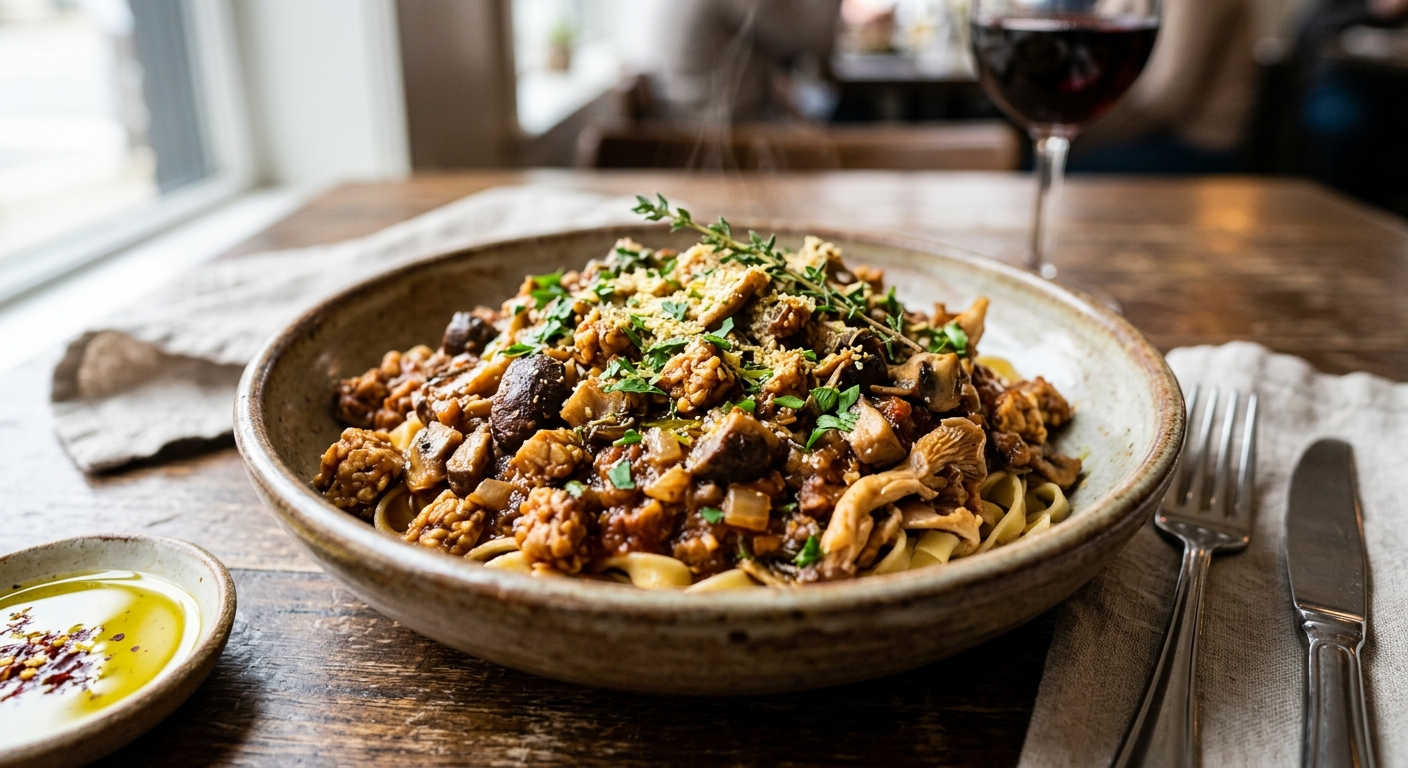
There is a persistent myth that plant-based eating means accepting mineral deficiency, that iron and zinc must come from animal flesh or supplements. This Tempeh and Mushroom Ragu exists to dismantle that myth with evidence and flavor. Crumbled tempeh brings fermented soy protein alongside significant non-heme iron and zinc, while a carefully chosen quartet of mushrooms, cremini, shiitake, oyster, and porcini, each contribute their own mineral signatures: manganese from shiitake, copper from oyster, selenium from cremini, and glutamate-driven umami from rehydrated porcini. Together, they form what we call the Plant-Based Mineral Matrix.
The culinary technique here matters as much as the ingredient selection. Crumbling and browning the tempeh in a dry pan before introducing fat develops Maillard reaction compounds that mimic the depth of a slow-braised meat sauce. Deglazing with a bold red wine lifts every browned bit from the pan, and a long, gentle reduction concentrates the mineral-rich cooking liquor into a glossy, clingy ragu that coats pasta, polenta, or crusty bread with authority. The tomatoes, for their part, are not merely a vehicle: their vitamin C content chemically reduces ferric iron (Fe3+) to ferrous iron (Fe2+), dramatically improving the bioavailability of the non-heme iron from both tempeh and mushrooms.
Whether you take the stovetop route for maximum control over texture, let the slow cooker build depth over a quiet afternoon, or use a pressure cooker to achieve a weekend-worthy ragu on a Tuesday evening, the nutritional payoff is the same. This recipe is calibrated to provide over 30% of your Daily Value for iron, more than 20% for zinc, and a full spectrum of B vitamins including riboflavin, niacin, and B6. Serve it simply, season it carefully, and let the mineral matrix do its work.
4
servings
Ingredients
- 400 gtempeh, crumbled into 1cm irregular pieces
- 250 gcremini mushrooms, roughly chopped
- 150 gshiitake mushrooms, stems removed, caps sliced
- 100 goyster mushrooms, torn into strips
- 20 gdried porcini mushrooms
- 250 mLboiling water (for rehydrating porcini)
- 3 tbspextra-virgin olive oil, divided
- 1 largeyellow onion, finely diced
- 4 clovesgarlic, minced
- 2 mediumcarrots, finely diced
- 2 stalkscelery, finely diced
- 2 tbsptomato paste
- 180 mLdry red wine (e.g. Barbera or Sangiovese)
- 400 gcanned whole San Marzano tomatoes, crushed by hand
- 240 mLlow-sodium vegetable broth
- 1 tspdried thyme
- 1 tspdried oregano
- 2 sprigsfresh rosemary
- 1 tbspsoy-free tamari or coconut aminos
- 1 tspsmoked paprika
- 0.5 tspfennel seeds, lightly crushed
- 2 tbspfresh flat-leaf parsley, chopped (to serve)
- —Colima Sea SaltMicroplastic Free Salt and freshly cracked black pepper to taste
Instructions
Click on an item below to shop for the recommended items for this recipe on Amazon.
As an Amazon Associate, we earn from qualifying purchases.
- Place the dried porcini in a heatproof bowl and pour 250 mL boiling water over them. Let steep for 20 minutes until fully rehydrated. Lift the mushrooms out with a slotted spoon, squeeze gently, and roughly chop. Reserve the soaking liquid, pouring it through a fine-mesh sieve or coffee filter to remove grit. Set both aside separately.
- Heat a large, heavy Dutch oven or wide saute pan over medium-high heat without oil. Add the crumbled tempeh in a single layer and cook, undisturbed, for 3 to 4 minutes until the underside develops a deep golden-brown crust. Toss and continue cooking for another 2 to 3 minutes. The dryness of the pan accelerates Maillard browning. Transfer the browned tempeh to a plate and set aside.
- Reduce heat to medium and add 2 tablespoons of olive oil to the same pan. Add the diced onion, carrot, and celery (the soffritto) with a pinch of salt. Cook, stirring occasionally, for 8 to 10 minutes until the vegetables are fully softened and beginning to turn golden at the edges. Add the minced garlic, fennel seeds, smoked paprika, thyme, and oregano. Stir constantly for 60 seconds until fragrant.
- Push the soffritto to the edges of the pan and add the remaining tablespoon of olive oil to the center. Add all the fresh mushrooms (cremini, shiitake, oyster) and the chopped rehydrated porcini. Cook without stirring for 3 to 4 minutes to encourage browning, then toss and cook for a further 3 minutes. The mushrooms should be deeply golden and have released and reabsorbed most of their moisture.
- Add the tomato paste and stir it into the vegetables and mushrooms, coating everything evenly. Cook for 2 minutes, pressing the paste against the hot pan to caramelize and deepen its flavor. Pour in the red wine and use a wooden spoon to scrape up all the browned bits from the pan bottom. Allow the wine to reduce by half, about 4 minutes at a vigorous simmer.
- Return the browned tempeh to the pan. Add the crushed San Marzano tomatoes, vegetable broth, reserved porcini soaking liquid, rosemary sprigs, and tamari. Stir well to combine. Bring to a boil, then reduce heat to a gentle, steady simmer (small bubbles breaking the surface). Cook uncovered for 30 to 35 minutes, stirring every 8 to 10 minutes, until the sauce is thick, glossy, and coats a spoon heavily.
- Remove and discard the rosemary sprigs. Taste and adjust seasoning with salt and black pepper. If the ragu seems too thick, add a splash of broth or pasta cooking water. Serve immediately over pappardelle, soft polenta, or toasted sourdough, finished with chopped fresh parsley.
- Rehydrate the dried porcini in 250 mL boiling water for 20 minutes. Lift out, squeeze, and roughly chop. Strain the soaking liquid through a fine-mesh sieve and reserve. In a large skillet over medium-high heat, dry-toast the crumbled tempeh without oil for 3 to 4 minutes per side until well browned. This browning step is essential for flavor development: the slow cooker cannot create Maillard compounds. Transfer the tempeh directly to the slow cooker insert.
- Without cleaning the skillet, reduce heat to medium and add 2 tablespoons of olive oil. Cook the diced onion, carrot, and celery with a pinch of salt for 7 to 8 minutes until softened. Add the garlic, fennel seeds, smoked paprika, thyme, and oregano, stirring for 60 seconds. Add the tomato paste and cook for 90 seconds, pressing it against the pan. Pour in the red wine and scrape up the browned bits, simmering for 3 minutes until slightly reduced. Transfer the entire contents of the skillet into the slow cooker insert.
- Add all fresh mushrooms (cremini, shiitake, oyster), the chopped rehydrated porcini, crushed San Marzano tomatoes, 120 mL vegetable broth, the strained porcini soaking liquid, rosemary sprigs, and tamari to the slow cooker. Stir gently to distribute everything evenly. The insert should be at least half full but no more than two-thirds full for proper heat circulation.
- Place the lid on the slow cooker and cook on Low for 6 to 8 hours or on High for 3 to 4 hours. Resist the urge to lift the lid during cooking, as each peek adds 15 to 20 minutes of recovery time. After the minimum cook time, the ragu should be thick and the mushrooms very tender.
- Remove the rosemary sprigs. If the ragu appears too liquid, switch to High and cook uncovered for 20 to 30 minutes to reduce. If cooking on Low and you are at home for the last hour, propping the lid slightly ajar with a wooden spoon helps evaporate excess moisture. Taste and adjust salt and pepper. Finish with the remaining tablespoon of olive oil stirred in off-heat for richness, then top with fresh parsley at the table.
- Rehydrate the dried porcini in 250 mL boiling water for 15 minutes (the pressure cooking process will finish the hydration, so 15 minutes is sufficient here). Lift out, roughly chop, and strain the soaking liquid through a fine-mesh sieve. Set aside. Select the Saute function on your Instant Pot or pressure cooker and allow the insert to heat until the display reads ‘Hot’.
- Add the crumbled tempeh to the dry insert and cook without stirring for 3 to 4 minutes until browned on one side, then toss and cook for 2 more minutes. The Saute function reaches high enough temperatures for genuine Maillard browning. Remove the tempeh to a plate. Add 2 tablespoons of olive oil to the insert and cook the diced onion, carrot, and celery for 5 to 6 minutes, stirring occasionally. Add the garlic, fennel seeds, smoked paprika, thyme, and oregano and stir for 45 seconds.
- Add the tomato paste directly to the insert and stir for 60 seconds. Pour in the red wine and deglaze thoroughly, scraping the bottom of the insert clean with a wooden spoon or silicone spatula. This step is critical: any browned residue left on the bottom can trigger the pressure cooker burn warning. Allow the wine to reduce for 2 minutes.
- Return the browned tempeh to the insert. Add all the fresh mushrooms, chopped rehydrated porcini, crushed San Marzano tomatoes, 240 mL vegetable broth, the strained porcini soaking liquid, rosemary sprigs, and tamari. Stir well. Secure the lid and set the steam release valve to the Sealing position. Select Pressure Cook (Manual) on High Pressure and set the timer for 15 minutes.
- Once the cooking cycle completes, allow a natural pressure release for 10 minutes (do not touch the valve). After 10 minutes, carefully switch the valve to Venting to release any remaining steam. Open the lid away from you. Remove the rosemary sprigs. Select Saute and cook the ragu uncovered for 5 to 8 minutes, stirring frequently, to reduce it to a thick, glossy consistency. Stir in the remaining tablespoon of olive oil, taste for salt and pepper, and serve immediately with fresh parsley.
- Preheat your oven to 160 C (325 F). Rehydrate the dried porcini in 250 mL boiling water for 20 minutes. While they steep, place a 5 to 6 liter Dutch oven over medium-high heat on the stovetop. Add the crumbled tempeh to the dry, ungreased pot and brown for 3 to 4 minutes per side without stirring. Remove to a plate. This initial searing on the stovetop establishes the flavor base before the dish moves into the oven.
- Reduce the stovetop heat to medium and add 2 tablespoons of olive oil to the Dutch oven. Cook the diced onion, carrot, and celery with a pinch of salt for 8 minutes until softened. Add the garlic, fennel seeds, smoked paprika, thyme, and oregano, stirring for 60 seconds. Add the tomato paste and stir for 2 minutes, allowing it to caramelize slightly. Pour in the red wine, scraping the bottom thoroughly, and reduce for 3 to 4 minutes.
- Lift the rehydrated porcini from their soaking liquid, squeeze gently, and chop roughly. Strain the soaking liquid and reserve it. Add all the mushrooms (fresh and rehydrated) to the Dutch oven and stir well into the soffritto. Cook on the stovetop for 4 minutes to begin softening the mushrooms and integrate the flavors.
- Return the browned tempeh to the Dutch oven. Add the crushed San Marzano tomatoes, vegetable broth, strained porcini soaking liquid, rosemary sprigs, and tamari. Stir to combine and bring the contents to a gentle boil on the stovetop. Place the lid on the Dutch oven and carefully transfer to the center rack of the preheated oven.
- Braise in the oven for 45 minutes with the lid on. Remove the lid and continue braising uncovered for an additional 30 minutes. During this uncovered phase, the oven’s dry heat concentrates the sauce beautifully, reducing it to a thick, almost jammy ragu without the risk of scorching that stovetop simmering can bring. The surface will develop a slight crust at the edges of the pot, which you should stir back in twice during this period.
- Remove from the oven. Discard the rosemary sprigs. Stir in the remaining tablespoon of olive oil to create a glossy emulsion. Taste and correct seasoning with salt and pepper. Let the ragu rest uncovered for 5 minutes before serving; it will continue to thicken slightly as it cools. Garnish with fresh flat-leaf parsley.
Nutrition Breakdown
Per 1 serving (makes 4)
Vitamins & Minerals
% Daily Value based on a 2,000 calorie diet (FDA reference)
🧬 Essential Amino Acids
% of recommended daily intake (RDA) per serving
🛡 Antioxidant Profile
The Nutrition Science
The central nutritional engineering in this recipe is the deliberate pairing of vitamin C sources with non-heme iron. Non-heme iron, the form found in all plant foods, exists primarily in the ferric (Fe3+) state, which the human gut absorbs poorly, typically at only 2 to 8% efficiency. Ascorbic acid (vitamin C) in the tomatoes and fresh parsley acts as a reducing agent, donating electrons to convert ferric iron to ferrous iron (Fe2+). Ferrous iron is the substrate for the intestinal divalent metal transporter (DMT-1), the primary iron uptake channel in the duodenum. Studies have shown that consuming 25 mg or more of vitamin C alongside a non-heme iron source can increase iron absorption by two to four times. This recipe delivers approximately 18 mg of vitamin C per serving from the tomatoes alone, a figure that climbs significantly when parsley is added generously.
Tempeh’s nutritional profile is meaningfully superior to that of unfermented tofu or dried soybeans for mineral bioavailability. During the Rhizopus mold fermentation process, phytate (inositol hexaphosphate), the principal antinutrient in soy that chelates zinc and iron and renders them unabsorbable, is hydrolyzed by microbial phytase enzymes. Published research estimates a 30 to 50% reduction in phytate content in tempeh compared to unfermented soybeans, resulting in significantly higher fractional absorption of its iron and zinc. The fermentation also produces free amino acids and short peptides that may further enhance mineral solubility in the digestive tract. This is the reason tempeh is the protein anchor of choice in this mineral matrix recipe, not just for its zinc and iron content, but for how accessible those minerals are to your body.
The mushroom quartet is selected for complementary mineral contributions that go beyond simple culinary variety. Shiitake mushrooms are among the best dietary sources of manganese, a trace mineral essential for the function of superoxide dismutase (MnSOD), the mitochondrial antioxidant enzyme. Oyster mushrooms contribute meaningfully to dietary copper, a cofactor for ceruloplasmin (the ferroxidase that converts ferrous to ferric iron for transport in the blood) and cytochrome c oxidase in the electron transport chain. Cremini mushrooms provide selenium and ergothioneine, an unusual amino acid antioxidant for which humans have a dedicated transporter in the gut, suggesting a specific physiological role. Dried porcini not only contribute umami glutamates that deepen flavor but also provide additional B vitamins, particularly niacin and riboflavin, completing the B-complex picture that tempeh begins.
Pro Tips
- Do not skip the dry-browning step for the tempeh. Cooking it without oil in a hot pan creates a firm, golden crust that prevents it from becoming soft and grainy in the final sauce. This step is non-negotiable for texture regardless of which cooking method you choose.
- Always strain the porcini soaking liquid carefully. The rich, dark liquid is packed with dissolved glutamates and minerals, but dried mushrooms carry grit. A coffee filter or double layer of cheesecloth gives the cleanest result. Pouring slowly and leaving the last 2 cm of liquid in the bowl avoids the sediment at the bottom.
- To boost iron absorption further, avoid drinking tea or coffee within one hour of eating this dish. Tannins in both beverages bind non-heme iron in the digestive tract and can reduce absorption by up to 65%. Instead, pair the meal with a small glass of citrus juice or water, and save your tea or coffee for an hour later.






Love this energy, Priya! I’m always thinking about how tempeh gets overlooked in these conversations when honestly, it’s been a nutritional powerhouse in Indonesian cuisine for centuries. What really excites me here is that when you pair fermented tempeh with mushrooms, you’re not just stacking minerals, you’re also improving bioavailability through that fermentation process, which means bodies can actually absorb and use that zinc and iron way more effectively than with a lot of other plant sources. My clients eat so much better once they understand that ancestral food combinations weren’t random, they were nutritionally strategic, and this ragu is a perfect modern example of that wisdom.
I’ve been making a version of this for three years now, and I always add a generous splash of extra virgin olive oil at the end, along with fresh ginger and turmeric to the base, which honestly transforms the anti-inflammatory profile for my joints. The mushrooms are wonderful for reducing inflammation too, and I find that slow cooking really brings out those mineral benefits you mentioned. Thank you so much for highlighting tempeh’s zinc content, Priya and Jasmine, because that’s been a game changer for my CRP levels alongside the iron uptake from the tomatoes!
This is exactly the kind of recipe I get excited about with my clients! Tempeh and mushrooms together are such a smart mineral combo, and I love that you’re highlighting the zinc piece especially, since that’s where plant-based eaters often need to be more intentional. The fermentation in tempeh actually improves mineral bioavailability too, so pairing it with the vitamin C from tomatoes in a slow-cooked sauce is *chef’s kiss* for iron absorption. Have you noticed whether your readers respond differently to this kind of savory, umami-forward approach compared to lighter plant-based recipes?