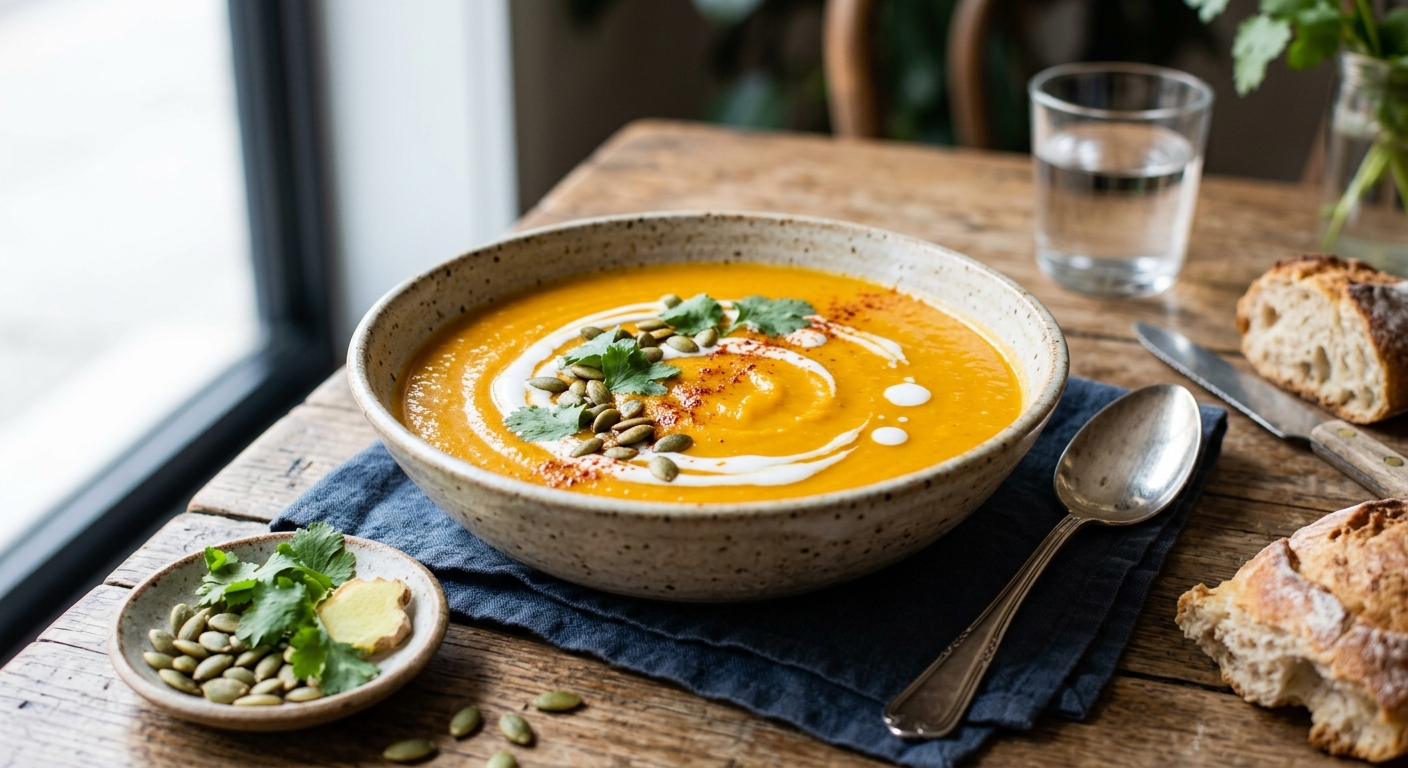
There are soups that warm you up, and then there are soups that actively rebuild you from the inside out. This Coconut Milk Pumpkin Soup belongs firmly in the second category. Built around sugar pumpkin, one of the most beta-carotene-dense vegetables available year-round, and enriched with full-fat coconut milk for both creaminess and fat-soluble nutrient absorption, this recipe was engineered as much in a nutritional laboratory as in a kitchen. The result is a bowl that is genuinely stunning to eat and quietly extraordinary in what it delivers to your body.
Zinc is the mineral most people forget about until their immune system starts failing them in October. Pumpkin seeds, stirred back in as a crunchy garnish, are among the richest plant-based zinc sources on the planet, with just two tablespoons contributing nearly 20% of your daily value. Paired with the soup’s iron, folate, and a full spectrum of B-vitamins from the red lentils that quietly thicken the base, this is a bowl designed to cover real nutritional gaps, especially for plant-based eaters who often run short on these exact micronutrients.
What makes this recipe stand out technically is the treatment of the aromatics. Blooming the spices, ground cumin, coriander, turmeric, and smoked paprika, directly in coconut oil before the other ingredients are added is not just a flavour move. Fat-soluble compounds like curcumin in turmeric and beta-carotene in pumpkin require dietary fat to be absorbed efficiently, and building that fat layer early ensures every molecule of nutrition ends up bioavailable rather than passing straight through. This is calibrated cooking in the most literal sense.
4
servings
Ingredients
- 900 gsugar pumpkin (or butternut squash), peeled, seeded, and cut into 3cm cubes
- 400 mlfull-fat coconut milk (one 400ml can)
- 100 gred lentils, rinsed and drained
- 750 mllow-sodium vegetable broth
- 1 mediumyellow onion, roughly chopped
- 4 clovesgarlic, minced
- 20 gfresh ginger, peeled and grated
- 2 tbspcoconut oil or extra-virgin olive oil
- 2 tspground cumin
- 1.5 tspground coriander
- 1 tspground turmeric
- 1 tspsmoked paprika
- 0.5 tspcayenne pepper (optional, adjust to taste)
- 1 tbspfresh lime juice
- 30 ghulled pumpkin seeds (pepitas), toasted, for garnish
- 4 tbspcoconut cream, for swirling on top
- 10 gfresh cilantro leaves, for garnish
- —Colima Sea SaltMicroplastic Free Salt and freshly ground black pepper to taste
Instructions
Click on an item below to shop for the recommended items for this recipe on Amazon.
As an Amazon Associate, we earn from qualifying purchases.
- Heat the coconut oil in a large Dutch oven or heavy-bottomed pot over medium heat. Once shimmering, add the chopped onion with a pinch of salt and cook, stirring occasionally, for 6 to 8 minutes until softened and beginning to turn golden at the edges.
- Add the minced garlic and grated ginger to the pot. Stir continuously for 90 seconds until fragrant. Reduce heat slightly if anything begins to stick.
- Add the cumin, coriander, turmeric, smoked paprika, and cayenne (if using) directly to the onion mixture. Stir constantly for 60 seconds, pressing the spices into the oil to bloom them. The mixture will become very fragrant and the oil will turn golden-orange from the turmeric.
- Add the pumpkin cubes and red lentils, stirring to coat everything thoroughly in the spiced oil. Pour in the vegetable broth, then increase heat to bring the mixture to a vigorous boil. Stir in three-quarters of the coconut milk, reserving the rest for finishing.
- Once boiling, reduce heat to medium-low, place a lid ajar on the pot, and simmer for 22 to 25 minutes, stirring occasionally, until the pumpkin is completely fork-tender and the lentils have fully dissolved into the base.
- Remove the pot from heat. Using an immersion blender, blend the soup directly in the pot until completely smooth and velvety, about 60 to 90 seconds. Alternatively, carefully transfer in batches to a countertop blender, filling no more than halfway each time. Stir in the remaining coconut milk and the lime juice. Season generously with salt and black pepper.
- Ladle into warmed bowls. Swirl a tablespoon of coconut cream on top of each serving, scatter toasted pumpkin seeds over the surface, and finish with fresh cilantro leaves. Serve immediately.
- If time allows, heat the coconut oil in a skillet over medium heat and saute the onion for 5 minutes until softened. Add the garlic, ginger, and all dried spices, stirring for 60 seconds to bloom them in the fat. Transfer this aromatic base to the slow cooker insert. If skipping the saute, simply combine the raw onion, garlic, ginger, and spices with one tablespoon of coconut oil directly in the insert.
- Add the pumpkin cubes and rinsed red lentils to the slow cooker. Pour in the full 750ml of vegetable broth, ensuring all ingredients are submerged. Do not add the coconut milk yet. Season lightly with salt and pepper, then stir everything to distribute the spices evenly.
- Place the lid on the slow cooker and cook on Low for 6.5 to 7 hours, or on High for 3 to 3.5 hours. The pumpkin should be completely tender and breaking apart at the edges, and the lentils should have dissolved into the broth creating a naturally thick base.
- Pour in the full can of coconut milk, stir to combine, replace the lid, and cook on High for a further 20 to 30 minutes until the coconut milk is fully incorporated and the soup is heated through.
- Use an immersion blender to blend the soup directly in the insert until smooth, or carefully ladle into a countertop blender in batches. Stir in the fresh lime juice and adjust salt and pepper to taste. The slow cooker version will have a deeper, more mellow sweetness from the long cook, which may need a touch more lime to brighten.
- Serve garnished with a swirl of coconut cream, toasted pumpkin seeds, and fresh cilantro.
- Set your pressure cooker to Saute mode (medium heat on Instant Pot). Add the coconut oil and once hot, add the onion with a pinch of salt. Saute for 4 to 5 minutes, stirring, until translucent. Add the garlic and ginger and cook for 60 seconds. Add all the dried spices and stir vigorously for 45 seconds to bloom them in the residual oil. Press Cancel to end Saute mode.
- Add the pumpkin cubes and red lentils, stirring to coat. Pour in 600ml of the vegetable broth, holding back 150ml to avoid exceeding the fill line. Do not add coconut milk before pressure cooking as the dairy fat can interfere with pressurization and cause scorching. Stir everything together, scraping the bottom of the insert with a wooden spoon to lift any spice bits that may cause a burn warning.
- Secure the lid and set the pressure release valve to Sealing. Cook on Manual (or Pressure Cook) at High Pressure for 10 minutes. The pot will take approximately 8 to 10 minutes to come to pressure before the countdown begins.
- Allow the pressure to release naturally for 10 minutes, then carefully switch the valve to Venting to release any remaining steam. Open the lid away from you. The pumpkin should be completely broken down and the lentils fully dissolved.
- Add the full can of coconut milk and the remaining 150ml of vegetable broth. Use an immersion blender to blend the soup directly in the insert until completely smooth, about 60 seconds. Stir in the lime juice, then season well with salt and pepper. If the soup is too thick, add a splash more broth and stir.
- Serve immediately with a swirl of coconut cream, toasted pumpkin seeds, and fresh cilantro. The pressure cooker version will have the cleanest, brightest pumpkin flavour of the three methods.
- Preheat your oven to 210 degrees Celsius (425 degrees Fahrenheit) with a rack in the centre position. Line a large rimmed baking sheet with parchment paper.
- Spread the pumpkin cubes across the baking sheet in a single layer. Drizzle with one tablespoon of coconut oil, sprinkle lightly with salt and pepper, and toss to coat. Roast for 35 to 40 minutes, flipping the cubes halfway through, until deeply golden at the edges and completely tender when pierced with a fork. The caramelized edges are your flavour foundation, so do not rush this step.
- While the pumpkin roasts, heat the remaining tablespoon of coconut oil in a large pot or Dutch oven over medium heat on the stovetop. Add the onion and cook for 6 minutes until softened. Add the garlic, ginger, and all dried spices. Stir for 90 seconds to bloom the spices, then pour in the vegetable broth and red lentils. Bring to a boil, then reduce to a simmer for 15 minutes until the lentils are fully dissolved.
- Add the roasted pumpkin to the pot along with any caramelized juices from the baking sheet. Pour in the full can of coconut milk and stir to combine. Simmer together for 5 minutes to marry the flavours.
- Remove from heat and blend with an immersion blender until silky smooth, or transfer in batches to a countertop blender. Stir in the lime juice and adjust seasoning with salt and pepper. The oven method produces the thickest, most richly flavoured version; thin with a little extra broth if desired.
- Garnish each bowl with a swirl of coconut cream, a generous handful of toasted pumpkin seeds, and fresh cilantro. A light drizzle of chili oil makes an excellent optional finishing touch.
Nutrition Breakdown
Per 1 serving (makes 4)
Vitamins & Minerals
% Daily Value based on a 2,000 calorie diet (FDA reference)
🧬 Essential Amino Acids
% of recommended daily intake (RDA) per serving
🛡 Antioxidant Profile
The Nutrition Science
The headline nutrient here is beta-carotene, the orange pigment that gives pumpkin its colour and the body its primary dietary source of Vitamin A. A 225g serving of cooked sugar pumpkin provides roughly 9 to 12mg of beta-carotene. The critical detail, overlooked in most recipes, is that beta-carotene is fat-soluble, meaning absorption from a fat-free preparation can be as low as 5 to 8%. The full-fat coconut milk in this recipe solves that problem directly: research published in the American Journal of Clinical Nutrition found that consuming beta-carotene with as little as 2.4g of fat increased absorption by three to five times. With 22g of fat per serving here, you are operating at near-maximum bioavailability.
Zinc deserves more attention than it typically receives in plant-forward cooking. Pumpkin seeds (pepitas) are one of the richest plant sources available, providing approximately 2.2mg of zinc per 30g serving, about 20% of the daily value. The challenge is phytic acid, an antinutrient present in seeds and legumes that binds zinc and inhibits its absorption. Toasting the pepitas before using them as a garnish, as this recipe specifies, partially degrades phytic acid through heat, improving mineral availability meaningfully. The acidic lime juice at the end of cooking serves a similar function for the lentils, as mildly acidic environments reduce phytate activity.
The red lentils in this recipe are doing more work than simply thickening the soup. They contribute the majority of the dish’s folate (148mcg, nearly 40% DV), alongside meaningful amounts of iron and all eight essential amino acids. Red lentils are unique among legumes in that they are sold hulled, which removes most of the phytate-rich outer layer and makes their nutrients significantly more accessible than those in whole green or brown lentils. The combination of lentil iron with the Vitamin C naturally present in pumpkin and lime juice creates an ideal non-haem iron absorption environment, with Vitamin C converting ferric iron to the more absorbable ferrous form directly in the digestive tract.
Pro Tips
- For the most vibrant colour and sweetest flavour, choose a sugar pumpkin (also called a pie pumpkin) over a carving pumpkin. Sugar pumpkins have denser, less watery flesh with higher beta-carotene concentrations. Butternut squash is an excellent year-round substitute with near-identical nutrition.
- Toast the pumpkin seeds in a dry skillet over medium heat for 3 to 4 minutes, shaking the pan constantly, until they begin to pop and turn golden. Watch them carefully as they go from perfectly toasted to burnt in under 60 seconds. A light sprinkle of smoked salt immediately after toasting elevates them dramatically.
- Blend the soup in batches in a countertop blender if you want a truly restaurant-smooth result. Fill the blender no more than halfway, hold the lid down firmly with a folded kitchen towel, and start on the lowest speed to prevent hot liquid from expanding and blowing the lid off.
ohhh that’s such a good question about heat and nutrient retention! ive definitely noticed the color difference too when i’ve done raw vs roasted, but honestly the roasting might actually help with vitamin a bioavailability since its fat soluble and that coconut milk is doing serious work there. that said, i love your raw pumpkin idea for like, post run smoothie bowls where you want that quick carb absorption without the cooking time, do you add any quick carbs to it or keep it pretty much just pumpkin and coconut? curious if you’ve tested which one sits better during training!
Oh I love this conversation! So roasting does degrade some of the vitamin A, but honestly as someone tracking symptoms pretty closely, what I’ve noticed matters more is the fat soluble absorption piece that Melanie mentioned, especially since we’re getting that coconut milk fat in there. Raw pumpkin puree definitely looks more vibrant, but I find roasted pumpkin easier on my digestion (perimenopause gut drama is real), and the caramelized flavors actually make me more likely to actually eat a full bowl instead of picking at it. Both approaches work, just depends if you’re optimizing for raw nutrients or absorption plus satiety, you know?
ooh this looks amazing but im curious how much of that vitamin a you retain after roasting? ive been experimenting with raw pumpkin puree blended with coconut milk and spices and the color is insanely vibrant, like way more orange than cooked versions. do you know if theres actually data on beta carotene loss during roasting or is that just raw food dogma lol, ngl id love to see the numbers. also does roasting improve the zinc bioavailability at all or is that more of a heat myth your testing?