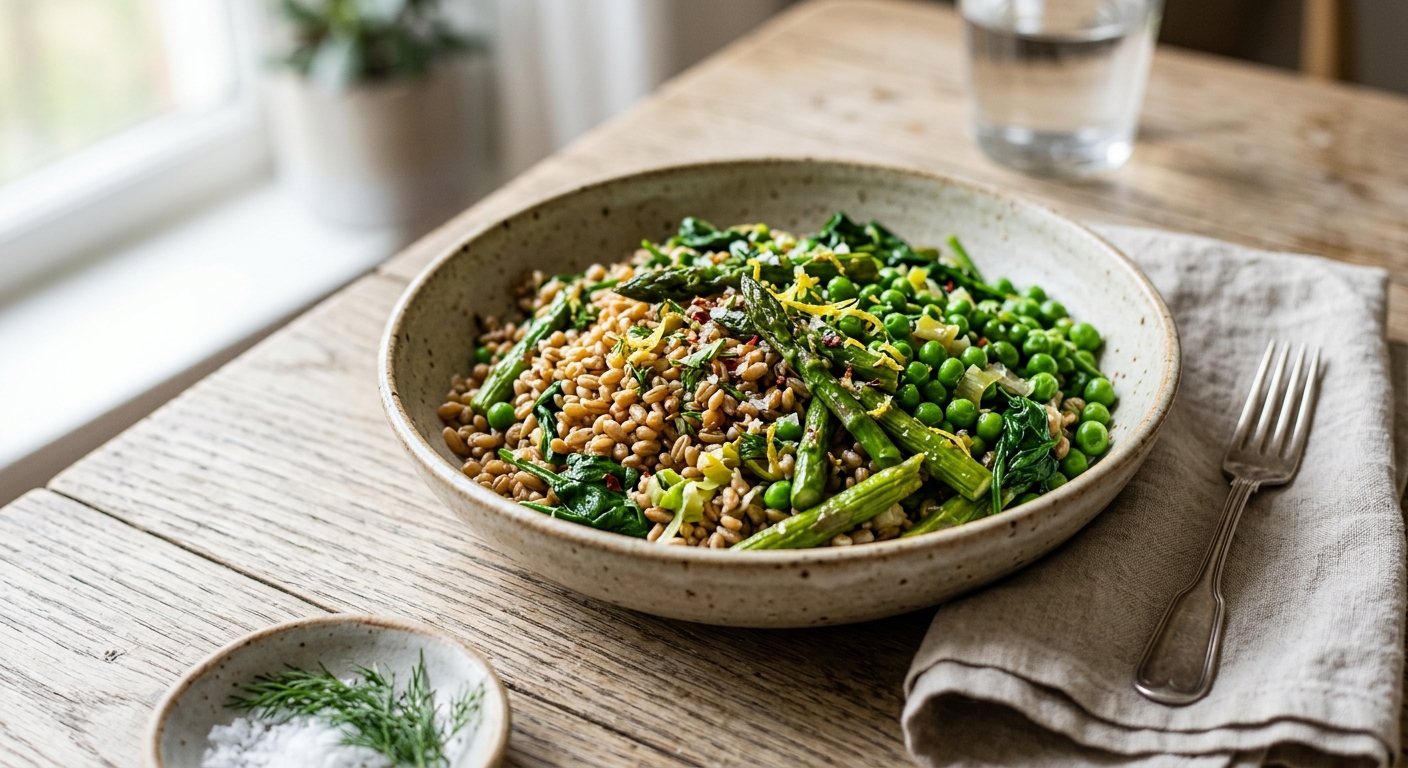
Einkorn is the oldest cultivated wheat on earth, its genome untouched by the hybridization programs that shaped modern bread wheat. That genetic simplicity translates directly to your plate: a higher protein-to-starch ratio, a richer supply of fat-soluble carotenoids including lutein and beta-carotene, and a more favorable gluten structure that many people find easier to digest. Paired with the chlorophyll-dense vegetables of early spring, this bowl becomes one of the most micronutrient-dense meals you can assemble from a home kitchen.
The supporting cast here is chosen with nutritional precision. Asparagus delivers inulin-type fructans and a concentrated hit of folate. Peas bring plant-based protein and thiamine. Spinach layers in non-heme iron and magnesium. Leeks and garlic contribute prebiotic fructooligosaccharides that feed the beneficial bacteria responsible for absorbing many of those hard-won micronutrients. Lemon zest and a finishing drizzle of extra-virgin olive oil are not just flavor choices: the vitamin C in the zest amplifies iron absorption, and fat-soluble carotenoid uptake from the einkorn and greens rises dramatically in the presence of dietary fat.
Calibrated Cuisine developed this recipe across three cooking methods so you can fit it into any schedule. The stovetop approach gives you the most control and the best-textured grain. The slow cooker is a hands-off weekday solution that lets flavors meld beautifully over low heat. The pressure cooker delivers a weeknight dinner in under 35 minutes. An optional oven method finishes the bowl with roasted vegetables for caramelized depth. Regardless of which method you choose, every serving lands within a narrow nutritional window, so the RDI percentages listed are reliable across all four techniques.
4
servings
Ingredients
- 300 gwhole-grain einkorn wheat berries, soaked overnight in cold water and drained
- 200 gasparagus, woody ends trimmed, cut into 4 cm pieces
- 150 gfresh or frozen peas
- 120 gbaby spinach, loosely packed
- 2 mediumleeks (about 250g), white and light-green parts only, thinly sliced
- 3 clovesgarlic, minced
- 1 mediumlemon, zested and juiced
- 3 tbspextra-virgin olive oil, divided
- 900 mllow-sodium vegetable broth
- 30 gflat-leaf parsley, leaves roughly chopped
- 25 gParmesan or Pecorino Romano, finely grated (optional, omit for dairy-free)
- 2 tbspnutritional yeast (use if omitting cheese)
- 1 tspground turmeric
- 0.5 tspred pepper flakes
- —Colima Sea SaltMicroplastic Free Salt and freshly cracked black pepper to taste
Instructions
Click on an item below to shop for the recommended items for this recipe on Amazon.
As an Amazon Associate, we earn from qualifying purchases.
- Bring a medium saucepan of well-salted water to a rolling boil. Add the drained einkorn berries, reduce heat to a gentle boil, and cook uncovered for 35 to 40 minutes until tender but still pleasantly chewy. Taste at 35 minutes: the grains should have a slight bite at the very center. Drain through a fine-mesh sieve and set aside. Reserve the cooking water if you like a slightly starchy finish.
- While the einkorn cooks, warm 2 tablespoons of olive oil in a wide, heavy-bottomed skillet or Dutch oven over medium heat. Add the sliced leeks with a pinch of salt and cook, stirring occasionally, for 7 to 8 minutes until softened and beginning to turn golden at the edges. Add the minced garlic, turmeric, and red pepper flakes and stir constantly for 90 seconds until fragrant.
- Pour in 120 ml of the vegetable broth to deglaze the pan, scraping up any golden bits from the bottom. Add the asparagus pieces and cook for 3 to 4 minutes, stirring occasionally, until bright green and just tender but still holding their shape. The broth should be mostly absorbed.
- Add the peas and drained einkorn directly to the skillet. Toss well over medium heat for 2 minutes, adding a splash more broth if the mixture looks dry. Fold in the baby spinach in two batches, letting each batch wilt for about 30 seconds before adding the next. Remove from heat.
- Season aggressively with salt and pepper. Add the lemon zest, squeeze over the lemon juice, and drizzle with the remaining 1 tablespoon of olive oil. Toss in the chopped parsley. Divide into four bowls and finish with grated Parmesan or nutritional yeast. Serve immediately.
- Combine the drained einkorn, all 900 ml of vegetable broth, sliced leeks, minced garlic, turmeric, red pepper flakes, 2 tablespoons of olive oil, and a generous pinch of salt in the slow cooker insert. Stir well to distribute the aromatics. Cover and cook on Low for 5 hours 30 minutes to 6 hours, until the einkorn is fully tender and has absorbed most of the broth into a creamy, porridge-like consistency. Check at the 5-hour mark: if the mixture looks dry, stir in 60 ml of hot water.
- After the initial cook time, uncover and stir the einkorn thoroughly. Scatter the asparagus pieces and frozen or fresh peas over the surface, pressing them gently into the grain mixture. Replace the lid and cook on Low for a further 20 to 25 minutes until the asparagus is tender-crisp and the peas are warmed through.
- Turn off the slow cooker. Fold in the baby spinach directly into the hot grain mixture, turning it over with a wide spoon until wilted, about 2 minutes. The residual heat is sufficient to wilt the spinach without overcooking it.
- Stir in the lemon zest, lemon juice, and remaining 1 tablespoon of olive oil. Taste and adjust salt, pepper, and lemon juice. The bowl should taste bright and slightly tangy to counterbalance the earthy einkorn.
- Spoon into four bowls, scatter over the parsley, and finish with grated Parmesan or nutritional yeast. Serve directly from the slow cooker insert to keep warm.
- Set the Instant Pot or electric pressure cooker to Sauté mode on Medium heat. Add 2 tablespoons of olive oil. Once shimmering, add the sliced leeks with a pinch of salt and sauté for 5 to 6 minutes, stirring, until softened. Add the garlic, turmeric, and red pepper flakes and stir for 60 seconds until fragrant. Press Cancel to end the Sauté cycle.
- Add the drained einkorn and pour in 750 ml of the vegetable broth, reserving 150 ml. Stir to combine, scraping any bits off the bottom of the pot to prevent a burn warning. Secure the lid, set the valve to Sealing, and cook on Manual High Pressure for 18 minutes.
- Allow a natural pressure release for 10 minutes, then carefully move the valve to Venting to release any remaining pressure. Open the lid: the einkorn should be tender and the liquid largely absorbed. If the mixture is very thick, stir in some of the reserved broth.
- Switch back to Sauté mode on Low. Stir in the asparagus pieces and peas and cook uncovered, stirring gently, for 3 to 4 minutes until the asparagus is bright green and just tender. Add the spinach and stir until wilted, about 1 minute. Press Cancel.
- Off heat, stir in the lemon zest, lemon juice, and the remaining 1 tablespoon of olive oil. Taste and season generously. Fold in the parsley, divide into four bowls, and top with Parmesan or nutritional yeast.
- Preheat your oven to 220°C (425°F) with a large rimmed baking sheet inside to preheat as well. Bring a medium saucepan of salted water to a boil, add the drained einkorn, and cook at a gentle boil for 35 to 40 minutes until tender-chewy. Drain and set aside.
- While the einkorn cooks, toss the asparagus pieces and sliced leeks together in a bowl with 2 tablespoons of olive oil, the turmeric, red pepper flakes, salt, and pepper until evenly coated. Carefully remove the hot baking sheet from the oven, spread the vegetables in a single uncrowded layer, and return to the oven. Roast for 14 to 16 minutes, turning once halfway through, until the asparagus tips are lightly charred and the leeks are golden and caramelized.
- In the same bowl used for the vegetables, combine the drained einkorn, roasted vegetables, garlic, and peas. The residual heat from the roasted vegetables and einkorn will warm the peas through. If the peas are frozen, spread them on the baking sheet in the turned-off but still-hot oven for 3 to 4 minutes after removing the vegetables.
- Warm the remaining 1 tablespoon of olive oil in a small saucepan over low heat with the minced garlic for 1 minute until fragrant but not colored. Pour this garlic oil over the einkorn and roasted vegetable mixture.
- Fold in the baby spinach and parsley, tossing until the spinach is wilted from the heat of the grains and vegetables. Add the lemon zest and juice, season assertively with salt and pepper, and toss one final time. Divide into four bowls and finish with grated Parmesan or nutritional yeast.
Nutrition Breakdown
Per 1 serving (makes 4)
Vitamins & Minerals
% Daily Value based on a 2,000 calorie diet (FDA reference)
🧬 Essential Amino Acids
% of recommended daily intake (RDA) per serving
🛡 Antioxidant Profile
The Nutrition Science
Einkorn (Triticum monococcum) carries a diploid genome of just 14 chromosomes compared to modern bread wheat’s 42-chromosome hexaploid structure. This genetic simplicity means einkorn synthesizes higher concentrations of carotenoids, particularly lutein, as pigment-protective compounds in its endosperm. Studies published in the Journal of Cereal Science show einkorn contains up to three times more lutein per gram than common wheat varieties, alongside measurably higher levels of thiamine, riboflavin, and tocols (vitamin E family compounds). Its gluten proteins, while present, form a weaker and more extensible network that some non-celiac gluten-sensitive individuals report tolerating better, though it is absolutely not safe for celiac disease.
The iron in this bowl is almost entirely non-heme iron sourced from einkorn, spinach, and peas. Non-heme iron absorption in isolation averages 2 to 20%, but this recipe is engineered to push that figure upward. The lemon juice delivers approximately 20mg of vitamin C at the finish, which has been demonstrated in controlled studies to increase non-heme iron absorption by up to four-fold by reducing ferric iron to the more bioavailable ferrous form in the gut. The simultaneous avoidance of calcium-rich dairy at the same meal (Parmesan is present only in finishing amounts) further removes a known absorption inhibitor. The result is a bowl where the 5.8mg of iron may behave more like a well-absorbed 9 to 10mg equivalent in practice.
Folate from asparagus, peas, spinach, and the einkorn itself accounts for over half of the daily value in one serving. Dietary folate is the preferred form over synthetic folic acid for individuals carrying MTHFR gene variants, as natural food folates do not require the same enzymatic conversion step. The B1 (thiamine) content, driven by the einkorn grain, supports the pyruvate dehydrogenase enzyme complex central to aerobic energy metabolism, making this bowl a particularly well-suited recovery meal after endurance exercise when carbohydrate oxidation demand is high.
Pro Tips
- Do not skip the overnight soak: soaking einkorn for 8 to 12 hours in cold water activates phytase enzymes that break down phytic acid, increasing zinc and iron absorption by up to 60% and cutting cook time significantly.
- Einkorn retains a pleasant chewiness even when fully cooked; if you prefer a softer texture, extend the cook time by 10 minutes and check every 5 minutes rather than cooking to a fixed time.
- Make a double batch of plain cooked einkorn and refrigerate for up to 4 days or freeze in 150g portions for up to 3 months, then build the vegetable component fresh for a weeknight dinner in under 15 minutes.
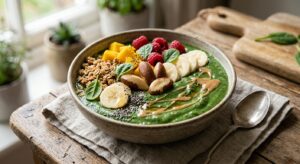

omg YES okay so i haven’t tried einkorn yet but i’m totally adding this to my list now!! does it have a different micronutrient profile than regular wheat, like more bioavailable minerals? asking bc my oldest is gluten sensitive and i’m always hunting for ancient grains that actually stick with her digestion, and i’m wondering if something like this would work for sneaking into her favorite bowls without her knowing lol. also those spring veggies have me EXCITED – are those pumpkin seeds i’m seeing sprinkled on top?? because HELLO magnesium moment right there
Hey Diane, so einkorn definitely has a better mineral bioavailability profile than modern wheat, which could help with absorption for your daughter, but I’d flag one thing: those spring veggies look mostly fresh which is great, but I’d double check the recipe for any fermented components or aged cheeses since those are histamine-liberators and can trigger sensitivities in some people. Those pumpkin seeds are definitely a magnesium win, though raw or lightly roasted fresh ones work way better than packaged/stored versions if your daughter has any mast cell stuff going on. Einkorn is gentler on digestion overall, so it’s definitely worth a shot, just maybe introduce
oh man, einkorn is such a game changer and i love that youre bringing it into the mainstream like this. my avó used to work with spelt and older wheats back in brazil and always said modern wheat made her feel heavy, but it wasnt until i started reading about gluten composition and how einkorn has different ratios that i really understood what she meant. the nutty flavor is incredible too, and honestly when youre fermenting grains before cooking them, einkorn gets this depth thats just unreal. have you experimented with soaking or fermenting the einkorn before this bowl, or does the cooking method itself do enough to break down the phytates? curious if