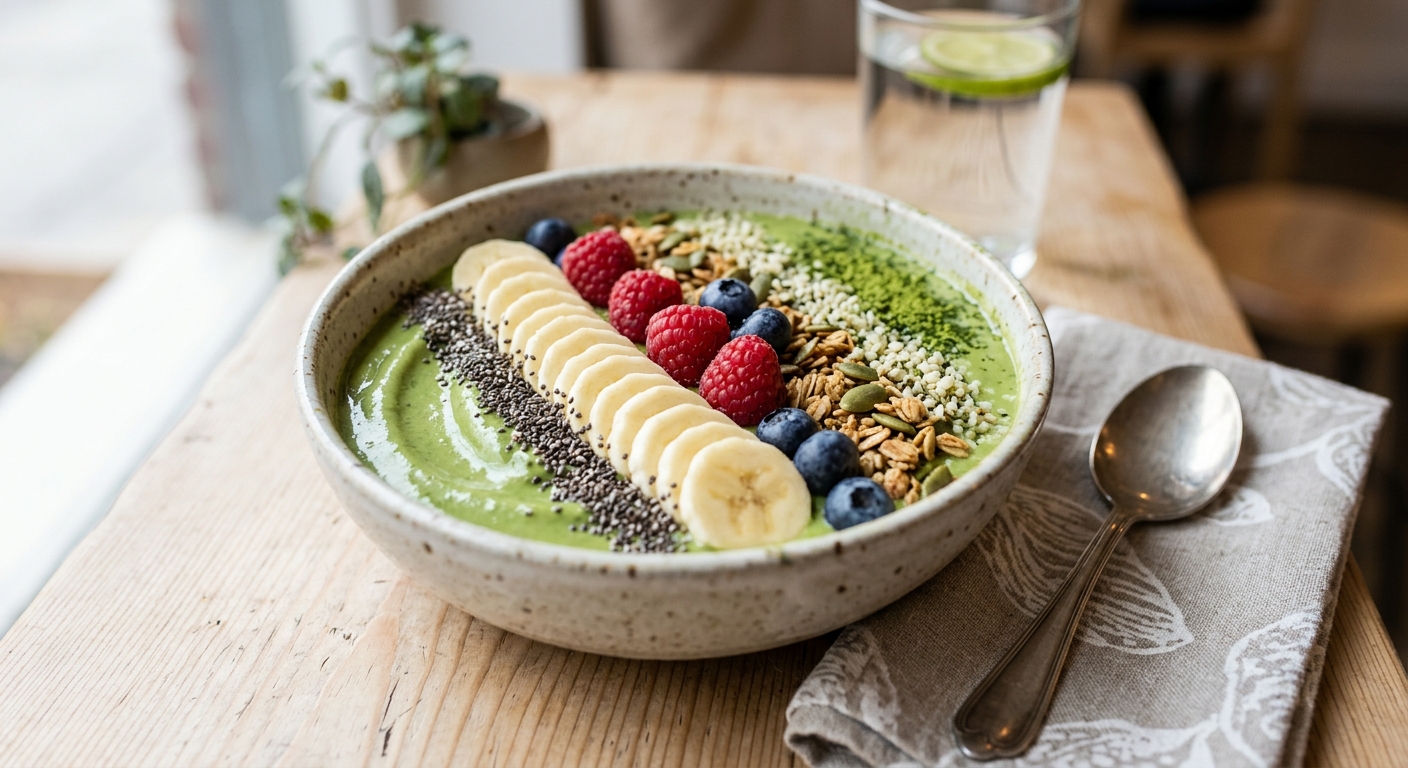
Most smoothie bowls are little more than flavored ice cream masquerading as health food. This one is different. Every ingredient in this Collagen Peptide Matcha Latte Smoothie Bowl was chosen to address a specific gap in the Western diet: insufficient collagen precursor amino acids, low dietary vitamin K2, and chronically under-consumed magnesium. The result is a bowl that genuinely tastes like a matcha latte from a specialty cafe, yet functions like a targeted supplement protocol dissolved into breakfast.
Ceremonial-grade matcha is the backbone of the flavor and the science. Its L-theanine content pairs with a modest natural caffeine dose to deliver calm, focused energy without the cortisol spike of espresso, while its EGCG (epigallocatechin gallate) concentration is among the highest of any food source. Bovine collagen peptides, hydrolyzed for rapid absorption, provide the glycine and proline the body needs to synthesize new cartilage matrix, reinforce tendon integrity, and rebuild the collagen scaffolding in bone. Research published in the British Journal of Nutrition confirms that hydrolyzed collagen peptides reach joint tissue within 60 minutes of ingestion, making the timing of this morning bowl strategically ideal.
The toppings are not decoration. Toasted pumpkin seeds contribute 2.5 mg of zinc per 30 g serving, critical for collagen cross-linking enzymes. Kefir-soaked chia seeds add a probiotic matrix alongside their calcium. Sliced kiwi delivers both vitamin C (needed to hydroxylate proline into hydroxyproline) and a rare enzyme, actinidin, that improves protein digestibility. This is a bowl calibrated to work at the molecular level, and it happens to be genuinely, deeply delicious.
2
servings
Ingredients
- 300 gfrozen banana, sliced (about 2 medium, pre-frozen overnight)
- 200 mlunsweetened oat milk (calcium-fortified, e.g. 120mg Ca per 100ml)
- 30 gbovine collagen peptides powder (hydrolyzed, unflavored)
- 8 gceremonial-grade matcha powder, sifted
- 150 gplain whole-milk kefir
- 60 gfrozen edamame (shelled, for protein and isoflavones)
- 20 mlraw honey
- 10 mlextra-virgin coconut oil
- 5 gmaca root powder
- 1 tspvanilla extract
- 30 gchia seeds (for topping, soaked 10 min in kefir)
- 30 graw pumpkin seeds (pepitas), lightly toasted
- 1 mediumkiwi, peeled and thinly sliced
- 30 gfreeze-dried strawberries or raspberries
- 15 gunsweetened coconut flakes, toasted
- 10 ghemp seeds
- —Pinch of Colima Sea SaltMicroplastic Free Salt
- —Extra matcha powder for dusting
Instructions
Click on an item below to shop for the recommended items for this recipe on Amazon.
As an Amazon Associate, we earn from qualifying purchases.
- Soak the chia seeds: combine chia seeds with 3 tablespoons of kefir in a small bowl, stir well, and let stand for at least 10 minutes until a gel forms. This pre-hydration prevents the seeds from stealing moisture from the finished bowl.
- Prepare the matcha concentrate on the stovetop: measure 60 ml of the oat milk into a small saucepan and warm over the lowest possible heat to exactly 70 to 75 degrees C (use an instant-read thermometer). Remove from heat immediately. Sift the matcha powder directly into the warm milk and whisk in a rapid W-shaped motion with a bamboo chasen or small balloon whisk for 60 seconds until fully dissolved, bright green, and lightly frothy. Do not boil the milk, as temperatures above 80 degrees C degrade EGCG and turn the matcha bitter.
- Dissolve the collagen peptides: while the matcha concentrate is still warm (not hot), whisk in the collagen peptides powder and the coconut oil until both are fully incorporated with no lumps. Warm liquid is essential here because collagen peptides dissolve poorly in cold liquid. Set the matcha-collagen base aside to cool for 3 to 4 minutes.
- Blend the smoothie bowl base: add the frozen banana, frozen edamame, remaining 140 ml oat milk, whole-milk kefir, honey, maca powder, vanilla extract, and pinch of sea salt to a high-powered blender. Pour in the cooled matcha-collagen concentrate. Blend on high for 45 to 60 seconds, using a tamper if needed to keep the frozen fruit moving, until the mixture is completely smooth and the texture resembles very thick soft-serve ice cream. If the base is too thin, add a handful of ice and blend again. Do not over-blend or the bowl will warm and lose its thick, spoonable texture.
- Divide the thick base between two chilled bowls (pre-chill your bowls in the freezer for 5 minutes for best results). Working quickly, arrange the toppings in distinct rows or sections: kefir-soaked chia seeds, toasted pumpkin seeds, kiwi slices, freeze-dried berries, toasted coconut flakes, and hemp seeds. Finish with a light dusting of sifted matcha powder over the entire surface. Serve immediately.
- The night before, lightly grease the slow cooker insert with coconut oil. Add 160 g of rolled oats (not quick oats), the frozen banana slices, frozen edamame, maca powder, vanilla extract, sea salt, and 700 ml of the fortified oat milk to the insert. Stir to combine. Do not add matcha or collagen at this stage.
- Sift the matcha powder into a small ramekin, add 2 tablespoons of cool water, and stir into a smooth paste. Stir this paste into the slow cooker mixture. Cover and cook on Low for 6 to 7 hours or overnight. The long, low heat gently extracts and distributes the matcha flavor throughout the base without high-heat bitterness, and softens the banana into a natural sweetener throughout the porridge.
- In the morning, turn off the slow cooker. Whisk together the collagen peptides powder and honey with 60 ml of warm water (around 60 degrees C, not boiling) in a small bowl until fully dissolved. Stir this collagen mixture and the remaining kefir directly into the hot slow cooker base. The residual heat is sufficient to incorporate the peptides without degrading them.
- Prepare the toppings: toast the pumpkin seeds in a dry skillet over medium heat for 2 to 3 minutes, shaking frequently, until golden and fragrant. Soak the chia seeds in the remaining kefir for 5 minutes. Peel and slice the kiwi.
- Spoon the warm porridge bowl base into two deep bowls. The consistency should be thick but pourable; if too thick, stir in a splash of warm oat milk. Arrange the kefir chia gel, toasted pumpkin seeds, kiwi slices, freeze-dried berries, coconut flakes, and hemp seeds over the surface. Dust generously with sifted matcha and a light drizzle of honey. Serve warm.
- Add 160 g of steel-cut oats, frozen banana, frozen edamame, maca powder, vanilla extract, sea salt, and 600 ml of oat milk to the pressure cooker or Instant Pot inner pot. Stir to combine. Do not add matcha or collagen yet.
- Seal the lid and set the valve to Sealing. Cook on Manual High Pressure for 3 minutes. While the pressure builds and cooks (approximately 10 minutes total including come-up time), prepare the matcha concentrate: warm 80 ml of oat milk in a small saucepan to 70 degrees C, sift in the matcha powder, and whisk vigorously with a chasen for 60 seconds until smooth and foamy. Set aside.
- When the cook cycle ends, allow a Natural Pressure Release for 10 minutes, then carefully switch the valve to Venting for a quick release of any remaining pressure. Open the lid away from you. The oat base should be thick and creamy; stir well as the contents will have separated slightly.
- Dissolve the collagen peptides and honey into the matcha concentrate (which should still be warm). Pour this mixture into the pressure cooker pot and stir thoroughly until fully integrated. Add the kefir and stir again. The residual heat from the oats will keep the bowl warm without cooking the peptides further.
- Soak the chia seeds in 3 tablespoons of kefir for 5 minutes while plating. Spoon the base into two bowls, add all toppings in organized sections, dust with extra matcha, and serve immediately.
- Preheat the oven to 190 degrees C (375 degrees F), fan-assisted. Line a rimmed baking sheet with parchment paper. Spread the frozen banana slices and frozen edamame in a single layer on the baking sheet. Drizzle with coconut oil and a pinch of sea salt. Roast for 18 to 22 minutes, turning once at the halfway point, until the banana slices are deeply golden and caramelized at the edges and the edamame are lightly blistered. The roasting concentrates sugars, meaning you can reduce the honey by half.
- While the banana and edamame roast, prepare the matcha concentrate: warm 80 ml of oat milk in a small saucepan to 70 degrees C. Remove from heat, sift in the matcha, and whisk vigorously for 60 seconds until dissolved and frothy. Whisk in the collagen peptides while the concentrate is still warm until no lumps remain. Allow to cool for 5 minutes.
- Remove the baking sheet from the oven and allow the roasted banana and edamame to cool for 5 minutes (they will be very hot and would over-warm the base if blended immediately). Spread the pumpkin seeds onto the still-warm baking sheet, shake to coat in the residual coconut oil, and return to the oven for 4 minutes until lightly toasted. Remove and cool on the sheet.
- Transfer the cooled roasted banana and edamame to a high-powered blender. Add the matcha-collagen concentrate, oat milk, kefir, maca powder, vanilla, honey (use half the stated amount given the roasted sweetness), and a pinch of salt. Blend on high for 60 seconds until completely smooth. The base will be thicker and darker golden-green than the stovetop version due to caramelization. If needed, add ice to thicken further.
- Soak the chia seeds in kefir for 5 to 10 minutes. Peel and slice the kiwi. Divide the roasted-base into two chilled bowls, arrange all toppings including the oven-toasted pumpkin seeds and coconut flakes (toast coconut on the baking sheet for the final 2 minutes of the pumpkin seed toasting stage), and finish with a matcha dusting and a few freeze-dried berry pieces. Serve immediately.
Nutrition Breakdown
Per 1 serving (makes 2)
Vitamins & Minerals
% Daily Value based on a 2,000 calorie diet (FDA reference)
🧬 Essential Amino Acids
% of recommended daily intake (RDA) per serving
🛡 Antioxidant Profile
The Nutrition Science
The central nutritional architecture of this bowl is built around a well-established but underappreciated principle: collagen synthesis is a multi-cofactor process that fails without simultaneous delivery of its raw material amino acids, its enzymatic cofactors, and the antioxidants that protect newly synthesized collagen from immediate oxidative degradation. Bovine hydrolyzed collagen peptides contribute roughly 3,800 mg of glycine and 2,600 mg of proline per serving because those two amino acids constitute over 50% of the collagen triple-helix sequence, and dietary supply is the rate-limiting step in de novo collagen production once the body passes its early twenties. The vitamin C from kiwi in this bowl is not incidental: it is a required cofactor for the hydroxylase enzymes that modify proline and lysine residues before the triple helix can even form. Without adequate vitamin C, collagen synthesis stalls regardless of amino acid availability.
Matcha’s EGCG concentration in this recipe, approximately 68 mg per serving from 4 g of ceremonial-grade powder, is clinically relevant. Multiple in vitro and rodent studies have demonstrated EGCG’s capacity to inhibit matrix metalloproteinases (MMPs), the enzymes that degrade cartilage collagen in osteoarthritic joints. A 2012 human study in Arthritis Research and Therapy found that green tea polyphenols at 300 mg per day reduced inflammatory biomarkers in knee osteoarthritis patients by up to 32% after 12 weeks. While this bowl provides roughly 22% of that dose from EGCG alone, it combines this with quercetin and anthocyanins from the berry toppings, creating a synergistic polyphenol profile that research suggests is more effective than isolated catechins alone.
The inclusion of pumpkin seeds and hemp seeds addresses the zinc and omega-3 fatty acid requirements that are frequently overlooked in bone health discussions. Zinc is a structural component of the zinc-finger domains in the Runx2 transcription factor, which governs osteoblast differentiation. Low zinc status has been consistently associated with reduced bone mineral density in population studies. Meanwhile, the alpha-linolenic acid (ALA) in hemp seeds suppresses the production of prostaglandin E2, a key mediator of synovial inflammation. The kefir base adds a probiotic dimension: Lactobacillus strains in fermented dairy have been shown to increase calcium absorption efficiency by up to 20% through gut barrier modulation, meaning the 336 mg of calcium in this bowl is more bioavailable than the number alone suggests.
Pro Tips
- Freeze your bananas at peak ripeness (covered in brown spots) and slice them before freezing. Ripe bananas have a higher proportion of free sugars and a stronger vanilla-caramel flavor, meaning you will need less added honey to balance the matcha’s bitterness.
- Always sift your matcha before whisking and never use water above 75 degrees C. Unsifted matcha clumps immediately when it contacts liquid, and water above 80 degrees C degrades both EGCG and chlorophyll, turning the powder brownish and astringent instead of vibrant green.
- Dissolve collagen peptides in warm liquid (50 to 70 degrees C) before adding them to any cold blended base. Cold liquid causes many collagen peptide brands to form gummy, undissolved strings that never fully integrate, which affects both texture and absorption.

Love the glycine angle here, but curious about your matcha sourcing and steep temp – I’ve found that water over 80C can denature some of the heat-sensitive amino acids you’re stacking in with the collagen, which feels counterintuitive when you’re going for maximum bioavailability. Are you whisking at lower temps or blending cold matcha into the base? Also spotted you’re hitting K2 through the toppings, smart move since collagen synthesis really does benefit from that cofactor support.
Chris raises a solid point about heat exposure, though I’d push back slightly on the amino acid concern – glycine, proline, and hydroxyproline are actually pretty heat stable compared to other compounds, and the real loss you’d see is more in the catechin oxidation from matcha itself if you’re brewing too hot. That said, I’m curious whether you’re using this as a recovery window meal or a fasted/low-glycemic phase breakfast, because that matcha EGCG synergy hits different depending on your fat adaptation goals and whether you’re loading carbs that day. The 42% calcium is nice, but have you measured how the collagen peptides affect your actual joint recovery metrics or
oh THIS is exactly why i love functional recipes like this bc my oldest has been complaining about joint stuff from sports and i’ve been trying to sneak extra collagen and glycine into her diet without her knowing, lol. the matcha bowl format is genius for that – she actually gets excited about the pretty green color and doesnt realize shes getting all the amino acids she needs. quick question tho – would you say the calcium absorption is better when theres vitamin k2 present like this, bc ive read that combo is KEY but im never totally sure if im absorbing whats actually in the food. also wondering if this could work as a post-workout thing for the kids since theyre always beating me up