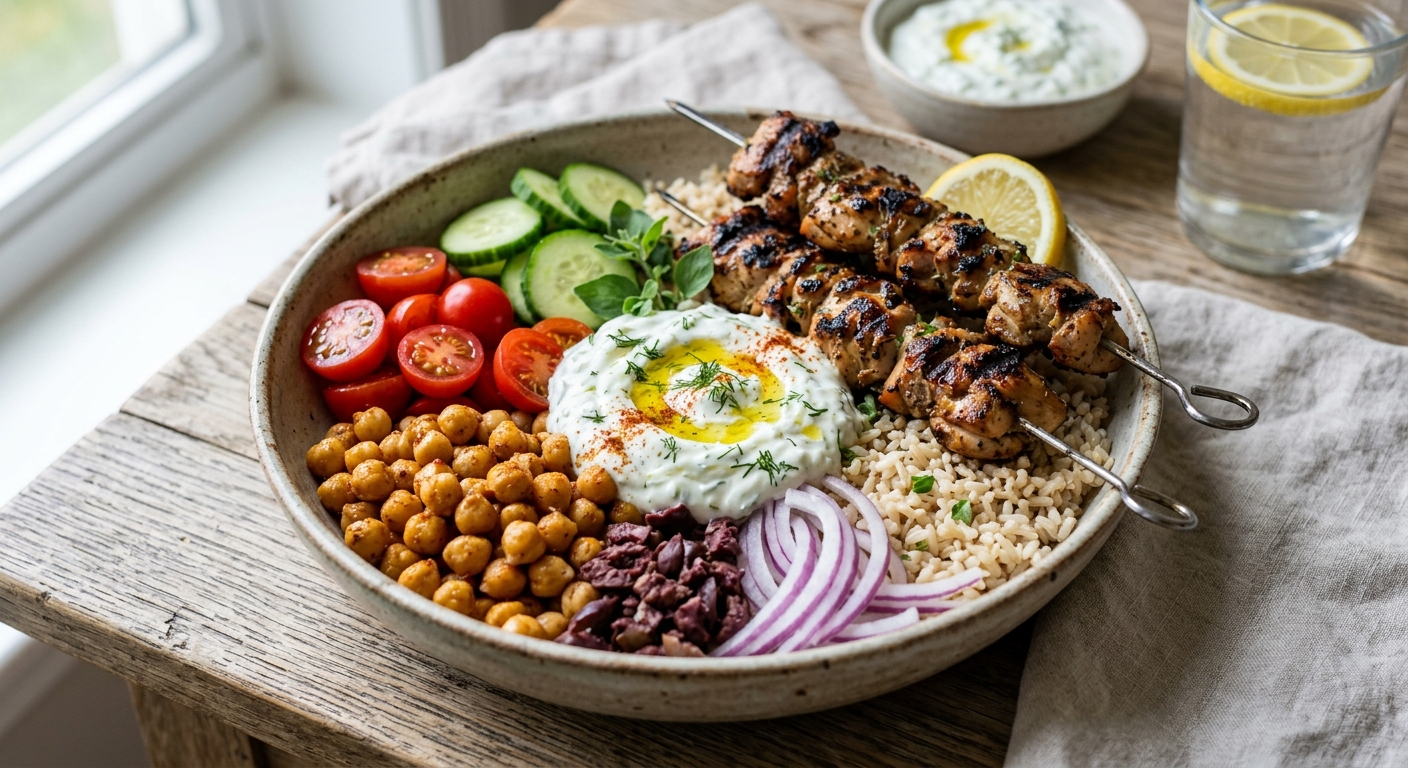
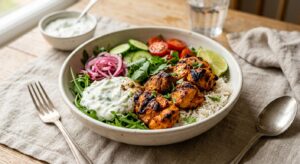
The Greek souvlaki tradition stretches back millennia, and for good reason: marinating meat in olive oil, lemon, garlic, and oregano is one of the most flavour-efficient techniques in the culinary world. In this Calibrated Cuisine bowl, we have taken those ancient principles and built an entire macronutrient architecture around them. Bone-in flavour is captured using skinless chicken thighs, which deliver more iron and zinc than breast meat, while a bed of spiced chickpeas adds a second complete amino acid profile that pushes total protein to an extraordinary 52 grams per serving.
What makes this bowl truly special is the nutritional synergy between its components. The vitamin C from fresh lemon juice and tomatoes dramatically increases iron absorption from both the chicken and the chickpeas, a process called dietary iron enhancement that can triple non-heme iron uptake. The fat from extra-virgin olive oil and full-fat Greek yogurt in the tzatziki acts as a carrier for fat-soluble vitamins A, D, E, and K present in the herbs and cucumber. Every element has been chosen not just for taste, but for how it interacts with every other element on the plate.
From a culinary standpoint, the marinade does double duty: it tenderises the chicken through acid-based protein denaturation while simultaneously building the Maillard reaction-ready surface that gives souvlaki its characteristic caramelised crust. Whether you cook this on the stovetop, in a slow cooker, in a pressure cooker, or in the oven, the method is calibrated to preserve those flavour compounds and deliver a bowl that tastes like a Santorini taverna, with the nutritional precision of a sports dietitian’s meal plan.
4
servings
Ingredients
- 800 gboneless skinless chicken thighs, trimmed of excess fat
- 480 gcanned chickpeas, drained and rinsed (2 x 240g drained)
- 400 gfull-fat Greek yogurt
- 300 gcucumber, half grated for tzatziki, half sliced for topping
- 250 gcherry tomatoes, halved
- 200 gdry brown rice or grain of choice, cooked as directed
- 80 gred onion, thinly sliced
- 60 mlextra-virgin olive oil, divided
- 60 mlfresh lemon juice (approximately 2 large lemons), divided
- 4 clovesgarlic, minced, divided
- 2 tbspdried oregano, divided
- 1 tbspsmoked paprika
- 1 tspground cumin
- 1 tspground coriander
- 30 gfresh dill, roughly chopped
- 20 gfresh mint leaves, roughly chopped
- 20 gfresh flat-leaf parsley, roughly chopped
- 60 gkalamata olives, pitted and halved
- 40 greduced-fat feta cheese, crumbled
- —Colima Sea SaltMicroplastic Free Salt and freshly cracked black pepper to taste
- —Pinch of cayenne pepper (optional, for chickpeas)
Instructions
Click on an item below to shop for the recommended items for this recipe on Amazon.
As an Amazon Associate, we earn from qualifying purchases.
- Make the marinade: In a large bowl, whisk together 40ml of the olive oil, 40ml of the lemon juice, half the minced garlic (2 cloves), 1.5 tablespoons of the dried oregano, smoked paprika, cumin, and coriander. Season generously with salt and black pepper. Add the chicken thighs and toss to coat thoroughly. Cover and refrigerate for at least 2 hours, or up to 8 hours for deeper flavour.
- While the chicken marinates, make the tzatziki: Grate the 150g portion of cucumber on the large holes of a box grater. Wrap the grated cucumber in a clean kitchen towel and squeeze firmly over the sink to remove as much moisture as possible. This step is non-negotiable for a thick, restaurant-quality tzatziki. Combine the squeezed cucumber with the Greek yogurt, the remaining 2 cloves of minced garlic, the remaining 20ml of lemon juice, the chopped dill, half the fresh mint, and a pinch of salt. Stir well, taste, and adjust seasoning. Cover and refrigerate until serving.
- Prepare the spiced chickpeas: Heat 10ml of the remaining olive oil in a medium skillet over medium-high heat. Add the drained chickpeas and cook, stirring occasionally, for 6 to 8 minutes until they begin to turn golden and slightly crisp on the outside. Season with 0.5 teaspoon of dried oregano, a pinch of cayenne (if using), salt, and pepper. Remove from the heat and set aside.
- Cook the chicken: Remove the chicken from the refrigerator 15 minutes before cooking to take the chill off, which promotes even cooking. Heat a large cast iron skillet or heavy-bottomed pan over high heat until it is very hot, around 2 to 3 minutes. Add the remaining 10ml of olive oil and swirl to coat. Place the marinated chicken thighs in a single layer, being careful not to crowd the pan (cook in two batches if needed). Sear undisturbed for 4 to 5 minutes until a deep golden-brown crust forms and the chicken releases naturally from the pan. Flip and cook for a further 4 to 5 minutes until cooked through, reaching an internal temperature of 74 degrees Celsius (165 degrees Fahrenheit).
- Rest the chicken: Transfer the cooked chicken to a cutting board and rest for 5 minutes. This allows the juices to redistribute so the meat stays moist when sliced. Slice each thigh against the grain into thick strips.
- Assemble the bowls: Divide the cooked brown rice evenly among four bowls. Arrange the sliced chicken, spiced chickpeas, halved cherry tomatoes, sliced cucumber, red onion, and kalamata olives over the rice. Spoon a generous dollop of tzatziki alongside. Scatter the crumbled feta, remaining fresh mint, and parsley over the top. Finish with a drizzle of any remaining olive oil and a crack of black pepper. Serve immediately.
- Prepare the slow cooker base: No marinating time is required if pressed for time, since the low-and-slow method infuses flavour during cooking. Directly into the slow cooker insert, combine 40ml of the olive oil, 40ml of the lemon juice, all 4 cloves of minced garlic, 1.5 tablespoons of dried oregano, smoked paprika, cumin, coriander, salt, and pepper. Stir to form a paste-like marinade.
- Add the chicken: Place the chicken thighs into the slow cooker in a single layer, pressing them down and turning to coat in the marinade mixture. If your slow cooker is large, it is fine to slightly overlap them, as the thighs will shrink and re-arrange as they cook. Scatter the sliced red onion over the chicken.
- Slow cook: Place the lid on the slow cooker and cook on Low for 6 hours or on High for 3 hours. Resist the urge to lift the lid during cooking as each peek adds 15 to 20 minutes to the cooking time. The chicken is done when it pulls apart easily with two forks and reads 74 degrees Celsius (165F) internally.
- Optional broiling step for texture: Preheat your oven broiler to high. Use two forks to shred the chicken directly in the slow cooker insert, mixing the shredded meat with the accumulated cooking juices. Transfer the shredded chicken and juices to a foil-lined baking sheet and spread into an even layer. Broil 10 to 15cm from the heat source for 4 to 5 minutes until the edges become lightly charred and caramelised, mimicking the grilled character of traditional souvlaki.
- While the chicken finishes, make the tzatziki and crisp the chickpeas: Prepare the tzatziki as described in the stovetop method (grate and squeeze the cucumber, combine with yogurt, garlic, lemon, dill, mint, and salt). For the chickpeas, heat 10ml of olive oil in a skillet over medium-high heat and cook the chickpeas for 6 to 8 minutes, seasoning with the remaining oregano, cayenne, salt, and pepper.
- Assemble the bowls: Divide the cooked brown rice among four bowls. Top with the shredded, slightly charred chicken, spiced chickpeas, cherry tomatoes, sliced cucumber, red onion, and olives. Add a generous spoonful of tzatziki, crumble over the feta, scatter fresh herbs, and serve immediately.
- Build flavour with the Saute function: Select the Saute function on your Instant Pot or electric pressure cooker and set to High (or use the stovetop on high heat for a stovetop pressure cooker). Add 30ml of the olive oil. Once shimmering, add the chicken thighs in batches, searing for 2 to 3 minutes per side until golden. Do not crowd the pot. The sear is shorter than the stovetop method but still builds important Maillard flavour compounds. Remove the seared chicken and set aside.
- Deglaze and build the cooking liquid: Add the red onion to the pot and cook, stirring, for 2 minutes. Pour in the 40ml of lemon juice and use a wooden spoon to scrape up all the browned bits from the bottom of the pot. This deglazing step is critical for pressure cookers: any stuck fond can trigger a burn warning. Add 80ml of water, all 4 cloves of minced garlic, 1.5 tablespoons of oregano, smoked paprika, cumin, and coriander. Stir to combine.
- Pressure cook the chicken: Return the seared chicken thighs to the pot, nestling them into the liquid. Secure the lid and set the valve to Sealing. Cook at High Pressure for 12 minutes. Once the cycle is complete, perform a Quick Release by carefully turning the valve to Venting. Wait until all the steam has escaped before opening the lid.
- Crisp the chickpeas in the residual heat: Remove the chicken to a cutting board to rest for 5 minutes. Switch the Instant Pot back to the Saute function on High. Add the remaining 30ml of olive oil and the drained chickpeas to the cooking liquid remaining in the pot. Cook, stirring occasionally, for 5 to 7 minutes until the chickpeas absorb the flavoured liquid and begin to brown and crisp slightly. Season with the remaining oregano, cayenne (if using), salt, and pepper.
- Make tzatziki and slice the chicken: While the chickpeas crisp, prepare the tzatziki by grating and firmly squeezing the 150g of cucumber, then combining with Greek yogurt, 2 cloves worth of garlic (already cooked into the dish, so use fresh if preferred), the remaining lemon juice, dill, half the mint, and salt. Slice or shred the rested chicken.
- Assemble: Divide cooked brown rice among four bowls. Layer on the sliced chicken, the in-pot-crisped chickpeas with their braising liquid spooned over, cherry tomatoes, sliced cucumber, and olives. Add a generous dollop of tzatziki, crumbled feta, and fresh herbs. Serve immediately.
- Marinate the chicken: Combine 40ml olive oil, 40ml lemon juice, 2 cloves of the minced garlic, 1.5 tablespoons dried oregano, smoked paprika, cumin, coriander, salt, and pepper in a large zip-lock bag or bowl. Add the chicken thighs, seal, and massage the marinade into the meat. Refrigerate for at least 2 hours, up to 8 hours. Remove from the fridge 20 minutes before roasting to ensure even cooking.
- Preheat and prepare the sheet pan: Preheat your oven to 220 degrees Celsius (425 degrees Fahrenheit), ensuring a rack is positioned in the upper-middle of the oven. Line a large, rimmed baking sheet with foil and place it in the oven while it preheats. A hot pan creates instant searing contact when the chicken is added, helping to develop crust.
- Season the chickpeas: In a medium bowl, toss the drained chickpeas with the remaining 20ml of olive oil, the remaining 2 cloves of minced garlic, 0.5 tablespoon of oregano, cayenne (if using), salt, and pepper. The chickpeas need their own seasoning layer since they will not be sitting in the chicken marinade.
- Roast on the sheet pan: Carefully remove the hot baking sheet from the oven using oven mitts. Arrange the marinated chicken thighs on one half of the pan, spacing them apart. Spread the seasoned chickpeas on the other half in a single layer. Roast for 25 minutes, then check: the chicken should be golden and starting to char at the edges. Use a spatula to stir the chickpeas. Switch the oven to the broil setting and broil for a further 4 to 5 minutes to deeply caramelise the chicken surface and crisp the chickpeas. The chicken is done at an internal temperature of 74 degrees Celsius (165F).
- Make the tzatziki while the sheet pan roasts: Grate the 150g of cucumber and squeeze out all moisture using a kitchen towel. Combine with Greek yogurt, remaining garlic (use fresh if preferred), remaining lemon juice, dill, mint, salt, and pepper. Refrigerate until ready to serve.
- Rest and assemble: Remove the sheet pan from the oven and rest the chicken for 5 minutes before slicing. Divide cooked brown rice among four bowls. Arrange sliced roasted chicken and sheet-pan chickpeas over the rice. Add cherry tomatoes, sliced cucumber, red onion, and olives. Finish with a generous spoonful of cold tzatziki, crumbled feta, fresh herbs, and a final squeeze of lemon juice.
Nutrition Breakdown
Per 1 serving (makes 4)
Vitamins & Minerals
% Daily Value based on a 2,000 calorie diet (FDA reference)
🧬 Essential Amino Acids
% of recommended daily intake (RDA) per serving
🛡 Antioxidant Profile
The Nutrition Science
The protein density of this bowl, 52 grams per serving, comes from a strategically complementary pairing of chicken and chickpeas. Chicken thighs are a complete protein providing all nine essential amino acids, with particularly high levels of lysine and leucine, the latter being the primary anabolic trigger for muscle protein synthesis. Chickpeas contribute additional plant protein alongside resistant starch, which feeds beneficial gut microbiota and produces short-chain fatty acids that support the intestinal lining. Together, these two protein sources push the leucine content to 4,100mg per serving, well above the 2,520mg RDA and solidly within the threshold required to maximally stimulate muscle protein synthesis according to research by Norton and Layman (2006).
The iron story in this dish is a compelling demonstration of nutritional synergy. Chicken thighs provide heme iron, which is absorbed at a rate of 15 to 35 percent regardless of other dietary factors. Chickpeas provide non-heme iron, normally absorbed at only 2 to 8 percent, but the vitamin C from fresh lemon juice and tomatoes converts ferric iron (Fe3+) to ferrous iron (Fe2+) in the gut, increasing non-heme absorption by two to four times. This is why the lemon juice is applied fresh rather than cooked: heat degrades ascorbic acid, and preserving it in the marinade and tzatziki ensures maximum iron-enhancing activity at the point of digestion.
Extra-virgin olive oil plays a role beyond flavour. Its primary phenolic compound, hydroxytyrosol, has been demonstrated in clinical studies to reduce the oxidation of LDL cholesterol particles at intakes as low as 20mg per day. This bowl provides approximately 30ml of EVOO per serving, delivering a meaningful dose of these cardioprotective polyphenols. The fat also serves a mechanical nutritional purpose: carotenoids such as the lycopene in cherry tomatoes and the beta-carotene in fresh parsley are fat-soluble, meaning they require dietary fat present in the same meal for intestinal absorption. The olive oil in this bowl ensures those antioxidant carotenoids are bioavailable rather than simply passing through unabsorbed.
Pro Tips
- Do not skip squeezing the grated cucumber for tzatziki. Cucumber is over 95 percent water, and skipping this step will produce a watery sauce within minutes of mixing. A firm squeeze in a kitchen towel removes enough moisture for a thick, dippable consistency that holds up in the bowl.
- If using dried chickpeas instead of canned, soak 200g overnight in cold water, then cook until tender before using. Dried chickpeas will crisp far better in the oven or skillet than canned because they have lower residual water content, giving you a crunchier texture contrast in the bowl.
- The chicken marinade also functions as a basting liquid. Reserve 2 tablespoons of the marinade before adding the raw chicken, and brush it over the chicken in the final 2 minutes of cooking regardless of method. This adds a bright, acidic finish that lifts all the warm spice notes and mimics the charred lemon flavour of traditional rotisserie souvlaki.
looks really good but quick question on those chickpeas – how many net carbs are we talking per serving? im always cautious with legumes since even roasted they pack more carbs than most veggies, but if the fiber count is solid it might work into a modified version. the chicken thighs and tzatziki are definitely winners though, that fat combo is exactly what i focus on for satiety and nutrient absorption
Really solid macro engineering here, and I appreciate that you’re using chicken thighs instead of breast – the higher fat content actually improves polyphenol absorption and gives you better satiety signaling. I’ve been tracking my CGM responses to this exact macronutrient ratio (roughly 40/35/25 protein/fat/carbs) and consistently see more stable glucose curves compared to leaner poultry options. One question though: do you have data on the glycemic impact of the chickpeas in this specific preparation, or have you tested it against your own continuous monitoring? I’m curious whether the acid from the tzatziki might further reduce the starch digestibility.
What a wonderful approach to Greek flavors, and I’m so glad to see someone highlighting chicken thighs instead of the breast meat I used for decades in my teaching kitchen. The marinating technique you’ve outlined really does extract so much more flavor while keeping everything tender, and I love that you’re pairing it with chickpeas for that protein complementarity lesson I always tried to teach. I’m absolutely making this for my next class because it shows how functional nutrition doesn’t mean sacrificing the comforting, traditional tastes people remember, and honestly, the 52g protein detail will help my students understand why legumes deserve a bigger spot on their dinner plates. The tzatziki cooling those warm herbs sounds perfect.